Skip to content
#software testing Open access

Replication package: Horizon, Deployment Objective and Evaluation Protocol Decide the Ranking -- a controlled benchmark of load forecasters on 300 buildings

Sep 2026 · Zenodo (CERN European Organization for Nuclear Research)

Abstract

Replication package for Horizon, Deployment Objective and Evaluation Protocol Decide the Ranking: Evidence from a Controlled Benchmark of Load Forecasters on 300 Buildings. Eight forecasters -- DLinear, an LSTM encoder-decoder, PatchTST, iTransformer, XGBoost and three naive rules -- are compared on 300 ASHRAE Great Energy Predictor III buildings under one preprocessing pipeline, a per-horizon hyperparameter search of identical budget, five seeds and index-aligned forecast origins. The advantage of attention over recurrence is largest at one hour and smallest at one day, the opposite of the long-range-dependency rationale that motivates these models; at the day-ahead lead the three sequence architectures are equivalent within a margin declared in advance. Deployment objective, site and evaluation protocol each move the ranking further than the architecture does. This deposit contains the pipeline, the summary results behind every table and figure, and the figures themselves. What is included code/ -- the full pipeline: preprocessing and sampling, the five learned forecasters and three naive rules, the horizon, heterogeneity, equivalence and Diebold-Mariano analyses, the economic evaluation, and the figure scripts. results/e1/ -- the main result tree: per-model metrics, the per-step metrics (stored as per-horizon gzips; see README.md for the one-line recombine), Diebold-Mariano tests, the equivalence tests, and the economic evaluation. results/e3probe/, results/e4-e7 -- the gate and profile ablations, heterogeneity, weather ablation, interpretability and leave-one-site-out. figures/, figures_from_station/ -- every figure in the manuscript and its supplement. run_*.sh -- the run drivers. Three carry pre-registered decision rules above the run they gate. tools/split_oversize_csv.py, experiments/EXPERIMENT_PROTOCOL.md, README.md, SHA256SUMS. What is not included, and why ASHRAE GEPIII load and weather data (~2.4 GB). Redistributable only through the competition's Kaggle page under its terms. code/01_preprocess.py retrieves it; a Kaggle account and API token are required. It is not deposited here and must not be. Model checkpoints and per-building prediction files. Several GB, regenerable from the code, and close enough to a derivative of the GEPIII load series that depositing them would be doing indirectly what the competition terms forbid directly. The manuscript. Deliberately out of scope. This record is a software and results deposit, not a preprint. Reproducing -- see README.md. Training needs a CUDA GPU; everything downstream of the saved predictions runs on CPU. code/00_audit.py and the smoke tests run without a GPU and without the full download.


View source

Similar papers

#computer vision Review Sep 2017

Agile Software Development Methods: Review and Analysis

This publication proposes a definition and a classification of agile software development approaches and analyses ten software development methods that can be characterized as being "agile" against the defined criterion.

P. Abrahamsson, O. Salo, Jussi Ronkainen et al. · 727 citations · ⚡54
#computer vision Jun 2008

The impact of agile practices on communication in software development

The study shows that agile practices improve both informal and formal communication, but indicates that, in larger development situations involving multiple external stakeholders, a mismatch of adequate communication mechanisms can sometimes even hinder the communication.

M. Pikkarainen, Jukka Haikara, O. Salo et al. · 401 citations · ⚡48
#machine learning Review Open access Oct 2014

Software development in startup companies: A systematic mapping study

The results indicate that software engineering work practices are chosen opportunistically, adapted and configured to provide value under the constrains imposed by the startup context.

Nicolò Paternoster, Carmine Giardino, M. Unterkalmsteiner et al. · 394 citations · ⚡54
#computer vision Review Mar 2008

Agile methods in European embedded software development organisations: a survey on the actual use and usefulness of Extreme Programming and Scrum

The results show that the embedded industry has been able to apply agile methods in its development processes and that the appreciation of the agile methods and their individual practices appears to increase once adopted and applied in practice.

O. Salo, P. Abrahamsson · 238 citations · ⚡9
#computer vision Open access Jul 2017

What happens when software developers are (un)happy

Consequences of happiness and unhappiness that are beneficial and detrimental for developers' mental well-being, the software development process, and the produced artifacts are found.

D. Graziotin, Fabian Fagerholm, Xiaofeng Wang et al. · 236 citations · ⚡13
#computer vision Open access Oct 2004

Mobile-D: an agile approach for mobile application development

The Mobile-D approach is briefly outlined here and the experiences gained from four case studies are discussed, which helped develop an agile development approach for mobile application development.

P. Abrahamsson, Antti Hanhineva, H. Hulkko et al. · 225 citations · ⚡18

Related blog posts

GPT-Lab Sep 17, 2026

Beyond Prompt Engineering: The Role of Tacit Knowledge in Software Engineering

AI is making software generation faster, but speed does not remove the need for expertise. As more work is delegated to AI, tacit knowledge may become one of the most important human advantages in software engineering. The post Beyond Prompt Engineering: The Role of Tacit Knowledge in Software Engineering appeared first on GPT-Lab.

MIT News · Artificial Intelligence Aug 17, 2026

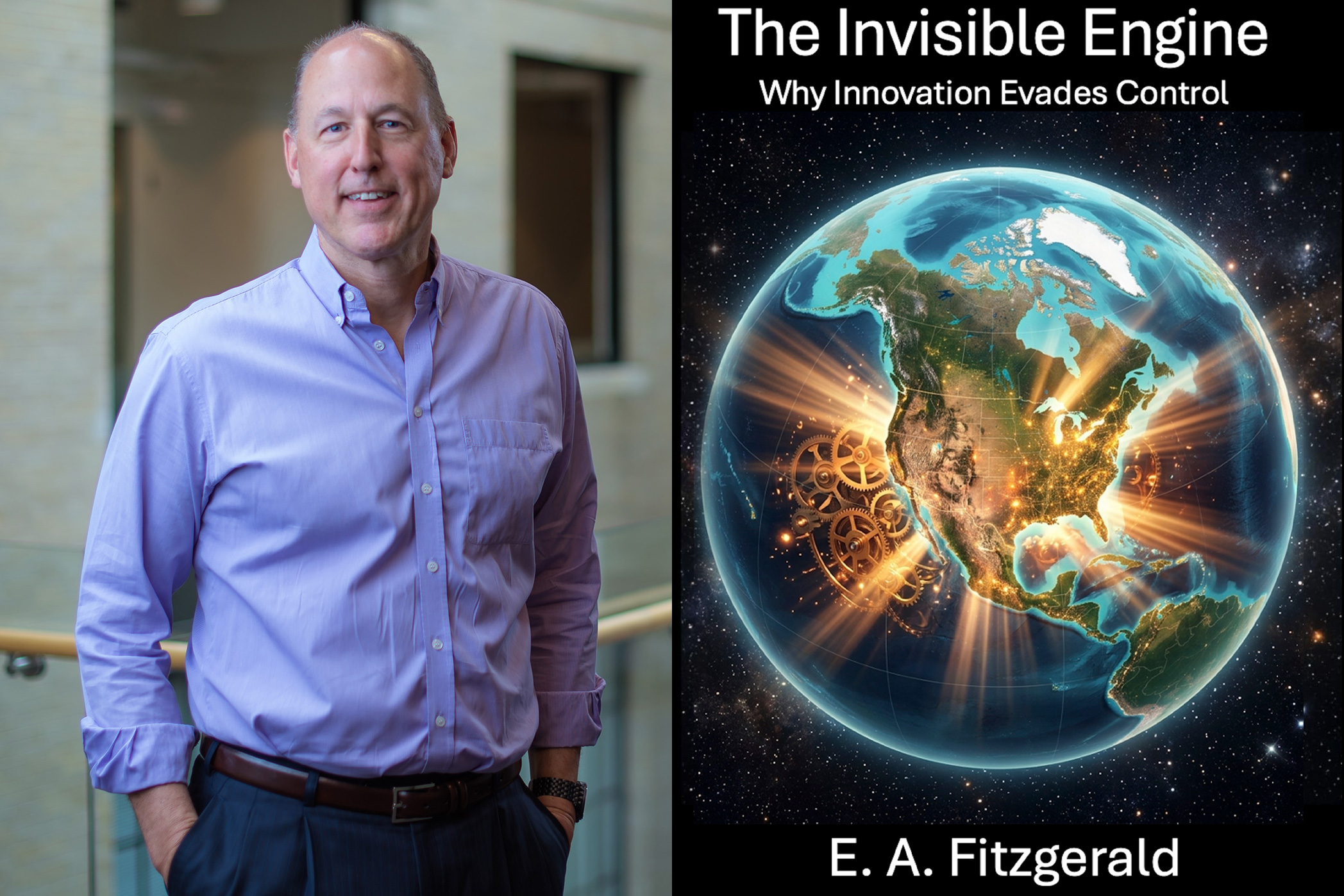
Q&A: Rethinking how innovation happens

In his latest book, Professor Eugene Fitzgerald examines the forces that turn breakthroughs into value — and why innovation resists simple formulas.

Microsoft Research Blog Aug 12, 2026

MindTopo reveals VLMs’ spatial reasoning abilities

A path, a fence, a knot. MindTopo sets a new benchmark for testing how AI understands topological relationships and highlights new opportunities to strengthen spatial reasoning and planning. The post MindTopo reveals VLMs’ spatial reasoning abilities appeared first on Microsoft Research.

We use cookies to run the site and, with your consent, for analytics and to show ads. See our Cookie Policy.