Skip to content
#software testing Open access

Reproducibility package for Complex-Fractional Recurrence and Aharonov-Type Type III Hybrid Disappearance

Sep 2026 · Zenodo (CERN European Organization for Nuclear Research)

Abstract

This repository provides the reproducibility package for the theoretical and computational study of complex-fractional quantum recurrence, Aharonov-type weak values, Kirkwood–Dirac (KD) quasiprobabilities, and Type III hybrid disappearance. The framework is organized as a sequence of four levels: Q1 — a globally Hermitian projected quantum system;Q2 — an effective complex-fractional memory generated by a discrete-scale-invariant hidden spectrum;Q3 — an autonomous three-sector PP-CC-SS Hamiltonian in which the logarithmic scale phase is generated without externally scheduled recurrence times;Q4 — a conditioned-observation layer based on fixed postselection, projector weak values, and KD quasiprobabilities. Version 1.2 update Version 1.2 adds a direct numerical test of the Q3 → Q4 connection. The autonomous Q3 trajectories are used without inserting an externally prescribed phase into the conditioned readout. A single fixed postselection is applied to the same Hermitian Q3 dynamics, and the logarithmic scale parameter bb is independently recovered from weak-value and KD observables. For input b=3b=3–7, the scale parameter recovered from the conditioned observables closely follows the value previously recovered from the autonomous Q3 response: bQ3≃bweak≃bKD.b_{\mathrm{Q3}} \simeq b_{\mathrm{weak}} \simeq b_{\mathrm{KD}}. Across the five tested values, the mean absolute mismatch relative to bQ3b_{\mathrm{Q3}} is approximately 1.18% for the weak-value estimator and 0.59% for the KD estimator. The correlations with bQ3b_{\mathrm{Q3}} exceed 0.9998. The analysis also yields an important negative result. Although the autonomous Q3 dynamics transmits the same discrete-scale phase into Q4 weak/KD observables, a single fixed postselection does not by itself produce recurrent complete weak-value cancellation. Thus, the supported conclusion is that Q1→Q2→Q3→Q4Q1 \rightarrow Q2 \rightarrow Q3 \rightarrow Q4 establishes autonomous scale-phase transmission into conditioned observables, whereas recurrent complete Type III disappearance requires an additional postselection or symmetry condition. The repository also retains the earlier Type III sufficient-condition calculations in which genuine Born-probability relocation and weak-value cancellation are treated as distinct components of the disappearance vector D(t)=(Drel,Dcan).\mathcal{D}(t)=\left(D_{\mathrm{rel}},D_{\mathrm{can}}\right). The package includes: Python source code for all principal calculations; autonomous Q3 → Q4 weak-value and KD reanalysis; numerical CSV outputs; multi-bb recovery results; robustness analyses for dephasing, postselection error, unequal P/CP/C relocation, and Hamiltonian detuning; combined-error Monte Carlo simulations; representative figures; parameter and variable dictionaries; reproducibility maps and method notes; software requirements, execution logs, and SHA256 checksums. All main calculations can be reproduced using the supplied run_all.py script. Monte Carlo calculations use the fixed random seed 20260825. Negative weak values and negative KD quasiprobabilities are not interpreted as negative Born probabilities, negative particle numbers, or disappearance of energy from physical spacetime. They are treated as conditioned or quasiprobabilistic quantum contributions that are distinct from the actual location of Born-probability weight. Creator: Masanobu KudoORCID: 0009-0007-3014-6667 Related records:Previous Type III reproducibility record: https://doi.org/10.5281/zenodo.22110544Companion autonomous-Q3 reproducibility record: https://doi.org/10.5281/zenodo.22510100 Version: 1.2


View source

Similar papers

#computer vision Review Sep 2017

Agile Software Development Methods: Review and Analysis

This publication proposes a definition and a classification of agile software development approaches and analyses ten software development methods that can be characterized as being "agile" against the defined criterion.

P. Abrahamsson, O. Salo, Jussi Ronkainen et al. · 727 citations · ⚡54
#computer vision Jun 2008

The impact of agile practices on communication in software development

The study shows that agile practices improve both informal and formal communication, but indicates that, in larger development situations involving multiple external stakeholders, a mismatch of adequate communication mechanisms can sometimes even hinder the communication.

M. Pikkarainen, Jukka Haikara, O. Salo et al. · 401 citations · ⚡48
#machine learning Review Open access Oct 2014

Software development in startup companies: A systematic mapping study

The results indicate that software engineering work practices are chosen opportunistically, adapted and configured to provide value under the constrains imposed by the startup context.

Nicolò Paternoster, Carmine Giardino, M. Unterkalmsteiner et al. · 394 citations · ⚡54
#computer vision Review Mar 2008

Agile methods in European embedded software development organisations: a survey on the actual use and usefulness of Extreme Programming and Scrum

The results show that the embedded industry has been able to apply agile methods in its development processes and that the appreciation of the agile methods and their individual practices appears to increase once adopted and applied in practice.

O. Salo, P. Abrahamsson · 238 citations · ⚡9
#computer vision Open access Jul 2017

What happens when software developers are (un)happy

Consequences of happiness and unhappiness that are beneficial and detrimental for developers' mental well-being, the software development process, and the produced artifacts are found.

D. Graziotin, Fabian Fagerholm, Xiaofeng Wang et al. · 236 citations · ⚡13
#computer vision Open access Oct 2004

Mobile-D: an agile approach for mobile application development

The Mobile-D approach is briefly outlined here and the experiences gained from four case studies are discussed, which helped develop an agile development approach for mobile application development.

P. Abrahamsson, Antti Hanhineva, H. Hulkko et al. · 225 citations · ⚡18

Related blog posts

GPT-Lab Sep 17, 2026

Beyond Prompt Engineering: The Role of Tacit Knowledge in Software Engineering

AI is making software generation faster, but speed does not remove the need for expertise. As more work is delegated to AI, tacit knowledge may become one of the most important human advantages in software engineering. The post Beyond Prompt Engineering: The Role of Tacit Knowledge in Software Engineering appeared first on GPT-Lab.

MIT News · Artificial Intelligence Aug 17, 2026

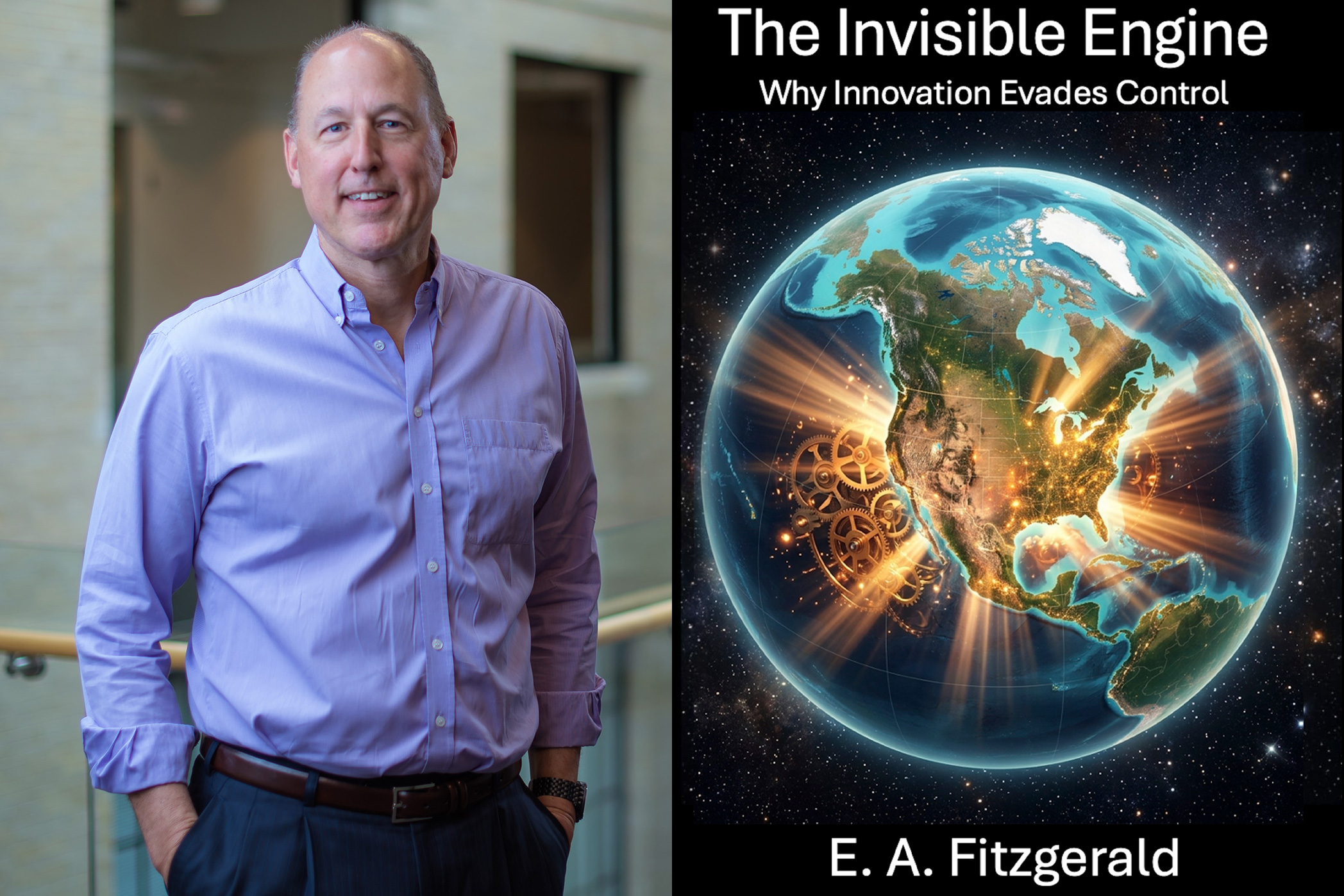
Q&A: Rethinking how innovation happens

In his latest book, Professor Eugene Fitzgerald examines the forces that turn breakthroughs into value — and why innovation resists simple formulas.

Microsoft Research Blog Aug 12, 2026

MindTopo reveals VLMs’ spatial reasoning abilities

A path, a fence, a knot. MindTopo sets a new benchmark for testing how AI understands topological relationships and highlights new opportunities to strengthen spatial reasoning and planning. The post MindTopo reveals VLMs’ spatial reasoning abilities appeared first on Microsoft Research.

We use cookies to run the site and, with your consent, for analytics and to show ads. See our Cookie Policy.