Skip to content
#edge computing Open access

[Global Livingry Governance Architecture | Part 11]: Volcanic Monitoring and Early Warning Architecture: Integration of Community Camera Networks, Edge AI, and Tensor Stress Indices (TSI_{t+1})

Sep 2026 · Zenodo (CERN European Organization for Nuclear Research)
Seismology and Earthquake Studies

Abstract

Active volcanic regions require a fundamental shift from manual, expert-committee-dependent response models toward closed-loop automated architectures. This study proposes an integrated early warning framework that combines the Tensor Stress Index (TSI_{t+1}) function, edge computing (Edge AI), and distributed community-based observation networks. By utilizing consumer and fixed surveillance cameras as edge nodes within a micro-sandbox tier, the system achieves continuous 24/7 baseline observation at a fraction of traditional infrastructure costs. When multivariate geological indicators—including magma reservoir pressure (P), surface deformation (\epsilon), micro-seismic frequency (S), and gas emission rates (G)—drive the TSI_{t+1} function beyond safety tolerance thresholds, the architecture autonomously flags anomalies, triggers real-time visual verification via low-latency mobile interfaces, and coordinates rapid evacuation routes. Furthermore, the framework anchors operational management into the Local Ecological Restoration Credit (LERC) economic structure, leveraging formally verified smart contracts for transparent resource allocation and automated financial disbursement without administrative bottlenecks.

View source

Similar papers

#computer vision Review Sep 2017

Agile Software Development Methods: Review and Analysis

This publication proposes a definition and a classification of agile software development approaches and analyses ten software development methods that can be characterized as being "agile" against the defined criterion.

P. Abrahamsson, O. Salo, Jussi Ronkainen et al. · 727 citations · ⚡54
#computer vision Jun 2008

The impact of agile practices on communication in software development

The study shows that agile practices improve both informal and formal communication, but indicates that, in larger development situations involving multiple external stakeholders, a mismatch of adequate communication mechanisms can sometimes even hinder the communication.

M. Pikkarainen, Jukka Haikara, O. Salo et al. · 401 citations · ⚡48
#machine learning Review Open access Oct 2014

Software development in startup companies: A systematic mapping study

The results indicate that software engineering work practices are chosen opportunistically, adapted and configured to provide value under the constrains imposed by the startup context.

Nicolò Paternoster, Carmine Giardino, M. Unterkalmsteiner et al. · 394 citations · ⚡54

Related blog posts

GPT-Lab Sep 17, 2026

Beyond Prompt Engineering: The Role of Tacit Knowledge in Software Engineering

AI is making software generation faster, but speed does not remove the need for expertise. As more work is delegated to AI, tacit knowledge may become one of the most important human advantages in software engineering. The post Beyond Prompt Engineering: The Role of Tacit Knowledge in Software Engineering appeared first on GPT-Lab.

Microsoft Research Blog Aug 31, 2026

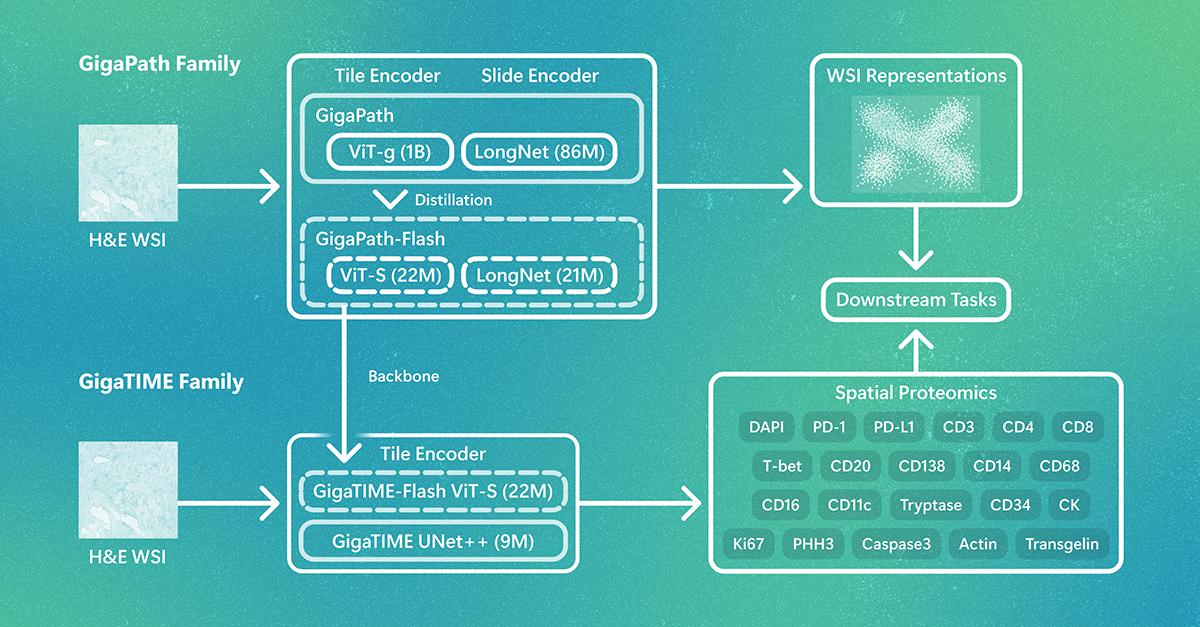
GigaPath-Flash and GigaTIME-Flash: Toward population-scale discovery with efficient pathology foundation models

What if pathology foundation models could do more with less? GigaPath-Flash and GigaTIME-Flash cut computational demands while maintaining strong performance, opening the door to larger studies and broader exploration. The post GigaPath-Flash and GigaTIME-Flash: Toward population-scale discovery with efficient pathology foundation models appeared first on Microsoft Research.

We use cookies to run the site and, with your consent, for analytics and to show ads. See our Cookie Policy.