Skip to content
#edge computing Open access

Direct Satellite-to-Device Communications: From Cooperative Task Offloading to Noncooperative Access Monitoring

Sep 2026 · IEEE Vehicular Technology Magazine · 0 citations · 15 references
Computer Science Engineering Mathematics

TL;DR

A versatile DS2D system that supports cooperative task offloading and non-cooperative access monitoring, and Transformer-based models to enable blind signal detection and automatic modulation classification (AMC) are proposed.

Abstract

Direct satellite-to-device (DS2D) communication is emerging as a transformative paradigm for extending ubiquitous connectivity and edge computing capabilities to remote and underserved regions within 6G non-terrestrial networks. However, practical deployment faces dual critical challenges: i) dynamic satellite channel conditions (e.g., severe Doppler shifts, fast fading) and constrained satellite computing resources in cooperative scenarios; and ii) unauthorized satellite access introduces significant spectrum security threats in non-cooperative scenarios. To address these challenges, we propose a versatile DS2D system that supports cooperative task offloading and non-cooperative access monitoring. For cooperative DS2D communications, we integrate a channel estimation module with a dueling double deep Q-network (D3QN) to dynamically optimize task offloading strategy. For non-cooperative DS2D communications, we propose Transformer-based models to enable blind signal detection and automatic modulation classification (AMC). Simulation results show that: 1) The D3QN algorithm reduces average latency by up to 225\% compared to static association policies. 2) Our signal detection model achieves an average presence detection probability of 90.5\% for DS2D signals. 3) The proposed AMC algorithm achieves superior performance across different signal-to-noise ratios (SNRs), with a 9.4\% accuracy gain in low-SNR regimes compared to existing methods.

Read PDF

Similar papers

#computer vision Review Sep 2017

Agile Software Development Methods: Review and Analysis

This publication proposes a definition and a classification of agile software development approaches and analyses ten software development methods that can be characterized as being "agile" against the defined criterion.

P. Abrahamsson, O. Salo, Jussi Ronkainen et al. · 727 citations · ⚡54
#computer vision Jun 2008

The impact of agile practices on communication in software development

The study shows that agile practices improve both informal and formal communication, but indicates that, in larger development situations involving multiple external stakeholders, a mismatch of adequate communication mechanisms can sometimes even hinder the communication.

M. Pikkarainen, Jukka Haikara, O. Salo et al. · 401 citations · ⚡48
#machine learning Review Open access Oct 2014

Software development in startup companies: A systematic mapping study

The results indicate that software engineering work practices are chosen opportunistically, adapted and configured to provide value under the constrains imposed by the startup context.

Nicolò Paternoster, Carmine Giardino, M. Unterkalmsteiner et al. · 394 citations · ⚡54

Related blog posts

GPT-Lab Sep 17, 2026

Beyond Prompt Engineering: The Role of Tacit Knowledge in Software Engineering

AI is making software generation faster, but speed does not remove the need for expertise. As more work is delegated to AI, tacit knowledge may become one of the most important human advantages in software engineering. The post Beyond Prompt Engineering: The Role of Tacit Knowledge in Software Engineering appeared first on GPT-Lab.

Microsoft Research Blog Aug 31, 2026

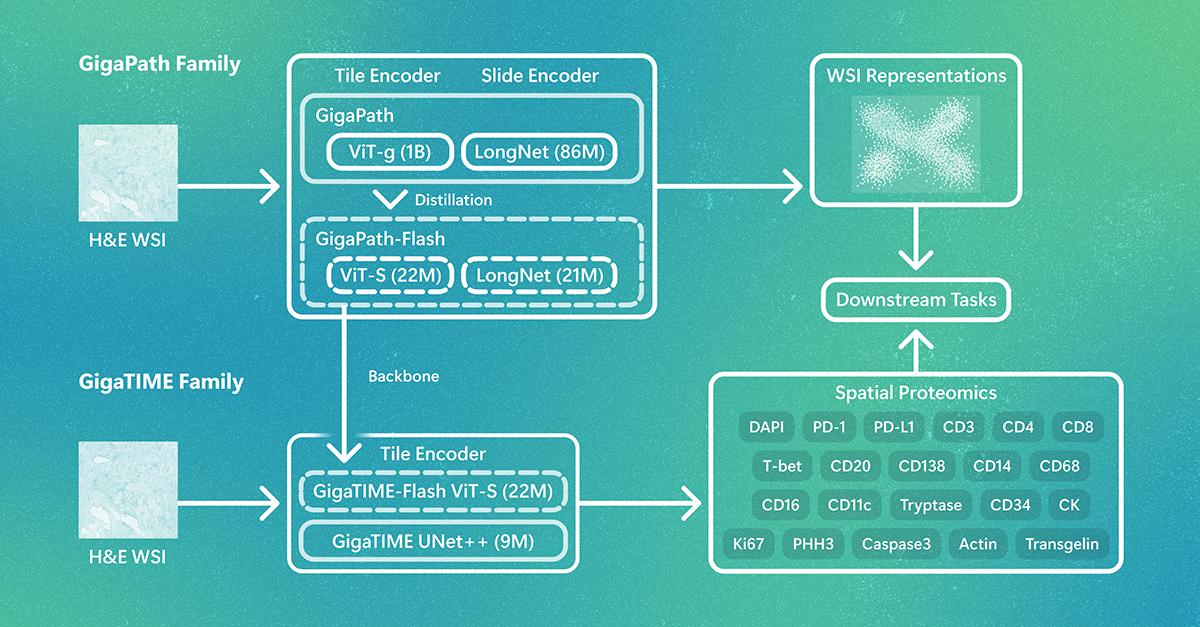
GigaPath-Flash and GigaTIME-Flash: Toward population-scale discovery with efficient pathology foundation models

What if pathology foundation models could do more with less? GigaPath-Flash and GigaTIME-Flash cut computational demands while maintaining strong performance, opening the door to larger studies and broader exploration. The post GigaPath-Flash and GigaTIME-Flash: Toward population-scale discovery with efficient pathology foundation models appeared first on Microsoft Research.

We use cookies to run the site and, with your consent, for analytics and to show ads. See our Cookie Policy.