Sep 2026· Zenodo (CERN European Organization for Nuclear Research)
Noncommutative and Quantum Gravity TheoriesAdvanced Operator Algebra Research
Abstract
Two structural results on the possibility of a genuinely noncommutative arithmetic thermodynamics. First, a universal no-go, the abelian scaling bottleneck: for a right LCM semigroup with scalar one-parameter dynamics driven by a multiplicative weight N, every KMS state is tracial on the gauge-fixed algebra, the classification splits into a scaling measure governed by the abelianization-graded weight and a beta-independent tracial datum on the isotropy, and no nonabelian residual symmetry group can arise on the scaling side - verified concretely on the braid monoids, right LCM and maximally noncommutative, whose entire transition is that of the length series. This retro-explains the abelian essential-value groups, the norm-one reduction, and the hyperfiniteness no-go found earlier in the series. Second, the constructive half: noncommutativity lives transverse to the scaling, as an ordered cocycle into a compact group, and the canonical arithmetic candidate is named - the angular Hurwitz system, whose radial part carries the known thermodynamics with critical exponent 2 and whose angular part a/Nrd(a)^{1/2} in SU(2) is an ordered cocycle whose matrix Kakutani series is exactly computable by the a -> -a symmetry, with abscissa exactly 2: the angle turns critical precisely where the radius does. The programme - transporting the matrix-martingale coboundary theorem to the Hurwitz tail relation, expected verdict KMS simplex Prob(SU(2)) in the entire Gibbs phase, with the Lubotzky-Phillips-Sarnak spectral gap closing the critical edge - is stated with its single hard step named.
This publication proposes a definition and a classification of agile software development approaches and analyses ten software development methods that can be characterized as being "agile" against the defined criterion.
P. Abrahamsson, O. Salo, Jussi Ronkainen et al.· arXiv.org· 727 citations· ⚡54
The study shows that agile practices improve both informal and formal communication, but indicates that, in larger development situations involving multiple external stakeholders, a mismatch of adequate communication mechanisms can sometimes even hinder the communication.
M. Pikkarainen, Jukka Haikara, O. Salo et al.· Empirical Software Engineeri...· 401 citations· ⚡48
The results indicate that software engineering work practices are chosen opportunistically, adapted and configured to provide value under the constrains imposed by the startup context.
Nicolò Paternoster, Carmine Giardino, M. Unterkalmsteiner et al.· Information and Software Tec...· 394 citations· ⚡54
The perception of the impact of agile methods is predominantly positive, and several challenge areas were discovered, but based on this study, agile methods are here to stay.
M. Laanti, O. Salo, P. Abrahamsson· Information and Software Tec...· 260 citations· ⚡20
AI is making software generation faster, but speed does not remove the need for expertise. As more work is delegated to AI, tacit knowledge may become one of the most important human advantages in software engineering. The post Beyond Prompt Engineering: The Role of Tacit Knowledge in Software Engineering appeared first on GPT-Lab.
MIT News · Artificial Intelligence· news.mit.eduSep 9, 2026
A weeklong summer workshop brought higher education faculty to campus to explore how AI and machine learning materials can be adapted for their classrooms.
MIT News · Artificial Intelligence· news.mit.eduSep 2, 2026
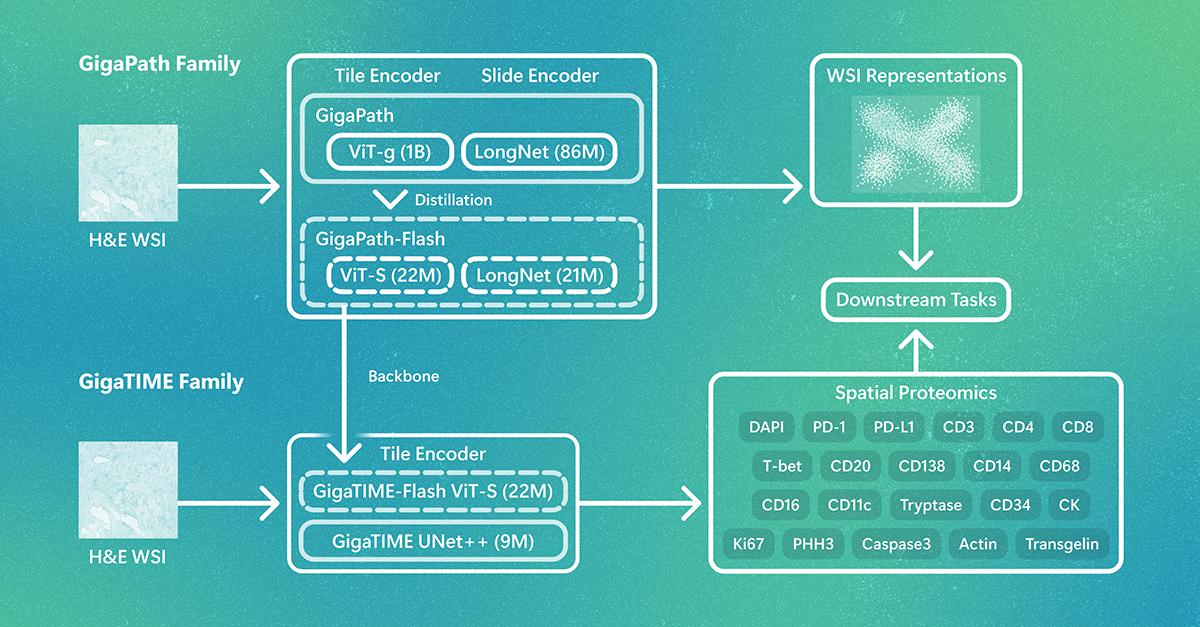
What if pathology foundation models could do more with less? GigaPath-Flash and GigaTIME-Flash cut computational demands while maintaining strong performance, opening the door to larger studies and broader exploration. The post GigaPath-Flash and GigaTIME-Flash: Toward population-scale discovery with efficient pathology foundation models appeared first on Microsoft Research.
We use cookies to run the site and, with your consent, for analytics and to show ads.
See our Cookie Policy.