Skip to content
#edge computing Open access

The Distributed Algorithmic Boundary: When the System No Longer Coincides with the Machine

Sep 2026 · Zenodo (CERN European Organization for Nuclear Research)

Abstract

For much of the history of computing, the material boundary of a computational system could be represented with relative simplicity: processors, memory, storage, and software execution were located within machines whose participation in the system was architecturally specified in advance. Distributed computing complicated this picture without necessarily dissolving it. Recent developments in distributed inference, edge computing, external memory, agentic tool use, and dynamically allocated computational resources introduce a stronger problem: the components causally participating in an algorithmic trajectory may change during execution itself. This paper proposes that, for a class of contemporary algorithmic systems, functional boundary and physical machine boundary should no longer be assumed to coincide. A computational resource initially belonging to the environment may temporarily become causally constitutive of an ongoing process; external memory may preserve state; tools may participate in operational trajectories; sensors and actuators may close loops between computation and environment; and execution may migrate across materially distinct substrates while preserving functional continuity. The argument does not claim that these mechanisms require a new technological ontology. The ontological question arises at another level: what should count as the system when its effective causal organization is not coextensive with any single machine or with its initial material configuration? A provisional answer is advanced: in dynamically distributed algorithmic systems, system boundaries may be better reconstructed from the components that become causally constitutive of an operational trajectory than from the physical enclosure of the substrate on which that trajectory began.

View source

Similar papers

#computer vision Review Sep 2017

Agile Software Development Methods: Review and Analysis

This publication proposes a definition and a classification of agile software development approaches and analyses ten software development methods that can be characterized as being "agile" against the defined criterion.

P. Abrahamsson, O. Salo, Jussi Ronkainen et al. · 727 citations · ⚡54
#computer vision Jun 2008

The impact of agile practices on communication in software development

The study shows that agile practices improve both informal and formal communication, but indicates that, in larger development situations involving multiple external stakeholders, a mismatch of adequate communication mechanisms can sometimes even hinder the communication.

M. Pikkarainen, Jukka Haikara, O. Salo et al. · 401 citations · ⚡48
#machine learning Review Open access Oct 2014

Software development in startup companies: A systematic mapping study

The results indicate that software engineering work practices are chosen opportunistically, adapted and configured to provide value under the constrains imposed by the startup context.

Nicolò Paternoster, Carmine Giardino, M. Unterkalmsteiner et al. · 394 citations · ⚡54

Related blog posts

GPT-Lab Sep 17, 2026

Beyond Prompt Engineering: The Role of Tacit Knowledge in Software Engineering

AI is making software generation faster, but speed does not remove the need for expertise. As more work is delegated to AI, tacit knowledge may become one of the most important human advantages in software engineering. The post Beyond Prompt Engineering: The Role of Tacit Knowledge in Software Engineering appeared first on GPT-Lab.

Microsoft Research Blog Aug 31, 2026

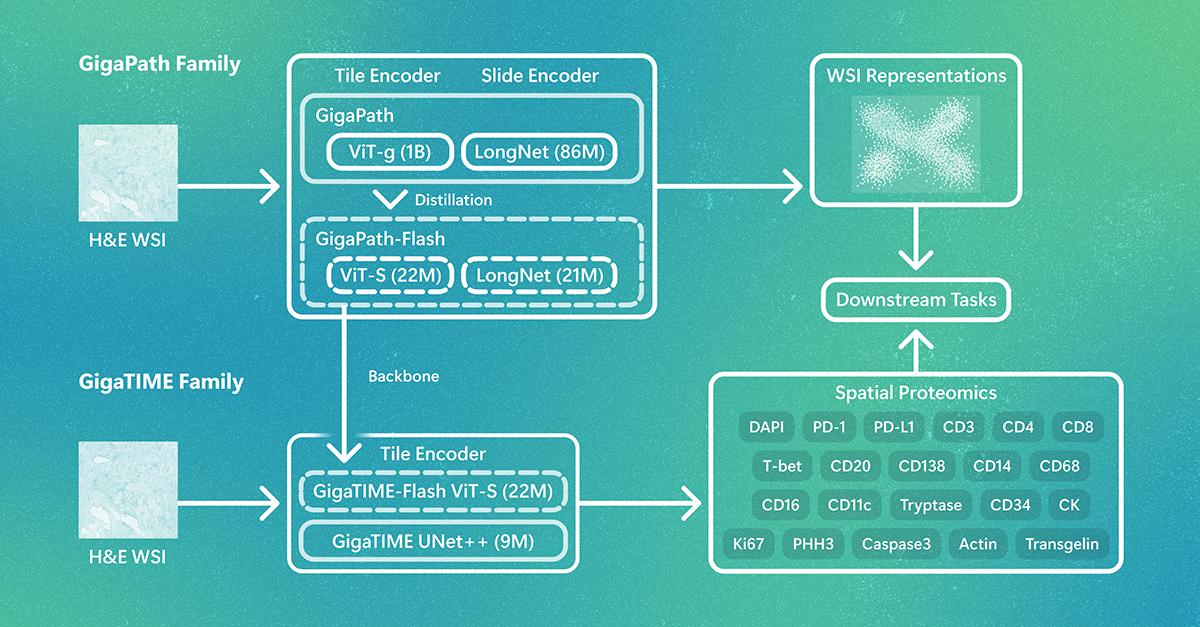
GigaPath-Flash and GigaTIME-Flash: Toward population-scale discovery with efficient pathology foundation models

What if pathology foundation models could do more with less? GigaPath-Flash and GigaTIME-Flash cut computational demands while maintaining strong performance, opening the door to larger studies and broader exploration. The post GigaPath-Flash and GigaTIME-Flash: Toward population-scale discovery with efficient pathology foundation models appeared first on Microsoft Research.

We use cookies to run the site and, with your consent, for analytics and to show ads. See our Cookie Policy.