Sep 2026· Zenodo (CERN European Organization for Nuclear Research)
Galaxies: Formation, Evolution, PhenomenaAstronomy and Astrophysical Research
Abstract
This tutorial presents a step-by-step calculation of the Curvature Polarization Transport Gravity (CPTG) galaxy-limit equation using three worked rotation-curve examples: DDO-154, NGC-3198, and NGC-7814. Starting from SPARC-style rotation-curve inputs, the calculation converts the observed radius and velocity columns into physical acceleration fields, builds the CPTG baryonic source field, infers the object-dependent structural acceleration scale a⋆, derives the structural transport scale, computes the transport remnant, solves the implicit nonlinear acceleration equation, and recovers the model rotation curve. The three galaxies are treated separately. DDO-154 is a gas-rich dwarf system and a classic low-acceleration test case for dark matter and modified-gravity theories. NGC-3198 is a large spiral galaxy with an extended, nearly flat H I rotation curve and has long served as a standard reference case for disk-galaxy mass discrepancies. NGC-7814 is an edge-on, bulge-dominated spiral whose rotation-curve decomposition includes a large stellar bulge contribution. Together, the three examples show how the same locked CPTG galaxy calculation is carried through a low-mass dwarf, an extended disk, and a centrally concentrated bulge system. A fixed-a0, unit-source MOND/RAR-form calculation is retained as a quantitative contrast so that the different source mapping, acceleration law, predicted curve, and residual diagnostics can be followed from the same SPARC component inputs. The purpose of the paper is instructional: to make the CPTG rotation-curve calculation reproducible step by step.
This publication proposes a definition and a classification of agile software development approaches and analyses ten software development methods that can be characterized as being "agile" against the defined criterion.
P. Abrahamsson, O. Salo, Jussi Ronkainen et al.· arXiv.org· 727 citations· ⚡54
The study shows that agile practices improve both informal and formal communication, but indicates that, in larger development situations involving multiple external stakeholders, a mismatch of adequate communication mechanisms can sometimes even hinder the communication.
M. Pikkarainen, Jukka Haikara, O. Salo et al.· Empirical Software Engineeri...· 401 citations· ⚡48
The results indicate that software engineering work practices are chosen opportunistically, adapted and configured to provide value under the constrains imposed by the startup context.
Nicolò Paternoster, Carmine Giardino, M. Unterkalmsteiner et al.· Information and Software Tec...· 394 citations· ⚡54
The perception of the impact of agile methods is predominantly positive, and several challenge areas were discovered, but based on this study, agile methods are here to stay.
M. Laanti, O. Salo, P. Abrahamsson· Information and Software Tec...· 260 citations· ⚡20
AI is making software generation faster, but speed does not remove the need for expertise. As more work is delegated to AI, tacit knowledge may become one of the most important human advantages in software engineering. The post Beyond Prompt Engineering: The Role of Tacit Knowledge in Software Engineering appeared first on GPT-Lab.
MIT News · Artificial Intelligence· news.mit.eduSep 9, 2026
A weeklong summer workshop brought higher education faculty to campus to explore how AI and machine learning materials can be adapted for their classrooms.
MIT News · Artificial Intelligence· news.mit.eduSep 2, 2026
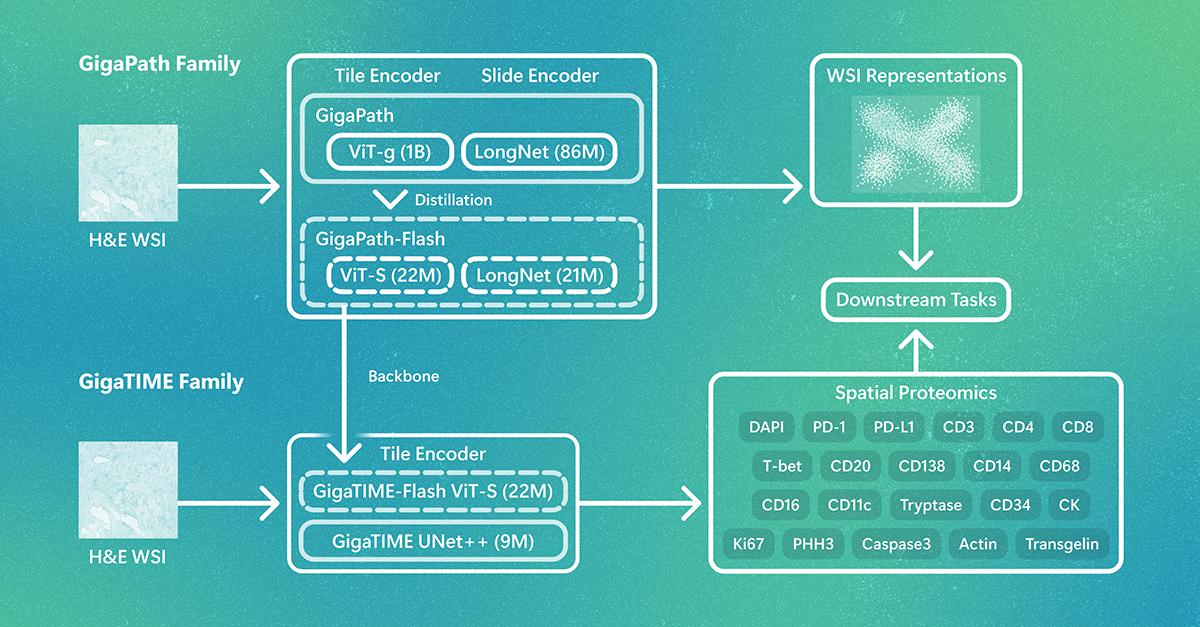
What if pathology foundation models could do more with less? GigaPath-Flash and GigaTIME-Flash cut computational demands while maintaining strong performance, opening the door to larger studies and broader exploration. The post GigaPath-Flash and GigaTIME-Flash: Toward population-scale discovery with efficient pathology foundation models appeared first on Microsoft Research.
We use cookies to run the site and, with your consent, for analytics and to show ads.
See our Cookie Policy.