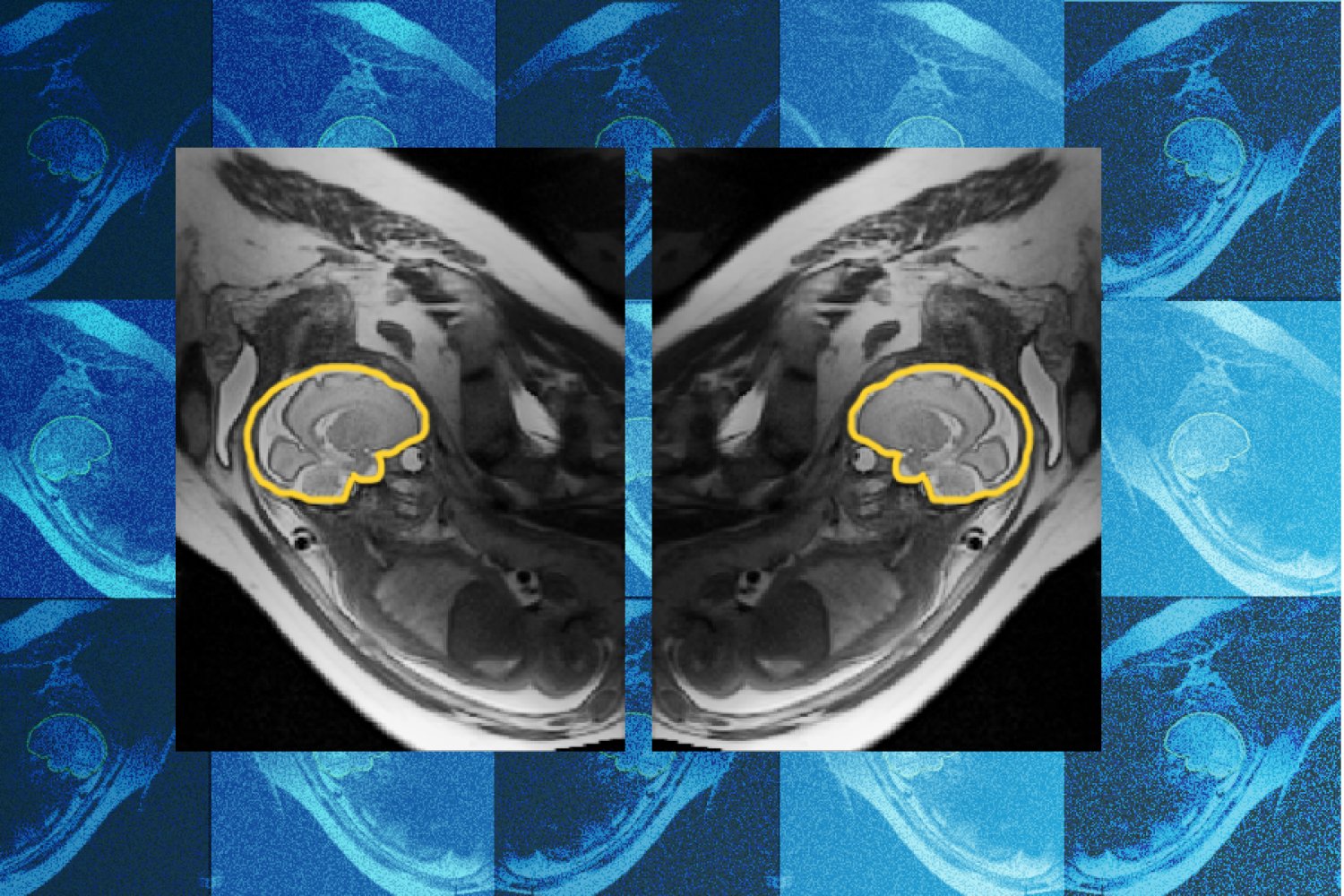
A von-Neumann inspired hypothesis of efficient computation as an alternative for neural decoding, a memory-augmented Transformer whose feed-forward block is a low-rank instruction bank: a shared base operator plus a small set of learned low-rank instructions, from which a per-token code synthesizes the weight matrix actually used at that token.
Abstract
Cortical computation is strikingly low-dimensional: a handful of latent variables, carried in a neural population's activity, steer the higher-dimensional responses of individual neurons. Our aim is sample efficiency-models that decode well from limited data and at small parameter budgets. In a standard Transformer layer, the feed-forward block applies the same operator to every token. We suggest a von-Neumann inspired hypothesis of efficient computation as an alternative for neural decoding: a controller decodes an instruction and then executes a token-specific operator; the usual realization-a soft mixture of experts-only blends their outputs, not operators. We introduce a von-Neumann State-Space Transformer (VN-SST), a memory-augmented Transformer whose feed-forward block is a low-rank instruction bank: a shared base operator plus a small set of learned low-rank instructions, from which a per-token code synthesizes the weight matrix actually used at that token. The code is read from a low- dimensional projection of a carried state-space memory, so a slow latent trajectory acts as an instruction pointer-mirroring how low-dimensional dynamics may route cortical computation. On three motor-cortex neural-decoding benchmarks, VN-SST is far more data-efficient than a modern Transformer, each jointly predicting spikes and decoding behavior. This model wins by a wide margin on the scarcest benchmark, leads on the other two, and turns longer context into rising rather than falling accuracy. We evaluated that the network compresses a large instruction bank to a few bits per token, so program capacity acts as a control channel, not an accuracy lever. The same model is also more parameter-efficient on two small text benchmarks used for language modeling (LLMs), suggesting a generic mechanism.
FLARE is proposed, a novel framework that endows VLAs with robust error recovery capabilities through a ``Retry" and ``Reset" Paradigm, and significantly improves task success and robustness.
Ganlong Zhao, Zijia Tang, Xingping Chen et al.· 3 citations
LifeSciBench is introduced, a benchmark of 750 expert-authored tasks designed to evaluate whether language models can handle realistic life science research work, with each constituent task paired with a human expert-written rubric.
Amelia Liu, Andrew Ho, Anne Marie Droste et al.· bioRxiv· 2 citations
Experimental results show that CritICL consistently outperforms standard in-context learning and achieves performance competitive with or superior to test-time scaling methods, while requiring significantly fewer generations and lower token cost.
Yu-Fan Wu, Yinghui He, Zhengyi Hu et al.· 1 citation
TestifAI, a deep learning testing framework for efficient and accurate estimation of robustness against combinations of perturbations, is proposed and partial model tomography is introduced, a novel approach to reconstructing model behaviour in a multi-perturbation space from tests that apply only a small number of perturbations.
Arooj Arif, T. Hartung, E. Botoeva et al.· 1 citation
The complex multi-energy coupling characteristics inherent to integrated energy system (IES) present unprecedented challenges for the implementation of low-carbon scheduling. Existing optimization methods often exhibit limitations in system scalability, algorithm adaptivity, and carbon reduction efficacy for complex IES. This paper proposes a Large Language Model (LLM)-Embedded Multi-Agent Reinforcement Learning (LEMARL) to address the aforementioned issues. The proposed method integrates the global perception capability of LLMs with the dynamic optimization capability of MARL. Specifically, the LLM-Embedded module generates high-quality reward functions and policy frameworks from a global perspective, while the MARL module leverages these LLM-generated strategies for distributed interactive iterations—greatly enhancing computation efficiency and scalability. Simulation results demonstrate that LEMARL reduces carbon emissions by 7.76% and simultaneously decreases operating costs by 4.49% in a small-scale IES. Furthermore, LEMARL also exhibits superior applicability and scalability in large-scale IES of the IEEE 141-bus power grid integrated with 51-node thermal system.
Chen Xia, Tong Gou, Yinliang Xu et al.· IEEE Transactions on Smart G...· 1 citation
General-purpose language models can reason and synthesize knowledge, but complex work also requires sustained interaction with files, information sources, and executable code, together with state maintenance, failure recovery, and verifiable delivery. We call this \emph{working capability}: sustained, verifiable progress toward a real-world objective. Apodex 1.1 develops this capability along two complementary dimensions. \emph{Environment Scaling} expands the diversity and verifiability of executable file, search, and code environments, while \emph{Agentic Coordination Scaling} trains agents to decompose long-horizon tasks, delegate parallel work, integrate asynchronous results, and replan. A shared execution harness and AgentOS maintain task state and provenance across tools and agents, and training turns environment trajectories and coordination traces into reliable behavior. Across complex professional work, finance, scientific research, mathematics, coding, and search, Apodex 1.1 reaches the leading performance band despite using a substantially smaller model than many frontier systems. The 35B-parameter Apodex 1.1 Mini further retains strong working capability in a locally deployable form. These results ground agentic intelligence in useful, verifiable work completed over time and advance our goal of building a \emph{Heavy-Duty Solver} for ambitious, long-running tasks.
Apodex Team B. An, B. Li, B. Wang et al.· 1 citation
A new method for surgically removing training examples from a model reveals that as datasets grow, the link between what a model learns and what it produces dissolves.