Skip to content
#software testing Open access

rolland: Time-domain simulation framework for coupled wave propagation and dynamics in railway tracks

Sep 2026 · Zenodo (CERN European Organization for Nuclear Research)

Abstract

Rolland v26.08 We are excited to announce the initial major release of Rolland, a highly optimized, Devito-based time- domain simulation framework designed for coupled wave propagation and dynamics in railway tracks. This release introduces the foundational numerical modeling mechanics validated in our publication: Mantel, M., & Sarradj, E. (2026). Time-domain modeling of coupled wave propagation in discretely supported railway tracks. Computers & Structures. doi:10.1016/j.compstruc.2026.108432 Highlights & Core Features Time-Domain Solver: Applying Explicit Finite Difference Method (FDM) to solve 13 differential equations of motion alongside 14 auxiliary differential equations. Full Track Dynamics: Comprehensive structural modeling capturing vertical and lateral bending waves, longitudinal waves, axial torsion, cross-sectional warping, and sleeper dynamics under eccentric excitation and support conditions. Flexible Track Configurations: Support for both ballasted and slab tracks with continuous or discrete supports, including spatial variations (periodic and stochastic) of track properties. Infinite Track Boundaries: Time-domain formulation of Complex Frequency-Shifted Perfectly Matched Layers (CFS-PML) to eliminate artificial boundary reflections. Dynamic Excitations: Seamless configuration for stationary excitations (e.g., Gaussian impulses) and moving sources along the track waveguide. Post-Processing & Validation: Clean, dataclass-based utilities (TrackResponse, TrackDecayRate, and VehicleResponse) to calculate point mobilities, transfer mobilities, and track decay rates (TDR). Five built-in analytical frequency-domain benchmark models for rapid verification (Euler-Bernoulli and Timoshenko beam models on continuous and discrete supports). What's Changed since v26.08a0 Post-Processing Modernization: Streamlined post-processing module with typing protocols and dataclasses (TrackResponse, TrackDecayRate). Replaced legacy PointResponse and removed deprecated PostProcessing classes. Added extensive unit tests and test suites for post-processing accuracy. Domain & Boundaries: Added Dirichlet boundary conditions for rigid boundaries in domain setup. Documentation & Visualization: Added animated visualizations and platform support notes to README and Sphinx documentation. Updated citation metadata (CITATION.cff, README, and documentation) with formal DOI references. Added example scripts for evaluating track response and decay rates. Installation pip install rolland Or install with optional extras: pip install rolland[dev,docs,io] ────── Citation If you use Rolland in your research, please cite: @article{mantel2026timedomain, title = {Time-domain modeling of coupled wave propagation in discretely supported railway tracks}, journal = {Computers \& Structures}, volume = {314}, pages = {108432}, year = {2026}, doi = {10.1016/j.compstruc.2026.108432} } @software{mantel2026rolland_api, author = {Mantel, Maximilian and Wagner, Benjamin and Sarradj, Ennes}, title = {Rolland: A Time-Domain Simulation Framework for Railway Track Dynamics and Rolling Noise}, year = {2026}, version = {v26.08}, doi = {10.5281/zenodo.21920225}, url = {https://github.com/mantelmax/rolland} }


View source

Similar papers

#computer vision Review Sep 2017

Agile Software Development Methods: Review and Analysis

This publication proposes a definition and a classification of agile software development approaches and analyses ten software development methods that can be characterized as being "agile" against the defined criterion.

P. Abrahamsson, O. Salo, Jussi Ronkainen et al. · 727 citations · ⚡54
#computer vision Jun 2008

The impact of agile practices on communication in software development

The study shows that agile practices improve both informal and formal communication, but indicates that, in larger development situations involving multiple external stakeholders, a mismatch of adequate communication mechanisms can sometimes even hinder the communication.

M. Pikkarainen, Jukka Haikara, O. Salo et al. · 401 citations · ⚡48
#machine learning Review Open access Oct 2014

Software development in startup companies: A systematic mapping study

The results indicate that software engineering work practices are chosen opportunistically, adapted and configured to provide value under the constrains imposed by the startup context.

Nicolò Paternoster, Carmine Giardino, M. Unterkalmsteiner et al. · 394 citations · ⚡54
#computer vision Review Mar 2008

Agile methods in European embedded software development organisations: a survey on the actual use and usefulness of Extreme Programming and Scrum

The results show that the embedded industry has been able to apply agile methods in its development processes and that the appreciation of the agile methods and their individual practices appears to increase once adopted and applied in practice.

O. Salo, P. Abrahamsson · 238 citations · ⚡9
#computer vision Open access Jul 2017

What happens when software developers are (un)happy

Consequences of happiness and unhappiness that are beneficial and detrimental for developers' mental well-being, the software development process, and the produced artifacts are found.

D. Graziotin, Fabian Fagerholm, Xiaofeng Wang et al. · 236 citations · ⚡13
#computer vision Open access Oct 2004

Mobile-D: an agile approach for mobile application development

The Mobile-D approach is briefly outlined here and the experiences gained from four case studies are discussed, which helped develop an agile development approach for mobile application development.

P. Abrahamsson, Antti Hanhineva, H. Hulkko et al. · 225 citations · ⚡18

Related blog posts

GPT-Lab Sep 17, 2026

Beyond Prompt Engineering: The Role of Tacit Knowledge in Software Engineering

AI is making software generation faster, but speed does not remove the need for expertise. As more work is delegated to AI, tacit knowledge may become one of the most important human advantages in software engineering. The post Beyond Prompt Engineering: The Role of Tacit Knowledge in Software Engineering appeared first on GPT-Lab.

MIT News · Artificial Intelligence Aug 17, 2026

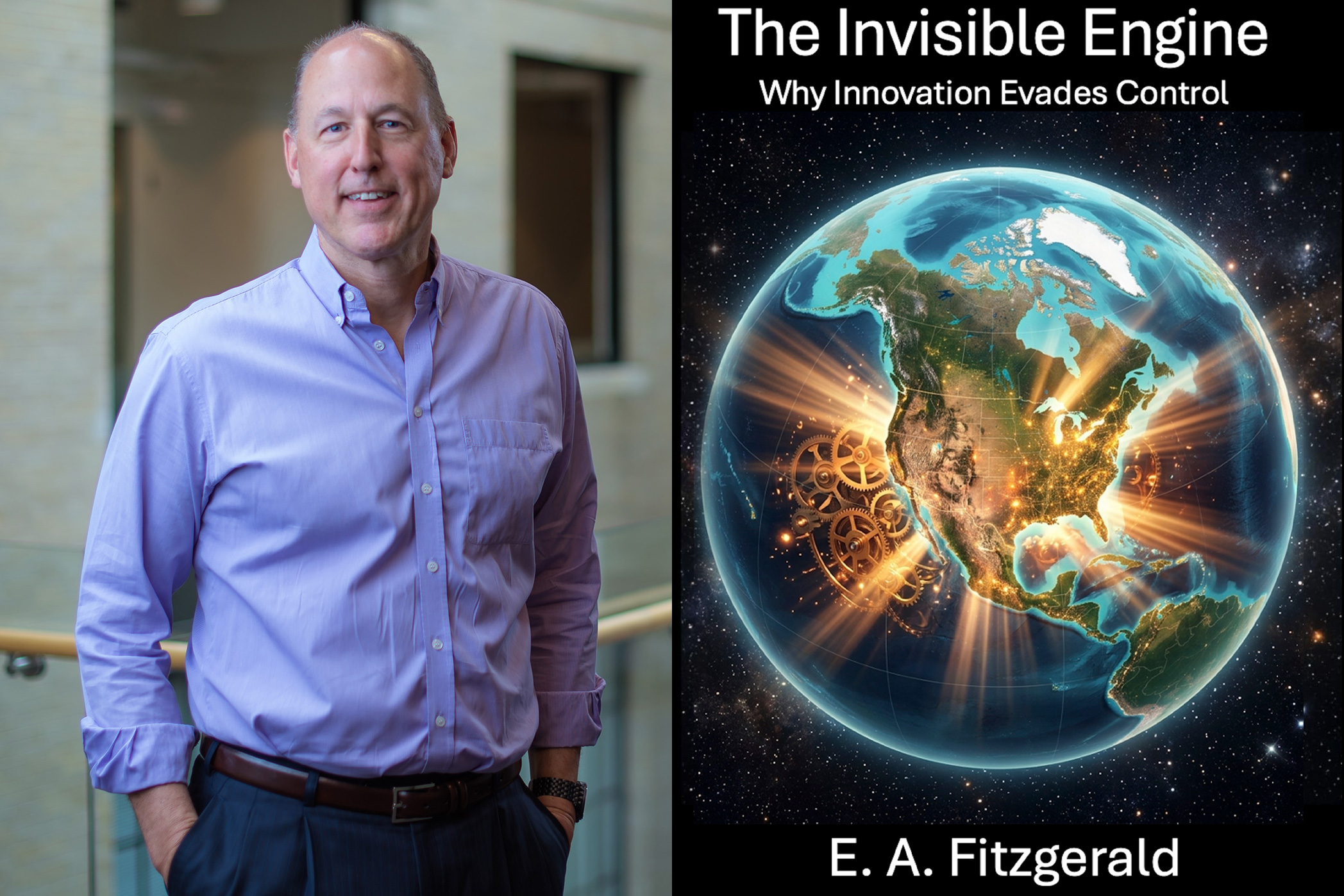
Q&A: Rethinking how innovation happens

In his latest book, Professor Eugene Fitzgerald examines the forces that turn breakthroughs into value — and why innovation resists simple formulas.

Microsoft Research Blog Aug 12, 2026

MindTopo reveals VLMs’ spatial reasoning abilities

A path, a fence, a knot. MindTopo sets a new benchmark for testing how AI understands topological relationships and highlights new opportunities to strengthen spatial reasoning and planning. The post MindTopo reveals VLMs’ spatial reasoning abilities appeared first on Microsoft Research.

We use cookies to run the site and, with your consent, for analytics and to show ads. See our Cookie Policy.