Accountable translation is developed as an analytic framework for making consequential changes attributable, inspectable, scoped in validation, and contestable, and extends HCI accounts of traceability and end-user debugging by locating professional authority and repair rights across heterogeneous technical and organizational handoffs.

Abstract
Natural-language app builders let domain experts create software, but their pipelines transform professional intent across compilation, generation, checking, and approval. We report a bounded trace study of a teacher-facing agentic authoring system. Evidence comprises six eligible build attempts across three accounts; a separate corpus of 37 workshop units from 23 display names contextualizes commitments without person-level linkage. Compiled specifications added governance requirements, while downstream representations sometimes normalized case-specific learning relations. Two drafts met a stored package/security threshold despite analyzer reservations and unresolved correspondence to their briefs; four attempts in one account produced no usable payload, and repair messages did not translate internal terms into domain-legible revisions. We develop accountable translation as an analytic framework for making consequential changes attributable, inspectable, scoped in validation, and contestable. It extends HCI accounts of traceability and end-user debugging by locating professional authority and repair rights across heterogeneous technical and organizational handoffs.
This survey examines agentic artifact creation, which is defined as stateful construction in which an AI system materially constructs or revises a deliverable and intermediate observations redirect later work, and formulate principles for keeping commitments and responsibility explicit, turning feedback into targeted r...
Tianfu Wang, Zhe-Zheng Hao, Xinchi Xia et al.· 1 citation
LoopCAT is presented, an Apache-2.0-licensed, local-first computer-assisted translation environment co-created with OpenAI Codex using GPT-5.5 and GPT-5.6, and a framework connecting workflow competence, evaluative judgement, and technological agency is proposed.
Analysis of leaked system prompts from 62 vendors across four community collections supports treating leaked prompts as operational specifications, closer to configuration files than value statements, and treats reuse and prompt rot as engineering and supply-chain concerns.
C. Patsakis, Vasilios Argyropoulos, Efthymios Alepis· 0 citations
Scientific method diagrams express computations through entities, dependencies, and conditional routes. Although generated figures can be improved through repeated editing, it is less clear whether experience from one paper improves the first figure of another. We present \sys, a framework for source-grounded adaptatio...
Feng Yuan, Yi-Fan Gao, Hao-Yue Li et al.· 0 citations
SAGE (State-Grounded Abstention-Aware Evaluation), which compiles a workflow specification and per-turn state diff into atomic, schema-grounded criteria and routes each through a cascade of symbolic and encoder/NLI verifiers that abstain rather than guess, aggregating criterion verdicts into a turn-level decision with...
Rayan Khoury, Shih-Yao Lin, P. Mishra· 0 citations
Enterprise communication platforms carry text, image, and audio content across organizational contexts that public-facing moderation systems were never designed to serve. Existing moderation acts after content reaches recipients, depends on fixed harm taxonomies that cannot be updated without retraining, and rarely cov...
Soham S. Jadhav, Omkar N. Gadakh, Atharv Gaikwad et al.· Cureus Journal of Computer S...· 0 citations
Related blog posts
MIT News · Artificial Intelligence· news.mit.eduOct 28, 2026
Professor Paris Smaragdis develops computers with superhuman hearing for applications like speech recognition, music understanding, and environmental monitoring.
MIT News · Artificial Intelligence· news.mit.eduOct 23, 2026
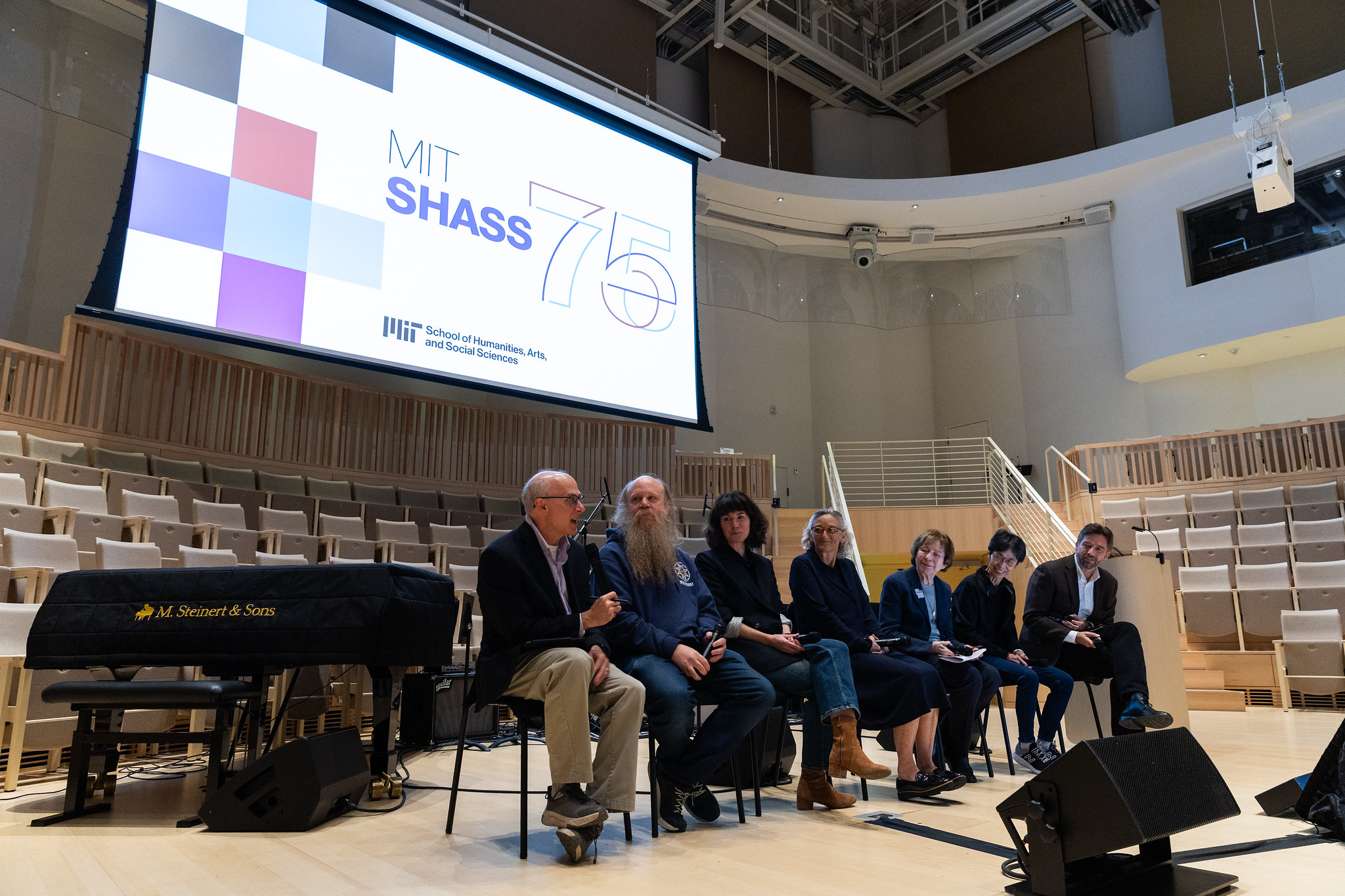
During the School of Humanities, Arts, and Social Sciences’ 75th Anniversary Symposium, President Sally Kornbluth said “MIT has never needed your particular insight and guidance more than we do now.”
MIT News · Artificial Intelligence· news.mit.eduOct 23, 2026
Assistant Professor Benjamin Lindquist studies how engineers deliberately injected randomness into early AI, giving rise to deep-learning models that sometimes hallucinate.
MIT News · Artificial Intelligence· news.mit.eduOct 22, 2026
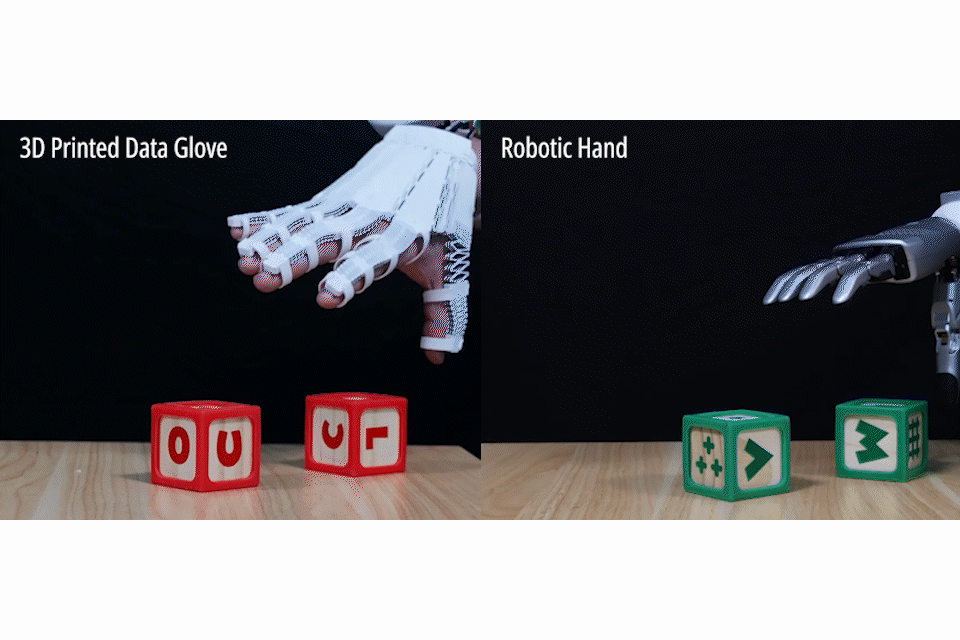
“X-Hinges” helps design and 3D print items like lamps and gloves with an interactive twist: automatically embedded sensors that perceive and adaptively respond to human contact.
We use cookies to run the site and, with your consent, for analytics and to show ads.
See our Cookie Policy.