Skip to content
#edge computing Open access

CAFDIM: a group convolution and self-attention fusion-based dual-domain iterative method for sparse-view CT reconstruction

Sep 2026 · Physics in Medicine and Biology · Vol 71 · 0 citations · 65 references
Physics Medicine

Abstract

Objective. Sparse-view computed tomography (CT) reduces radiation dose and acquisition time by decreasing the number of projection views, but it also makes image reconstruction severely ill-posed, leading to structural distortion and severe artifacts. This study aims to develop an effective reconstruction framework for improving both projection-data fidelity and reconstructed image quality in sparse-view CT. Approach. We propose a group convolution- and self-attention fusion-based dual-domain iterative method (CAFDIM) for sparse-view CT reconstruction. CAFDIM follows a model-informed dual-domain iterative design. The framework consists of the initialization enhancement network, gradient update block, projection-domain repair network, image-domain repair network, and momentum update block. The projection-domain branch employs a deep sparse block to enhance sparse projection features before full-view projection restoration, while the image-domain branch uses edge-guided residual refinement to improve anatomical structure preservation. To enhance local-global feature representation, a Convolution-Attention Fusion Block is embedded into both repair branches by combining group convolution with Pixel Shift Self-Attention. Results. Experiments on simulated and real clinical projection datasets demonstrate that CAFDIM effectively suppresses sparse-view artifacts, preserves anatomical structures, and achieves superior reconstruction accuracy, visual quality, and generalization ability compared with state-of-the-art methods. Significance. CAFDIM provides an effective and efficient dual-domain reconstruction framework for sparse-view CT, showing strong potential for clinical applications in sparse-view and low-dose CT imaging.

Read PDF

Similar papers

#computer vision Review Sep 2017

Agile Software Development Methods: Review and Analysis

This publication proposes a definition and a classification of agile software development approaches and analyses ten software development methods that can be characterized as being "agile" against the defined criterion.

P. Abrahamsson, O. Salo, Jussi Ronkainen et al. · 727 citations · ⚡54
#computer vision Jun 2008

The impact of agile practices on communication in software development

The study shows that agile practices improve both informal and formal communication, but indicates that, in larger development situations involving multiple external stakeholders, a mismatch of adequate communication mechanisms can sometimes even hinder the communication.

M. Pikkarainen, Jukka Haikara, O. Salo et al. · 401 citations · ⚡48
#machine learning Review Open access Oct 2014

Software development in startup companies: A systematic mapping study

The results indicate that software engineering work practices are chosen opportunistically, adapted and configured to provide value under the constrains imposed by the startup context.

Nicolò Paternoster, Carmine Giardino, M. Unterkalmsteiner et al. · 394 citations · ⚡54

Related blog posts

GPT-Lab Sep 17, 2026

Beyond Prompt Engineering: The Role of Tacit Knowledge in Software Engineering

AI is making software generation faster, but speed does not remove the need for expertise. As more work is delegated to AI, tacit knowledge may become one of the most important human advantages in software engineering. The post Beyond Prompt Engineering: The Role of Tacit Knowledge in Software Engineering appeared first on GPT-Lab.

Microsoft Research Blog Aug 31, 2026

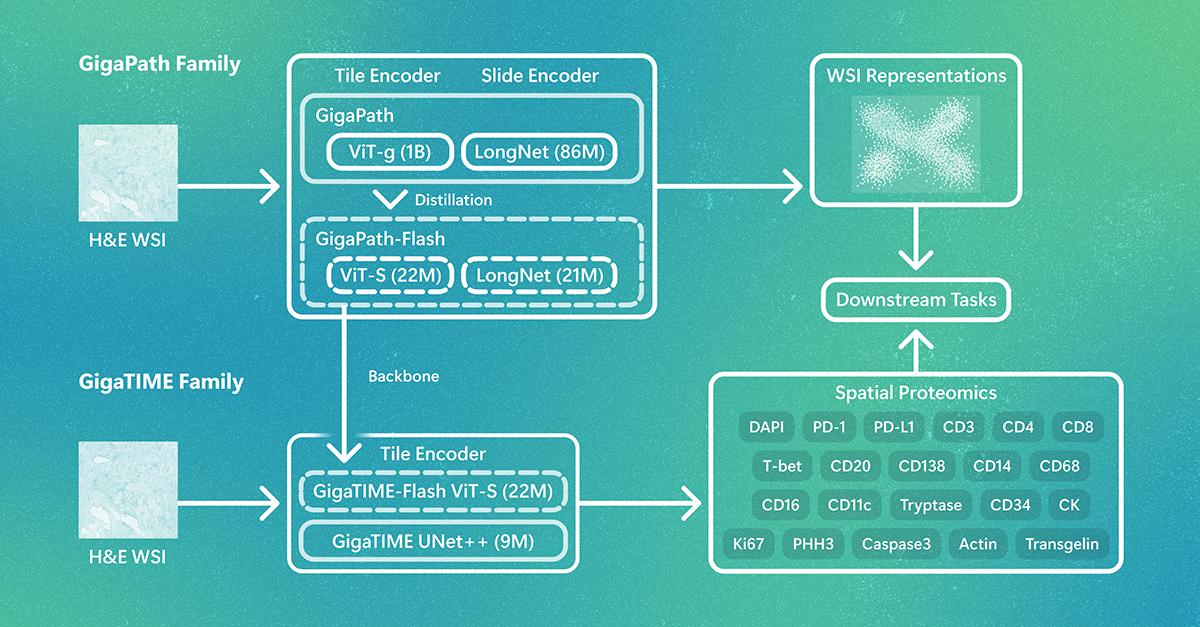
GigaPath-Flash and GigaTIME-Flash: Toward population-scale discovery with efficient pathology foundation models

What if pathology foundation models could do more with less? GigaPath-Flash and GigaTIME-Flash cut computational demands while maintaining strong performance, opening the door to larger studies and broader exploration. The post GigaPath-Flash and GigaTIME-Flash: Toward population-scale discovery with efficient pathology foundation models appeared first on Microsoft Research.

We use cookies to run the site and, with your consent, for analytics and to show ads. See our Cookie Policy.