Skip to content
#edge computing Open access

AI driven workflow scheduling in dynamic edge environments using Jacobi identity based deep neural network and multi criteria optimization

Sep 2026 · Discover Computing · Vol 29 · 0 citations · 30 references
IoT and Edge/Fog Computing

Abstract

Edge-cloud computing infrastructures are becoming a mandate in almost all the possible application areas due to exponential rise in the computational demands over the network. Therefore, adaptive load balancing and workload scheduling is critical in edge-cloud computing for maintaining Quality of Service (QoS) and system agility. To acquire an intelligent task scheduling and load distribution across heterogeneous computing environments, a novel AI-enabled predictive approach is presented in the proposed study for dynamic scheduling framework that integrates a Jacobi Identity-Based Deep Neural Network (JI-DNN) with a Multi-Criteria Grey Wolf Optimizer (MC-GWO). The proposed framework utilizes Jacobi identity properties for enhancing the network’s learning efficiency, stability, and convergence. The JI-DNN is employed for predicting task-specific execution times and heterogeneous resource requirements during run time task allocation in the system and the MC-GWO algorithm adapts the hunting behaviour of grey wolves for optimizing the scheduling decisions based on variant metrics like latency, energy usage, load balance, and overall outcome. The integration of predictive intelligence and multi-objective optimization helps the framework to adapt dynamically to real-time workload variations. Simulation result findings proves the proposed system’s effectiveness, highlighting the crucial improvements in reducing makespan, enhancing energy efficiency, and optimizing resource utilization as compared to the traditional static and single-criteria scheduling strategies. Clinical trial The study is not a clinical trial thus any registration details were not applicable.

Read PDF

Similar papers

#computer vision Review Sep 2017

Agile Software Development Methods: Review and Analysis

This publication proposes a definition and a classification of agile software development approaches and analyses ten software development methods that can be characterized as being "agile" against the defined criterion.

P. Abrahamsson, O. Salo, Jussi Ronkainen et al. · 727 citations · ⚡54
#computer vision Jun 2008

The impact of agile practices on communication in software development

The study shows that agile practices improve both informal and formal communication, but indicates that, in larger development situations involving multiple external stakeholders, a mismatch of adequate communication mechanisms can sometimes even hinder the communication.

M. Pikkarainen, Jukka Haikara, O. Salo et al. · 401 citations · ⚡48
#machine learning Review Open access Oct 2014

Software development in startup companies: A systematic mapping study

The results indicate that software engineering work practices are chosen opportunistically, adapted and configured to provide value under the constrains imposed by the startup context.

Nicolò Paternoster, Carmine Giardino, M. Unterkalmsteiner et al. · 394 citations · ⚡54

Related blog posts

GPT-Lab Sep 17, 2026

Beyond Prompt Engineering: The Role of Tacit Knowledge in Software Engineering

AI is making software generation faster, but speed does not remove the need for expertise. As more work is delegated to AI, tacit knowledge may become one of the most important human advantages in software engineering. The post Beyond Prompt Engineering: The Role of Tacit Knowledge in Software Engineering appeared first on GPT-Lab.

Microsoft Research Blog Aug 31, 2026

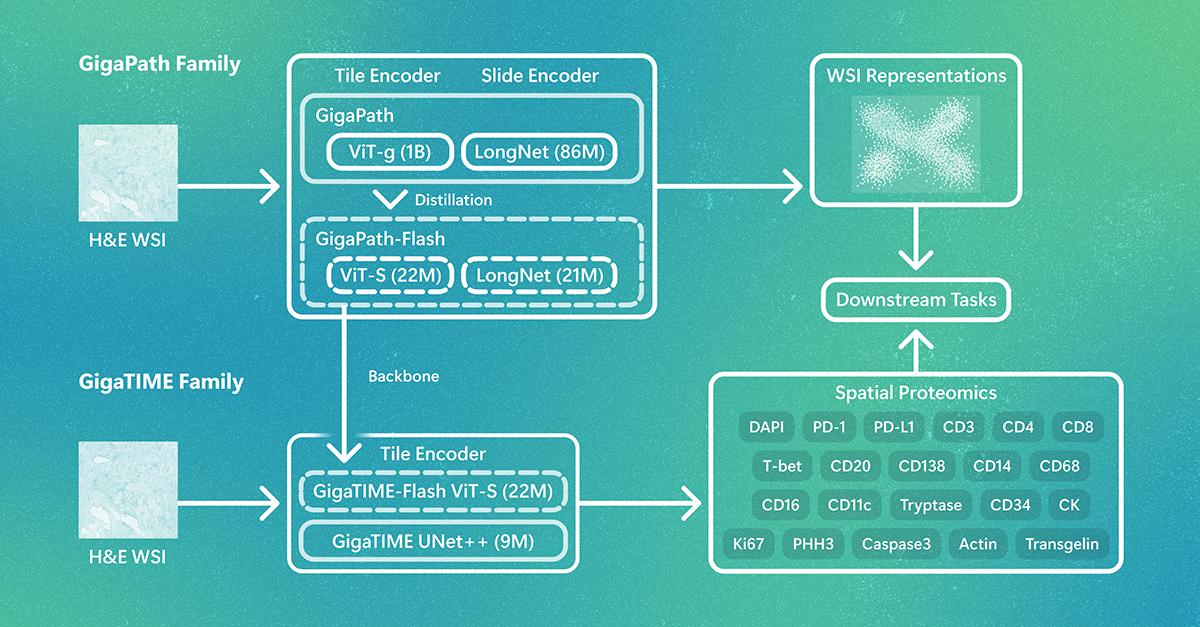
GigaPath-Flash and GigaTIME-Flash: Toward population-scale discovery with efficient pathology foundation models

What if pathology foundation models could do more with less? GigaPath-Flash and GigaTIME-Flash cut computational demands while maintaining strong performance, opening the door to larger studies and broader exploration. The post GigaPath-Flash and GigaTIME-Flash: Toward population-scale discovery with efficient pathology foundation models appeared first on Microsoft Research.

We use cookies to run the site and, with your consent, for analytics and to show ads. See our Cookie Policy.