Sep 2026· Journal of social research· 0 citations· 19 references
Water Quality Monitoring TechnologiesWater Systems and Optimization
Abstract
The water loss rate in Indonesia remains at a critical range of 20–45%. The fundamental challenge in addressing this issue at the household scale is the computational difficulty of distinguishing between pressure fluctuations caused by normal water consumption patterns and pressure drops caused by physical pipe damage. Therefore, this study designed a smart pipe leak detection system prototype based on the Internet of Things (IoT) using the Zero-Order Sugeno Fuzzy Logic method. The system utilized an ESP32 microcontroller as a local processing unit based on edge computing, integrated with a water flow sensor (YF-S201) and a pressure sensor to monitor fluid dynamics in real time. The acquired data were classified into three linguistic sets—Normal, Small Leak, and Large Leak—to control a relay actuator as an automatic mitigation mechanism. Based on the system testing results, the instrument measurement error rates were 2.12% for the flow sensor and 2.19% for the pressure sensor. The Sugeno Fuzzy Logic algorithm achieved an inference accuracy rate of 100% in classifying pipe condition status compared with theoretical mathematical calculations. Furthermore, the IoT architecture recorded an emergency notification transmission latency of 1.20 seconds to the Blynk dashboard. The implementation of decentralized control through the microcontroller demonstrated the capability to reduce false alarm risks and provide reliable automatic water supply shutoff mitigation without depending on the stability of cloud server connectivity.
This publication proposes a definition and a classification of agile software development approaches and analyses ten software development methods that can be characterized as being "agile" against the defined criterion.
P. Abrahamsson, O. Salo, Jussi Ronkainen et al.· arXiv.org· 727 citations· ⚡54
The study shows that agile practices improve both informal and formal communication, but indicates that, in larger development situations involving multiple external stakeholders, a mismatch of adequate communication mechanisms can sometimes even hinder the communication.
M. Pikkarainen, Jukka Haikara, O. Salo et al.· Empirical Software Engineeri...· 401 citations· ⚡48
The results indicate that software engineering work practices are chosen opportunistically, adapted and configured to provide value under the constrains imposed by the startup context.
Nicolò Paternoster, Carmine Giardino, M. Unterkalmsteiner et al.· Information and Software Tec...· 394 citations· ⚡54
The perception of the impact of agile methods is predominantly positive, and several challenge areas were discovered, but based on this study, agile methods are here to stay.
M. Laanti, O. Salo, P. Abrahamsson· Information and Software Tec...· 260 citations· ⚡20
AI is making software generation faster, but speed does not remove the need for expertise. As more work is delegated to AI, tacit knowledge may become one of the most important human advantages in software engineering. The post Beyond Prompt Engineering: The Role of Tacit Knowledge in Software Engineering appeared first on GPT-Lab.
MIT News · Artificial Intelligence· news.mit.eduSep 9, 2026
A weeklong summer workshop brought higher education faculty to campus to explore how AI and machine learning materials can be adapted for their classrooms.
MIT News · Artificial Intelligence· news.mit.eduSep 2, 2026
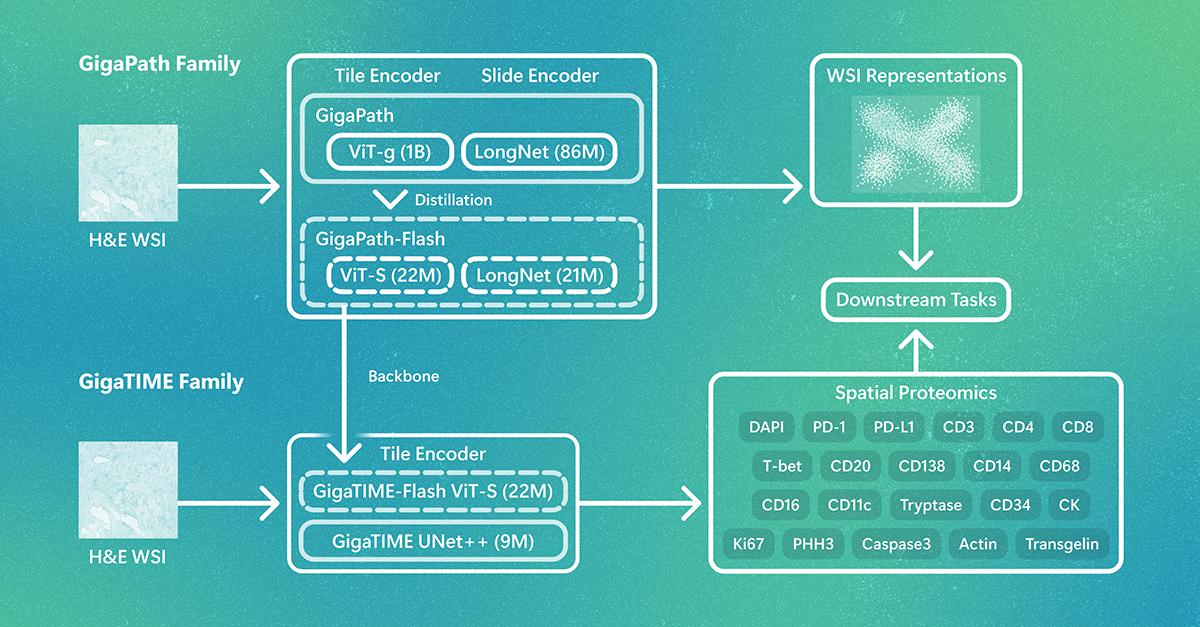
What if pathology foundation models could do more with less? GigaPath-Flash and GigaTIME-Flash cut computational demands while maintaining strong performance, opening the door to larger studies and broader exploration. The post GigaPath-Flash and GigaTIME-Flash: Toward population-scale discovery with efficient pathology foundation models appeared first on Microsoft Research.
We use cookies to run the site and, with your consent, for analytics and to show ads.
See our Cookie Policy.