Skip to content

AI for Climate Modeling and Environmental Prediction Enhancement

Sep 2026 · Zenodo (CERN European Organization for Nuclear Research)

Abstract

Artificial intelligence is dismantling the long‑standing computational bottlenecks of Earth system modeling. Traditional numerical weather prediction (NWP)—rooted in Navier‑Stokes discretization and dependent on exascale supercomputers—faces scaling limits that make sub‑kilometer global resolution prohibitively expensive. Deep neural surrogates overturn this paradigm. Models such as GraphCast, Pangu‑Weather, and FourCastNet learn the non‑linear atmospheric transition operators directly from decades of reanalysis data, delivering 1,000×–10,000× reductions in compute and energy cost while matching or surpassing ECMWF’s gold‑standard physics models on over 90% of verified atmospheric variables. “Machine learning is fundamentally dismantling the computational bottlenecks of Earth system science… achieving parity or superiority over traditional numerical weather prediction across more than 90% of atmospheric state variables at 1,000x to 10,000x lower energy and compute cost.” The monograph establishes a unified technical architecture for next‑generation climate intelligence: multi‑mesh graph neural networks for spherical atmospheric dynamics, generative diffusion models for convective super‑resolution, physics‑informed neural operators for mass‑energy conservation, and spatiotemporal foundation models for seasonal‑to‑decadal prediction. These systems revolutionize extreme weather forecasting—extending tropical cyclone track accuracy by 24–36 hours, improving atmospheric river landfall localization, enhancing flash‑flood early warning in ungauged basins by 3–7 days, and reducing agricultural yield prediction error by 40–65% across global breadbaskets. “Flood warning lead times expanded from ~24 hours to 5–7 days in critical African basins… protecting an estimated 460 million vulnerable riverine inhabitants.” A central contribution is the technoeconomic inversion: sovereign national forecasts can now run on $8k–$30k GPU edge nodes, replacing $25M regional supercomputers and enabling universal access to high‑resolution climate intelligence. The monograph concludes with a 2025–2035 global roadmap for operational AI deployment—hybrid NWP integration, Global South edge forecasting nodes, coupled Earth system foundation models, and kilometer‑scale planetary digital twins—anchored in open‑access data governance and physics‑constrained architectures.
View source

Similar papers

#computer vision Review Sep 2017

Agile Software Development Methods: Review and Analysis

This publication proposes a definition and a classification of agile software development approaches and analyses ten software development methods that can be characterized as being "agile" against the defined criterion.

P. Abrahamsson, O. Salo, Jussi Ronkainen et al. · 727 citations · ⚡54
#computer vision Jun 2008

The impact of agile practices on communication in software development

The study shows that agile practices improve both informal and formal communication, but indicates that, in larger development situations involving multiple external stakeholders, a mismatch of adequate communication mechanisms can sometimes even hinder the communication.

M. Pikkarainen, Jukka Haikara, O. Salo et al. · 401 citations · ⚡48
#machine learning Review Open access Oct 2014

Software development in startup companies: A systematic mapping study

The results indicate that software engineering work practices are chosen opportunistically, adapted and configured to provide value under the constrains imposed by the startup context.

Nicolò Paternoster, Carmine Giardino, M. Unterkalmsteiner et al. · 394 citations · ⚡54

Related blog posts

Microsoft Research Blog Aug 31, 2026

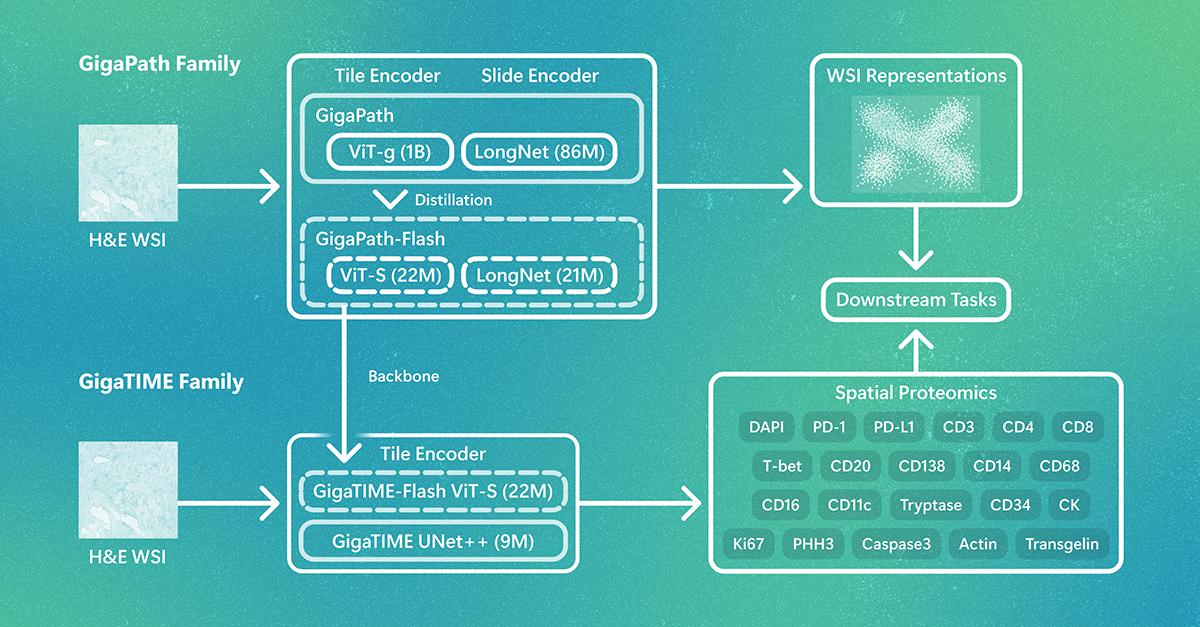
GigaPath-Flash and GigaTIME-Flash: Toward population-scale discovery with efficient pathology foundation models

What if pathology foundation models could do more with less? GigaPath-Flash and GigaTIME-Flash cut computational demands while maintaining strong performance, opening the door to larger studies and broader exploration. The post GigaPath-Flash and GigaTIME-Flash: Toward population-scale discovery with efficient pathology foundation models appeared first on Microsoft Research.

Microsoft Research Blog Jul 30, 2026

EvoLib: Turning experience into evolving knowledge

LLMs do not get smarter just by remembering more. EvoLib turns experience into evolving knowledge, taking reusable skills and insights that help models learn and adapt across tasks long after deployment. The post EvoLib: Turning experience into evolving knowledge appeared first on Microsoft Research.

MIT News · Artificial Intelligence Jul 14, 2026

Helping AI models to meet the real world

Through research and entrepreneurship, Professor Devavrat Shah is helping to design methods that can handle constant decision-making using limited computational resources.

We use cookies to run the site and, with your consent, for analytics and to show ads. See our Cookie Policy.