Skip to content

AceSpec: An Asymmetric Edge-Cloud Collaborative Framework for Communication-Efficient LLM Inference

Sep 2026 · 0 citations · 25 references
Computer Science

TL;DR

AceSpec, an asymmetric edge-cloud collaborative framework that employs an asymmetric communication protocol that transmits minimal main-chain indices uplink and compact sparse distributions downlink and introduces a network-aware, Lagrangian-optimized resource allocation strategy that dynamically maximizes the local cache hit rate.

Abstract

Deploying Large Language Models (LLMs) on edge devices typically relies on model compression or split inference. However, compression degrades reasoning capabilities, while split inference suffers from severe Wide Area Network (WAN) communication bottlenecks. Edge-cloud speculative decoding emerges as a promising alternative, leveraging an edge small model to draft tokens for cloud verification. Yet, over volatile WANs, inevitable prediction rejections trigger catastrophic pipeline stalls and network-wide rollbacks, neutralizing collaborative gains. To overcome this, we propose AceSpec, an asymmetric edge-cloud collaborative framework. AceSpec utilizes un-saturated edge compute to proactively construct a probabilistic state cache, effectively transforming network-wide pipeline flushes into $\mathcal{O}(1)$ local memory lookups. To preserve bandwidth, it employs an asymmetric communication protocol that transmits minimal main-chain indices uplink and compact sparse distributions downlink. Furthermore, we introduce a network-aware, Lagrangian-optimized resource allocation strategy that dynamically maximizes the local cache hit rate. Evaluations demonstrate that AceSpec achieves up to a 3.52$\times$ throughput speedup and exhibits exceptional bandwidth immunity, sustaining near-peak inference performance even under severely constrained 50 Kbps WAN conditions.

View source

Similar papers

#computer vision Review Sep 2017

Agile Software Development Methods: Review and Analysis

This publication proposes a definition and a classification of agile software development approaches and analyses ten software development methods that can be characterized as being "agile" against the defined criterion.

P. Abrahamsson, O. Salo, Jussi Ronkainen et al. · 727 citations · ⚡54
#computer vision Jun 2008

The impact of agile practices on communication in software development

The study shows that agile practices improve both informal and formal communication, but indicates that, in larger development situations involving multiple external stakeholders, a mismatch of adequate communication mechanisms can sometimes even hinder the communication.

M. Pikkarainen, Jukka Haikara, O. Salo et al. · 401 citations · ⚡48
#machine learning Review Open access Oct 2014

Software development in startup companies: A systematic mapping study

The results indicate that software engineering work practices are chosen opportunistically, adapted and configured to provide value under the constrains imposed by the startup context.

Nicolò Paternoster, Carmine Giardino, M. Unterkalmsteiner et al. · 394 citations · ⚡54

Related blog posts

Microsoft Research Blog Aug 31, 2026

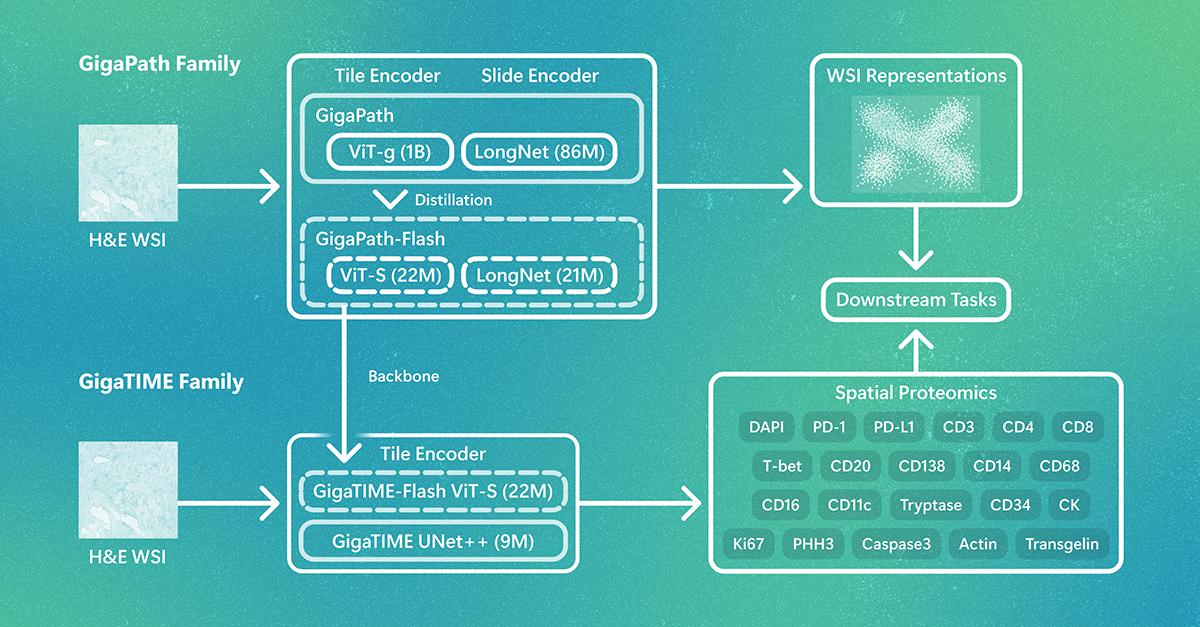
GigaPath-Flash and GigaTIME-Flash: Toward population-scale discovery with efficient pathology foundation models

What if pathology foundation models could do more with less? GigaPath-Flash and GigaTIME-Flash cut computational demands while maintaining strong performance, opening the door to larger studies and broader exploration. The post GigaPath-Flash and GigaTIME-Flash: Toward population-scale discovery with efficient pathology foundation models appeared first on Microsoft Research.

Microsoft Research Blog Jul 30, 2026

EvoLib: Turning experience into evolving knowledge

LLMs do not get smarter just by remembering more. EvoLib turns experience into evolving knowledge, taking reusable skills and insights that help models learn and adapt across tasks long after deployment. The post EvoLib: Turning experience into evolving knowledge appeared first on Microsoft Research.

We use cookies to run the site and, with your consent, for analytics and to show ads. See our Cookie Policy.