Photon-number-resolving (PNR) detectors are essential for photonic quantum computing, where a single measurement outcome must reliably herald a specific quantum state. However, detector fidelity is conventionally evaluated using ensemble-averaged statistics obtained from many measurements, which can remain high even when individual photon-number assignments are frequently misidentified. Here we introduce a universal single-shot fidelity that directly quantifies the probability of correctly identifying a photon number in a single measurement. The framework combines an efficiency-based POVM with a resolution-driven confusion matrix derived from the detector response, allowing photon loss and photon-number misidentification to be treated separately and then recombined into a single operational metric. This distinction reveals two fundamentally different limitations. Detection-efficiency loss represents an unrecoverable hardware constraint, whereas resolution-driven misidentification can be reduced by introducing a rejection region, trading generation rate for confidence. Because the metric is defined independently of detector architecture, it enables direct comparison between energy-resolving detectors such as transition-edge sensors and multiplexed click-based detectors on the same footing. Applying the framework to calibration data from three distinct detector architectures, we demonstrate quantitative comparison across photon-number regimes relevant to both discrete-variable and continuous-variable photonic quantum computing. The resulting benchmark provides a common operational metric for evaluating photon-number-resolving detectors and connecting detector performance to photonic quantum-computing requirements.
This publication proposes a definition and a classification of agile software development approaches and analyses ten software development methods that can be characterized as being "agile" against the defined criterion.
P. Abrahamsson, O. Salo, Jussi Ronkainen et al.· arXiv.org· 727 citations· ⚡54
The study shows that agile practices improve both informal and formal communication, but indicates that, in larger development situations involving multiple external stakeholders, a mismatch of adequate communication mechanisms can sometimes even hinder the communication.
M. Pikkarainen, Jukka Haikara, O. Salo et al.· Empirical Software Engineeri...· 401 citations· ⚡48
The results indicate that software engineering work practices are chosen opportunistically, adapted and configured to provide value under the constrains imposed by the startup context.
Nicolò Paternoster, Carmine Giardino, M. Unterkalmsteiner et al.· Information and Software Tec...· 394 citations· ⚡54
The perception of the impact of agile methods is predominantly positive, and several challenge areas were discovered, but based on this study, agile methods are here to stay.
M. Laanti, O. Salo, P. Abrahamsson· Information and Software Tec...· 260 citations· ⚡20
AI is making software generation faster, but speed does not remove the need for expertise. As more work is delegated to AI, tacit knowledge may become one of the most important human advantages in software engineering. The post Beyond Prompt Engineering: The Role of Tacit Knowledge in Software Engineering appeared first on GPT-Lab.
MIT News · Artificial Intelligence· news.mit.eduSep 9, 2026
A weeklong summer workshop brought higher education faculty to campus to explore how AI and machine learning materials can be adapted for their classrooms.
MIT News · Artificial Intelligence· news.mit.eduSep 2, 2026
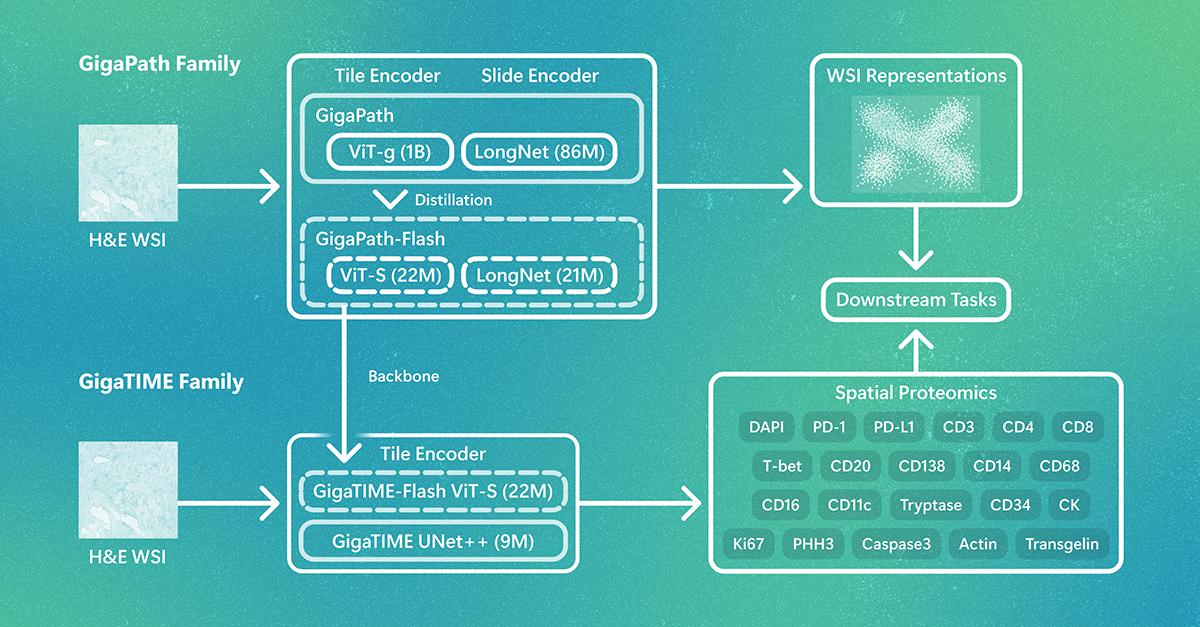
What if pathology foundation models could do more with less? GigaPath-Flash and GigaTIME-Flash cut computational demands while maintaining strong performance, opening the door to larger studies and broader exploration. The post GigaPath-Flash and GigaTIME-Flash: Toward population-scale discovery with efficient pathology foundation models appeared first on Microsoft Research.
We use cookies to run the site and, with your consent, for analytics and to show ads.
See our Cookie Policy.