Skip to content
#edge computing Preprint

Will there be a 7G?

Sep 2026 · 0 citations · 26 references
Computer Science

TL;DR

This paper argues that 7G should not be treated as an inevitable numbering exercise or as a catalogue of more ambitious radio targets, and its justification should depend on whether post-6G systems introduce needs or coordination problems that cannot be met by 6G/6G-Advanced, Wi-Fi, NTN, private cellular, neutral-host deployments, edge-cloud platforms, or complementary wireless and software-based systems.

Abstract

The transition from 5G to 6G is becoming concrete: the ITU-R IMT-2030 framework has established the high-level vision and capability set for 6G, while 3GPP Release 21 has defined the path toward the first 6G specifications. This raises a deliberately provocative question for the research and standards communities: will there be a 7G, and if so, what would justify it? This paper argues that 7G should not be treated as an inevitable numbering exercise or as a catalogue of more ambitious radio targets. Instead, its justification should depend on whether post-6G systems introduce needs or coordination problems that cannot be met by 6G/6G-Advanced, Wi-Fi, NTN, private cellular, neutral-host deployments, edge-cloud platforms, or complementary wireless and software-based systems. To support this assessment, the paper develops a readiness framework covering demand-led need, system-level discontinuity, coordination value, sustainability and circularity, trust, and geopolitical viability. It then applies the framework to candidate 7G discontinuities, including agentic network operation, RF-native computing, quantum-enabled interworking, policy-aware spectrum governance, grid-interactive infrastructure, outcome-assured services, and regionalized standards. The contribution is not a prediction of a fixed 7G architecture, but a structured basis for deciding whether 7G should become a distinct mobile generation, an extension of 6G evolution, or a broader post-6G infrastructure fabric.

View source

Similar papers

#computer vision Review Sep 2017

Agile Software Development Methods: Review and Analysis

This publication proposes a definition and a classification of agile software development approaches and analyses ten software development methods that can be characterized as being "agile" against the defined criterion.

P. Abrahamsson, O. Salo, Jussi Ronkainen et al. · 727 citations · ⚡54
#computer vision Jun 2008

The impact of agile practices on communication in software development

The study shows that agile practices improve both informal and formal communication, but indicates that, in larger development situations involving multiple external stakeholders, a mismatch of adequate communication mechanisms can sometimes even hinder the communication.

M. Pikkarainen, Jukka Haikara, O. Salo et al. · 401 citations · ⚡48
#machine learning Review Open access Oct 2014

Software development in startup companies: A systematic mapping study

The results indicate that software engineering work practices are chosen opportunistically, adapted and configured to provide value under the constrains imposed by the startup context.

Nicolò Paternoster, Carmine Giardino, M. Unterkalmsteiner et al. · 394 citations · ⚡54

Related blog posts

GPT-Lab Sep 17, 2026

Beyond Prompt Engineering: The Role of Tacit Knowledge in Software Engineering

AI is making software generation faster, but speed does not remove the need for expertise. As more work is delegated to AI, tacit knowledge may become one of the most important human advantages in software engineering. The post Beyond Prompt Engineering: The Role of Tacit Knowledge in Software Engineering appeared first on GPT-Lab.

Microsoft Research Blog Aug 31, 2026

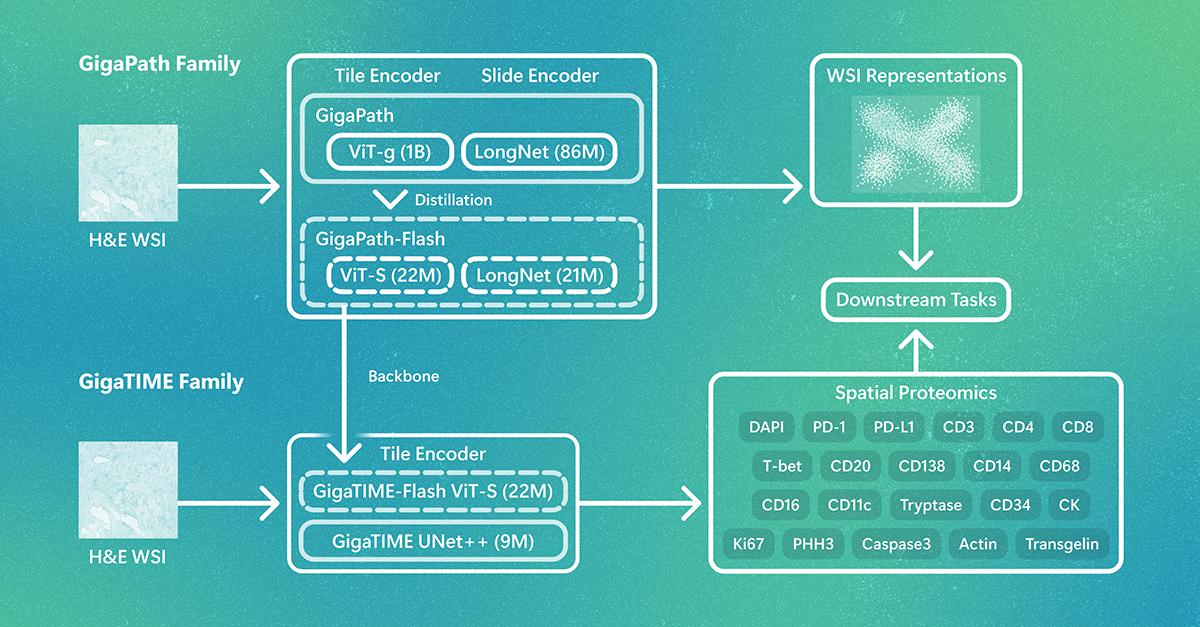
GigaPath-Flash and GigaTIME-Flash: Toward population-scale discovery with efficient pathology foundation models

What if pathology foundation models could do more with less? GigaPath-Flash and GigaTIME-Flash cut computational demands while maintaining strong performance, opening the door to larger studies and broader exploration. The post GigaPath-Flash and GigaTIME-Flash: Toward population-scale discovery with efficient pathology foundation models appeared first on Microsoft Research.

We use cookies to run the site and, with your consent, for analytics and to show ads. See our Cookie Policy.