Sep 2026· ACM Transactions on Software Engineering and Methodology· 0 citations· 105 references
TL;DR
This work proposes tHinter, an automated approach that frames translation error localization as a differential testing task, and integrates mixed-factorial user studies, expert validation, and SWOT-based strategic analysis to assess the perceived helpfulness and resilience within the rapidly evolving LLM landscape.
Abstract
Code translation, as a challenging and fundamental task, is increasingly relying on large language models (LLMs). However, LLMs often give seemingly plausible but fallacious translations, misleading and even deceptive to debugging developers. We propose tHinter, an automated approach that frames translation error localization as a differential testing task. By fuzzing and a novel Bayesian-inspired algorithm that integrates developer heuristics into SBFL, tHinter thoroughly exposes translation errors and effectively pinpoints functionality-twisting errors. We evaluate tHinter in a Python to C++ scenario, a representative and challenging task for migrating high-level logic to performance-critical systems. Experiments show that tHinter achieves the highest F1 in localizing translation errors, outperforming all baselines. When debugging LLM-translated code with human efforts, it averagely reduces 71% lines developers need to review. Furthermore, we provide a comprehensive evaluation reference beyond traditional fault localization metrics. We integrate mixed-factorial user studies, expert validation, and SWOT-based strategic analysis to assess the perceived helpfulness and resilience within the rapidly evolving LLM landscape, offering a methodologically rigorous example for researchers in the context of AI-augmented software engineering.

While LLM-rewritten messages significantly improved subjective evaluations, with pragmatic messages rated as clearer and less cognitively demanding, these perceived gains did not translate into statistically significant improvements in objective debugging performance.
Alexandru-Radu Moraru, Shreyan Biswas, U. Gadiraju· 0 citations
LLVM is the cornerstone of modern compilers, but its subtle intermediate representation (IR) semantics make transformations error-prone and necessitate formal verification. Alive2, a state-of-the-art translation validator based on satisfiability modulo theories, has achieved substantial success in automating the valida...
Chun-Feng Liao, Hong-Xu Xu, Xin-Tong Zhou et al.· 0 citations
The results show that previous conclusions from Python may be sensitive to benchmark construction, feedback representation, and tooling ecosystem, motivating more controlled multilingual benchmarks, and confirm key trends under a partially controlled replication of LLMbased repair systems.
L. Lalonde, Wassim Keddache, Thomas Perron Touchette et al.· 0 citations
The findings suggest that hidden states are a robust and informative resource for estimating functional code correctness, supporting a two-stage workflow that combines response-level risk screening with targeted line-level prioritization.
A novel empirical study targeting three domain- specific languages for transformation rules, namely Comby, GritQL, and Ast-Grep, which shows great potential for LLMs to generate sound, correct, generalizable, and reusable rules.
Axel Allain, Aymeric Blot, D. Khelladi et al.· Proceedings of the 41st IEEE...· 1 citation
This paper presents a formal mathematical model for categorizing the outcome of generated-tests into four classes, a couple of basic metrics: Bug-Revealing Rate (BRR) and Bug-Validating Rate (BVR); and two basic statistical tests to ensure that the results are rigorous.
Zeyad Farooq Lutfi· Al-Noor Journal of Engineeri...· 0 citations
Related blog posts
Microsoft Research Blog· microsoft.comOct 30, 2026
Evaluating Microsoft Copilot at enterprise scale requires test data that captures the full complexity of real organizations, yet real enterprise data contains sensitive information that cannot be used for evaluation under any circumstances. The post From synthetic enterprise data evaluations to real Microsoft Copilot AI confidence appeared first on Microsoft Research.
Microsoft Research Blog· microsoft.comOct 29, 2026
Host Sowbhagya Suresh shares some of the latest news and cutting-edge research from across Microsoft—from understanding the challenges facing coding agents to uncovering how people use AI at work and improving extended-range weather forecasting. The post Microsoft Research Focus – Edition #97 appeared first on Microsoft Research.
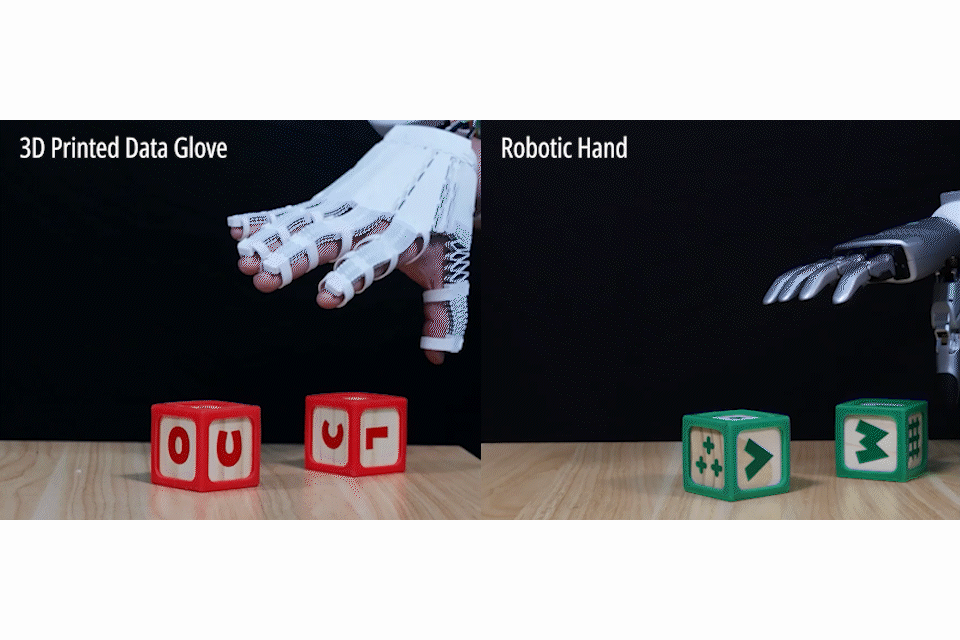
“X-Hinges” helps design and 3D print items like lamps and gloves with an interactive twist: automatically embedded sensors that perceive and adaptively respond to human contact.
We use cookies to run the site and, with your consent, for analytics and to show ads.
See our Cookie Policy.