Skip to content
#software testing Open access

PyMeshIt: An open-source geological solid modeling and tetrahedral meshing engine integrated in PZero

Sep 2026
Geological Modeling and Analysis

Abstract

Abstract. Volumetric mesh generation from surface-based geological models is a fundamental preprocessing step for numerical simulation of subsurface processes including fluid flow, heat transport, and deformation, with applications spanning geothermal energy, groundwater modeling and management, underground facility design, slope stability and hazard modeling, carbon sequestration and hydrocarbon reservoirs. To convert a surface-based geomodel into a volumetric mesh, build a watertight Piecewise Linear Complex (PLC) of the geological model as input to boundary-conforming meshing kernels to guarantee geometry-consistent tetrahedralization. Discretization remains challenging because geological models contain internal intersecting discontinuities, concave boundaries, folded or overturned surfaces, and geological attributes such as stratigraphic and structural identifiers and boundary condition tags that must be preserved during the meshing stage. We present PyMeshIt, an open-source Python implementation and extension of the C++ MeshIt meshing engine (Cacace and Blöcher 2015), developed to generate watertight PLCs and tetrahedral meshes for complex geological models. PyMeshIt is developed to be used either as a standalone meshing software or as a modeling engine integrated into the open-source PZero geological modeling framework, a platform for 3D structural interpretation and modeling (Bistacchi et al. 2021). The internal architecture of PyMeshIt splits the meshing process into several sequential stages: geometric preprocessing, hull construction, primary surface generation and interpolation, intersection resolution into a consistent PLC, and a final constrained tetrahedralization. A central technical contribution in PyMeshIt is the preservation and recovery of facet identity through the Python- TetGen interface, enabling exact extraction of fault and boundary triangle sets from the final volumetric mesh that can be input to the later numerical simulation stages (e.g., to be used to impose boundary conditions). To define boundary objects, PyMeshIt combines adaptive alpha-shape extraction for concave but projection-compatible surfaces, a 3D angular gap method for raw folded point clouds where projection-based hull algorithms fail, and a mesh-connectivity- based boundary extraction for pre-triangulated surfaces and already triangulated surfaces imported from PZero, with respect to MeshIt. We tested PyMeshIt on multiple synthetic benchmarks and five real case studies, reporting element counts and mesh quality metrics, and compared the outcomes against the original C++ implementation of MeshIt. Results demonstrate that PyMeshIt extends the original MeshIt workflow from faulted reservoir geometries to more complex folded geological models while maintaining controllable per-surface resolution, PLC consistency, and simulation-ready geological attribution. We additionally discuss the main limitations of the current implementation when dealing with very tight folds in the raw point-cloud pathway, where k-nearest-neighbour graphs used for Isomap may create cross-limb shortcuts; for such cases, pre-triangulated PZero surfaces with topology-derived boundaries currently provide a more robust alternative.


View source

Similar papers

#computer vision Review Sep 2017

Agile Software Development Methods: Review and Analysis

This publication proposes a definition and a classification of agile software development approaches and analyses ten software development methods that can be characterized as being "agile" against the defined criterion.

P. Abrahamsson, O. Salo, Jussi Ronkainen et al. · 727 citations · ⚡54
#computer vision Jun 2008

The impact of agile practices on communication in software development

The study shows that agile practices improve both informal and formal communication, but indicates that, in larger development situations involving multiple external stakeholders, a mismatch of adequate communication mechanisms can sometimes even hinder the communication.

M. Pikkarainen, Jukka Haikara, O. Salo et al. · 401 citations · ⚡48
#machine learning Review Open access Oct 2014

Software development in startup companies: A systematic mapping study

The results indicate that software engineering work practices are chosen opportunistically, adapted and configured to provide value under the constrains imposed by the startup context.

Nicolò Paternoster, Carmine Giardino, M. Unterkalmsteiner et al. · 394 citations · ⚡54
#computer vision Review Mar 2008

Agile methods in European embedded software development organisations: a survey on the actual use and usefulness of Extreme Programming and Scrum

The results show that the embedded industry has been able to apply agile methods in its development processes and that the appreciation of the agile methods and their individual practices appears to increase once adopted and applied in practice.

O. Salo, P. Abrahamsson · 238 citations · ⚡9
#computer vision Open access Jul 2017

What happens when software developers are (un)happy

Consequences of happiness and unhappiness that are beneficial and detrimental for developers' mental well-being, the software development process, and the produced artifacts are found.

D. Graziotin, Fabian Fagerholm, Xiaofeng Wang et al. · 236 citations · ⚡13
#computer vision Open access Oct 2004

Mobile-D: an agile approach for mobile application development

The Mobile-D approach is briefly outlined here and the experiences gained from four case studies are discussed, which helped develop an agile development approach for mobile application development.

P. Abrahamsson, Antti Hanhineva, H. Hulkko et al. · 225 citations · ⚡18

Related blog posts

GPT-Lab Sep 17, 2026

Beyond Prompt Engineering: The Role of Tacit Knowledge in Software Engineering

AI is making software generation faster, but speed does not remove the need for expertise. As more work is delegated to AI, tacit knowledge may become one of the most important human advantages in software engineering. The post Beyond Prompt Engineering: The Role of Tacit Knowledge in Software Engineering appeared first on GPT-Lab.

MIT News · Artificial Intelligence Aug 17, 2026

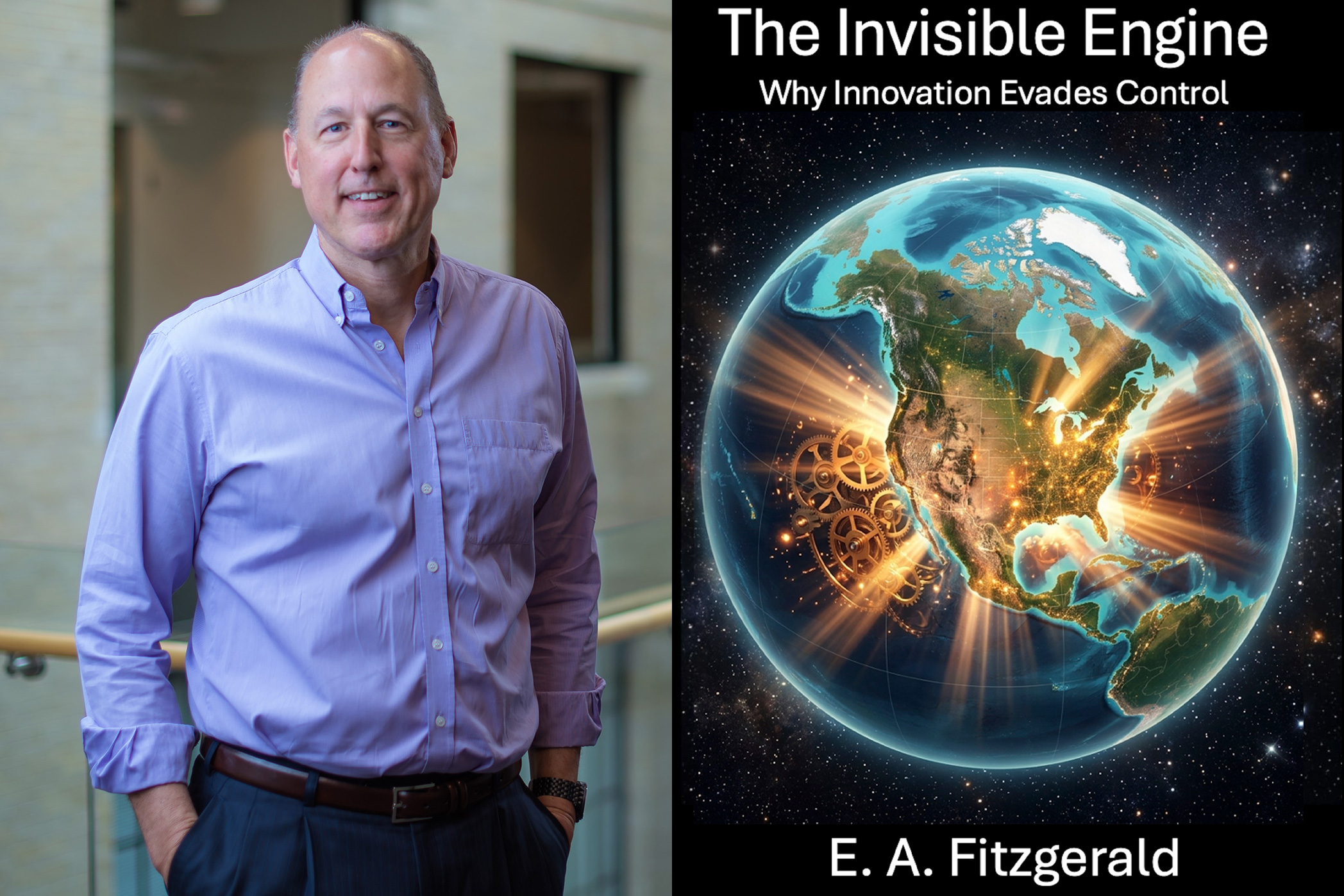
Q&A: Rethinking how innovation happens

In his latest book, Professor Eugene Fitzgerald examines the forces that turn breakthroughs into value — and why innovation resists simple formulas.

Microsoft Research Blog Aug 12, 2026

MindTopo reveals VLMs’ spatial reasoning abilities

A path, a fence, a knot. MindTopo sets a new benchmark for testing how AI understands topological relationships and highlights new opportunities to strengthen spatial reasoning and planning. The post MindTopo reveals VLMs’ spatial reasoning abilities appeared first on Microsoft Research.

We use cookies to run the site and, with your consent, for analytics and to show ads. See our Cookie Policy.