Skip to content
#software testing Open access

PyBacktrack 1.5: A community tool for reconstructing paleobathymetry of drill sites, geohistory and global paleobathymetry

Sep 2026
Geological formations and processes

Abstract

Abstract. PyBacktrack is a Python community software package that reconstructs the paleo-water depth (paleobathymetry) of ocean drill sites and industry wells through time by combining a model of tectonic subsidence with sediment decompaction and isostatic correction. Since the release of pyBacktrack 1.0, the software has undergone substantial development that culminates in pyBacktrack 1.5. The package now (i) runs on Python 3 and is distributed via the Python Package Index, conda-forge and Docker; (ii) includes a new paleobathymetry gridding module that reconstructs and backtracks all submerged present-day crust through geological time to produce time-dependent paleobathymetry grids; (iii) uses an updated default oceanic age-to-depth model, a globally complete set of rift start/end age grids derived from a deforming plate model, an updated total sediment thickness grid and an updated present-day age grid; (iv) supports both mantle and paleomagnetic reference frames and allows the gridded paleobathymetry to be optionally merged with externally produced paleobathymetry on synthetic, subducted crust; and (v) ships with expanded sea-level model and dynamic topography model libraries. We illustrate pyBacktrack 1.5 with three applications: (1) paleobathymetry reconstructions since the Early Cretaceous of the North Atlantic and the Southern Ocean; (2) one-dimensional backstripping and geohistory analysis at a long-record industry well on the Australian North West Shelf in three configurations (including or omitting eustatic sea level, and including a joint sea level and dynamic topography correction); and (3) a margin-scale gridded tectonic-subsidence-rate analysis of 109 Australian Northwest Shelf industry wells, quantifying how much of the inferred tectonic subsidence rate is dependent on eustatic and dynamic-topographic corrections in space and time. Together, these developments make pyBacktrack 1.5 a more accessible, extensible and globally applicable framework for reconstructing paleobathymetry and testing the tectonic, sedimentary, sea-level and dynamic-topographic controls on basin evolution.


Read PDF

Similar papers

#computer vision Review Sep 2017

Agile Software Development Methods: Review and Analysis

This publication proposes a definition and a classification of agile software development approaches and analyses ten software development methods that can be characterized as being "agile" against the defined criterion.

P. Abrahamsson, O. Salo, Jussi Ronkainen et al. · 727 citations · ⚡54
#computer vision Jun 2008

The impact of agile practices on communication in software development

The study shows that agile practices improve both informal and formal communication, but indicates that, in larger development situations involving multiple external stakeholders, a mismatch of adequate communication mechanisms can sometimes even hinder the communication.

M. Pikkarainen, Jukka Haikara, O. Salo et al. · 401 citations · ⚡48
#machine learning Review Open access Oct 2014

Software development in startup companies: A systematic mapping study

The results indicate that software engineering work practices are chosen opportunistically, adapted and configured to provide value under the constrains imposed by the startup context.

Nicolò Paternoster, Carmine Giardino, M. Unterkalmsteiner et al. · 394 citations · ⚡54
#computer vision Review Mar 2008

Agile methods in European embedded software development organisations: a survey on the actual use and usefulness of Extreme Programming and Scrum

The results show that the embedded industry has been able to apply agile methods in its development processes and that the appreciation of the agile methods and their individual practices appears to increase once adopted and applied in practice.

O. Salo, P. Abrahamsson · 238 citations · ⚡9
#computer vision Open access Jul 2017

What happens when software developers are (un)happy

Consequences of happiness and unhappiness that are beneficial and detrimental for developers' mental well-being, the software development process, and the produced artifacts are found.

D. Graziotin, Fabian Fagerholm, Xiaofeng Wang et al. · 236 citations · ⚡13
#computer vision Open access Oct 2004

Mobile-D: an agile approach for mobile application development

The Mobile-D approach is briefly outlined here and the experiences gained from four case studies are discussed, which helped develop an agile development approach for mobile application development.

P. Abrahamsson, Antti Hanhineva, H. Hulkko et al. · 225 citations · ⚡18

Related blog posts

GPT-Lab Sep 17, 2026

Beyond Prompt Engineering: The Role of Tacit Knowledge in Software Engineering

AI is making software generation faster, but speed does not remove the need for expertise. As more work is delegated to AI, tacit knowledge may become one of the most important human advantages in software engineering. The post Beyond Prompt Engineering: The Role of Tacit Knowledge in Software Engineering appeared first on GPT-Lab.

MIT News · Artificial Intelligence Aug 17, 2026

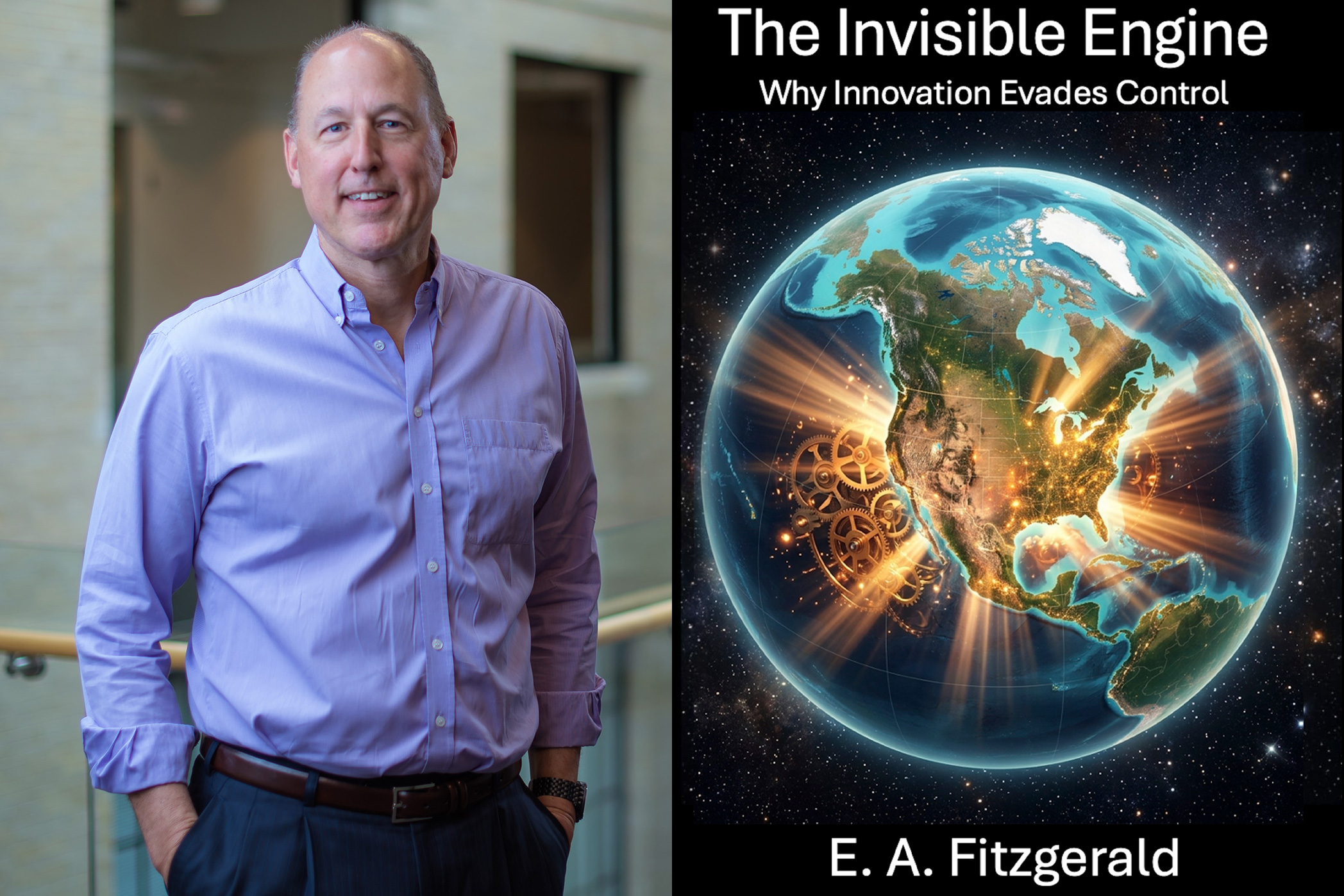
Q&A: Rethinking how innovation happens

In his latest book, Professor Eugene Fitzgerald examines the forces that turn breakthroughs into value — and why innovation resists simple formulas.

Microsoft Research Blog Aug 12, 2026

MindTopo reveals VLMs’ spatial reasoning abilities

A path, a fence, a knot. MindTopo sets a new benchmark for testing how AI understands topological relationships and highlights new opportunities to strengthen spatial reasoning and planning. The post MindTopo reveals VLMs’ spatial reasoning abilities appeared first on Microsoft Research.

We use cookies to run the site and, with your consent, for analytics and to show ads. See our Cookie Policy.