Skip to content
#edge computing Open access

Impact of Technological Innovation on Shareholder Value in the Telecom Sector

Sep 2026 · International Journal of Data Science and IoT Management System · 0 citations

Abstract

This study, titled "Impact of Technological Innovation on Shareholder Value in the Telecom Sector," evaluates the core innovation areas, operational cost reductions, subscriber growth, and financial feasibility of network virtualization investments. Telecommunication firms must allocate significant capital to technological innovations, including 5G Radio Access Networks (RAN), software-defined networks (SDN), and edge computing. A five-year project lifecycle (2021-2025) of a telecom providers virtualized node deployment is evaluated using capital budgeting metrics: Net Present Value (NPV), Internal Rate of Return (IRR), Payback Period (PBP), and Benefit-Cost Ratio (BCR). Quantitative analysis reveals that 5G RAN represents 45% of capital allocations. Software-defined virtualization reduces subscriber provisioning costs from 180 INR to 12 INR, supporting a 5G user base of 320 Million and raising the Average Revenue Per User (ARPU) to 245 INR by 2025. The financial model yields a positive NPV of 284.5 Crores and an IRR of 38.6%, indicating strong project feasibility. The study concludes that investing in network virtualization and edge cloud technology is highly viable, enabling telecommunication firms to minimize operational expenditures, optimize capital efficiency, and maximize Total Shareholder Return. Keywords: Telecom Innovation, 5G RAN, Network Functions Virtualization, ARPU, Total Shareholder Return (TSR), Capital Budgeting, Financial Feasibility, Edge Computing.

Read PDF

Similar papers

#computer vision Review Sep 2017

Agile Software Development Methods: Review and Analysis

This publication proposes a definition and a classification of agile software development approaches and analyses ten software development methods that can be characterized as being "agile" against the defined criterion.

P. Abrahamsson, O. Salo, Jussi Ronkainen et al. · 727 citations · ⚡54
#computer vision Jun 2008

The impact of agile practices on communication in software development

The study shows that agile practices improve both informal and formal communication, but indicates that, in larger development situations involving multiple external stakeholders, a mismatch of adequate communication mechanisms can sometimes even hinder the communication.

M. Pikkarainen, Jukka Haikara, O. Salo et al. · 401 citations · ⚡48
#machine learning Review Open access Oct 2014

Software development in startup companies: A systematic mapping study

The results indicate that software engineering work practices are chosen opportunistically, adapted and configured to provide value under the constrains imposed by the startup context.

Nicolò Paternoster, Carmine Giardino, M. Unterkalmsteiner et al. · 394 citations · ⚡54

Related blog posts

GPT-Lab Sep 17, 2026

Beyond Prompt Engineering: The Role of Tacit Knowledge in Software Engineering

AI is making software generation faster, but speed does not remove the need for expertise. As more work is delegated to AI, tacit knowledge may become one of the most important human advantages in software engineering. The post Beyond Prompt Engineering: The Role of Tacit Knowledge in Software Engineering appeared first on GPT-Lab.

Microsoft Research Blog Aug 31, 2026

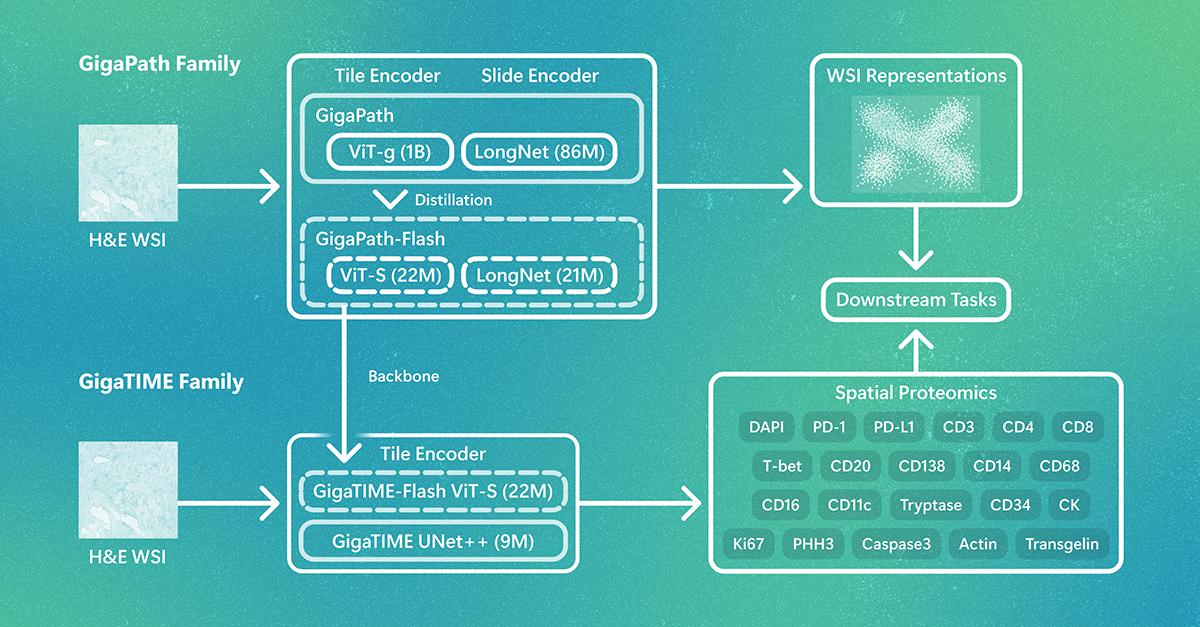
GigaPath-Flash and GigaTIME-Flash: Toward population-scale discovery with efficient pathology foundation models

What if pathology foundation models could do more with less? GigaPath-Flash and GigaTIME-Flash cut computational demands while maintaining strong performance, opening the door to larger studies and broader exploration. The post GigaPath-Flash and GigaTIME-Flash: Toward population-scale discovery with efficient pathology foundation models appeared first on Microsoft Research.

We use cookies to run the site and, with your consent, for analytics and to show ads. See our Cookie Policy.