Sep 2026· Zenodo (CERN European Organization for Nuclear Research)
Abstract
This software generates, counts, and classifies codes of rotation systems of cell-embedded graphs in oriented surfaces with a fixed root vertex and a fixed oriented sector. For a given number kk of edges, a code is a finite sequence over the alphabet {0,1,…,k}. Each number 1,…,k occurs exactly twice, while 0 may occur an arbitrary number of times. The codes satisfy additional canonical conditions that determine the order of first occurrences and the positions of zeros. The program provides algorithms for: generating all admissible codes; counting codes without explicitly generating them, using memoization; computing the distribution of codes by genus; determining equivalence classes when the root vertex and the orientation are fixed but the choice of the root sector is free; determining cyclic symmetries of the root vertex; computing the number of equivalence classes with a prescribed symmetry order; producing summary statistics by genus; exporting enumerative sequences to JSON; computing the number of ways to choose prescribed numbers of vertices and faces up to symmetry. Two codes are considered equivalent if they represent the same cell-embedded graph with the same root vertex and the same orientation of the surface, and differ only in the choice of the oriented sector at that vertex. The program uses a depth-first search algorithm for code generation and a memoized recursive algorithm for fast enumeration. For example, for k=5k=5, the program produces 8162 admissible codes, distributed by genus as follows:genus 0: 2916,genus 1: 4280,genus 2: 966. These codes form 2286 equivalence classes:genus 0: 1032,genus 1: 1100,genus 2: 154. The software is intended for computational enumeration and classification of rotation systems and may be used in research on graph embeddings, topological graph theory, and dynamical systems on surfaces. Author: Alexandr PrishlyakORCID: 0000-0002-7164-807X Software version: 1.0.0
This publication proposes a definition and a classification of agile software development approaches and analyses ten software development methods that can be characterized as being "agile" against the defined criterion.
P. Abrahamsson, O. Salo, Jussi Ronkainen et al.· arXiv.org· 727 citations· ⚡54
The study shows that agile practices improve both informal and formal communication, but indicates that, in larger development situations involving multiple external stakeholders, a mismatch of adequate communication mechanisms can sometimes even hinder the communication.
M. Pikkarainen, Jukka Haikara, O. Salo et al.· Empirical Software Engineeri...· 401 citations· ⚡48
The results indicate that software engineering work practices are chosen opportunistically, adapted and configured to provide value under the constrains imposed by the startup context.
Nicolò Paternoster, Carmine Giardino, M. Unterkalmsteiner et al.· Information and Software Tec...· 394 citations· ⚡54
The perception of the impact of agile methods is predominantly positive, and several challenge areas were discovered, but based on this study, agile methods are here to stay.
M. Laanti, O. Salo, P. Abrahamsson· Information and Software Tec...· 260 citations· ⚡20
AI is making software generation faster, but speed does not remove the need for expertise. As more work is delegated to AI, tacit knowledge may become one of the most important human advantages in software engineering. The post Beyond Prompt Engineering: The Role of Tacit Knowledge in Software Engineering appeared first on GPT-Lab.
MIT News · Artificial Intelligence· news.mit.eduSep 9, 2026
A weeklong summer workshop brought higher education faculty to campus to explore how AI and machine learning materials can be adapted for their classrooms.
MIT News · Artificial Intelligence· news.mit.eduSep 2, 2026
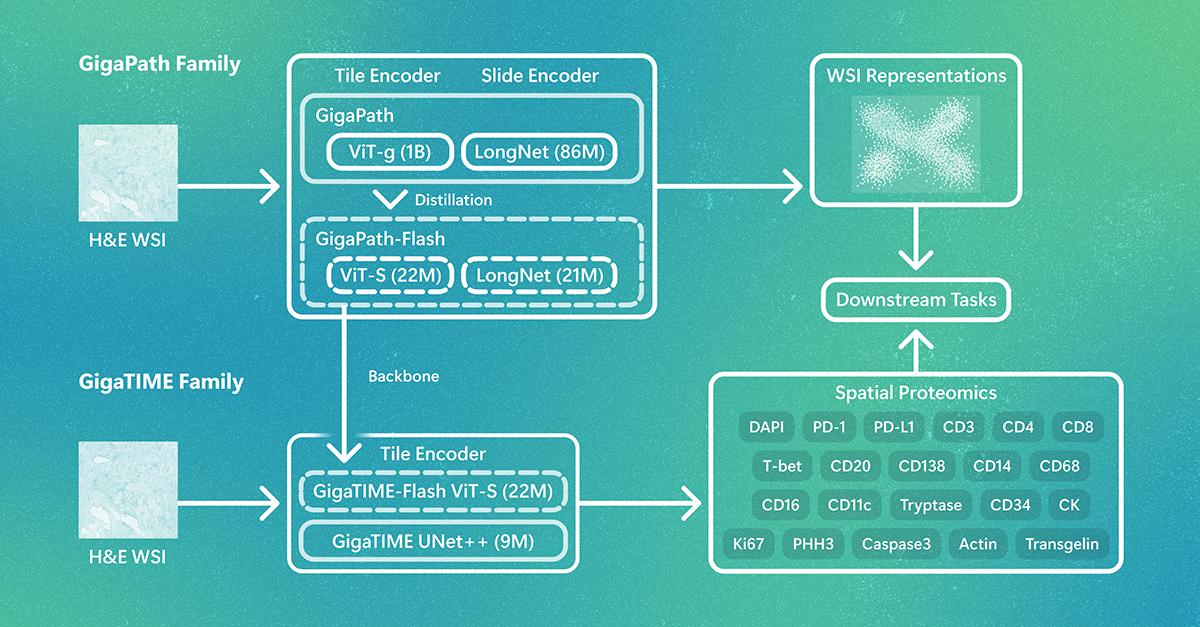
What if pathology foundation models could do more with less? GigaPath-Flash and GigaTIME-Flash cut computational demands while maintaining strong performance, opening the door to larger studies and broader exploration. The post GigaPath-Flash and GigaTIME-Flash: Toward population-scale discovery with efficient pathology foundation models appeared first on Microsoft Research.
We use cookies to run the site and, with your consent, for analytics and to show ads.
See our Cookie Policy.