Safe drilling in hydrate-bearing sediments is essential for environmentally responsible natural gas hydrate development. Complex pressure variations, fluid migration, and mechanical disturbances during drilling may increase the risks of gas influx, lost circulation, pipe sticking, and wellbore instability. To improve diagnostic robustness under heterogeneous and noisy drilling conditions while reducing dependence on large-scale manually labeled datasets, this study develops an adaptively coupled data–physics dual-driven diagnostic framework based on a self-organizing map (SOM) and a competitive classifier. Unlike a conventional one-way SOM–classifier cascade, changes in the downstream classification loss are fed back to adjust the SOM neighborhood radius, thereby coupling unsupervised feature mapping with supervised risk classification. In addition, class-conditional pressure-window and torque–drag consistency penalties are linked to the predicted class probabilities so that physical information directly participates in the optimization of applicable fluid-related and pipe-sticking risk predictions. Risk categories without an explicitly available physical residual remain primarily data-driven. Experiments on a hybrid measured–simulated dataset show that the proposed model achieves a test-set accuracy of 97.67%, outperforming representative baseline models. When 20% Gaussian noise is added, the accuracy decreases by only 4.20 percentage points. A three-layer data acquisition–edge-computing–cloud-monitoring early-warning system is implemented through MATLAB/VC integration. In a pilot field trial, a representative well-kick risk was identified 12 min earlier than by a conventional threshold-based alarm, and the missed-alarm rate decreased from 15% to 3%. The proposed method provides an engineering-oriented framework for improving drilling safety and environmental risk control during natural gas hydrate development.
This publication proposes a definition and a classification of agile software development approaches and analyses ten software development methods that can be characterized as being "agile" against the defined criterion.
P. Abrahamsson, O. Salo, Jussi Ronkainen et al.· arXiv.org· 727 citations· ⚡54
The study shows that agile practices improve both informal and formal communication, but indicates that, in larger development situations involving multiple external stakeholders, a mismatch of adequate communication mechanisms can sometimes even hinder the communication.
M. Pikkarainen, Jukka Haikara, O. Salo et al.· Empirical Software Engineeri...· 401 citations· ⚡48
The results indicate that software engineering work practices are chosen opportunistically, adapted and configured to provide value under the constrains imposed by the startup context.
Nicolò Paternoster, Carmine Giardino, M. Unterkalmsteiner et al.· Information and Software Tec...· 394 citations· ⚡54
The perception of the impact of agile methods is predominantly positive, and several challenge areas were discovered, but based on this study, agile methods are here to stay.
M. Laanti, O. Salo, P. Abrahamsson· Information and Software Tec...· 260 citations· ⚡20
AI is making software generation faster, but speed does not remove the need for expertise. As more work is delegated to AI, tacit knowledge may become one of the most important human advantages in software engineering. The post Beyond Prompt Engineering: The Role of Tacit Knowledge in Software Engineering appeared first on GPT-Lab.
MIT News · Artificial Intelligence· news.mit.eduSep 9, 2026
A weeklong summer workshop brought higher education faculty to campus to explore how AI and machine learning materials can be adapted for their classrooms.
MIT News · Artificial Intelligence· news.mit.eduSep 2, 2026
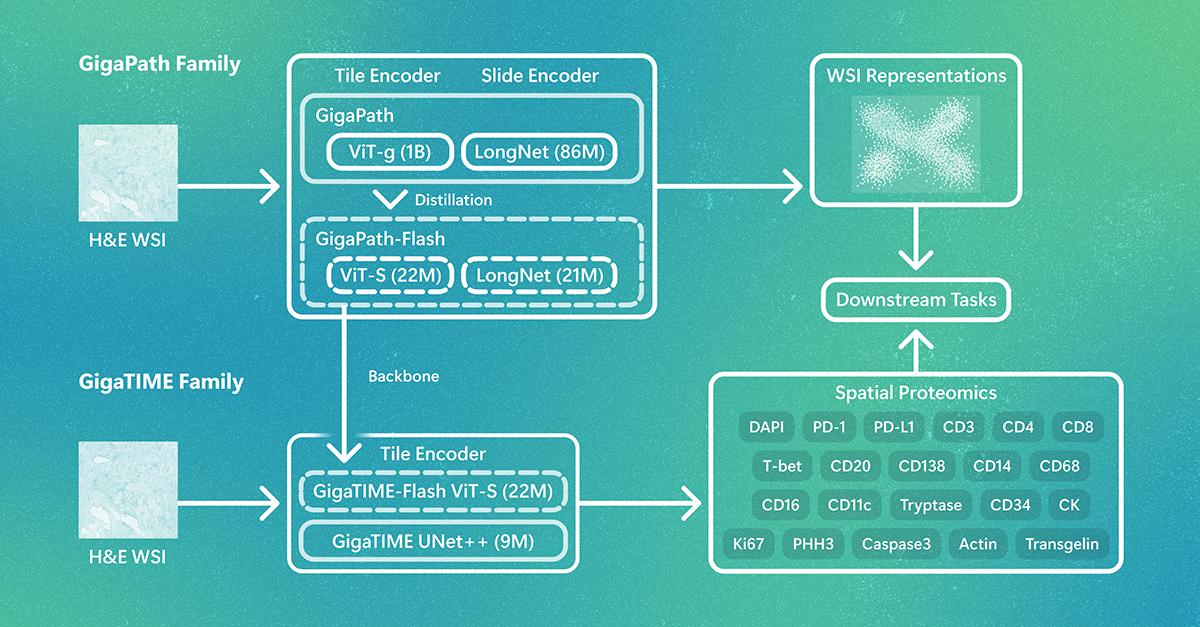
What if pathology foundation models could do more with less? GigaPath-Flash and GigaTIME-Flash cut computational demands while maintaining strong performance, opening the door to larger studies and broader exploration. The post GigaPath-Flash and GigaTIME-Flash: Toward population-scale discovery with efficient pathology foundation models appeared first on Microsoft Research.
We use cookies to run the site and, with your consent, for analytics and to show ads.
See our Cookie Policy.