Skip to content
#edge computing Open access

A Five-Layer IoT-Big Data Architecture for Smart Wastewater Monitoring and Treatment: Design, Integration of Machine Learning, and Deployment Feasibility for Vietnam

Sep 2026 · Zenodo (CERN European Organization for Nuclear Research)
Water Quality Monitoring Technologies

Abstract

ABSTRACT: Industrial and urban wastewater pollution constitutes a critical environmental challenge in Vietnam, where only approximately 12.5% of municipal wastewater currently undergoes adequate treatment before discharge. This paper proposes the Smart Wastewater Monitoring and Treatment (SWMT) framework, a five-layer IoT–Big Data architecture designed to enable real-time, data-driven management of wastewater quality and treatment processes. The framework integrates: (i) a multi-parameter wireless sensor network (WSN) measuring pH, dissolved oxygen (DO), biochemical oxygen demand (BOD), chemical oxygen demand (COD), total suspended solids (TSS), ammonium (NH₄⁺), temperature, and flow rate; (ii) LoRaWAN and MQTT-based communication protocols; (iii) edge computing for on-site preprocessing and rapid rule-based alerting; (iv) a cloud-hosted Lambda Architecture employing Apache Kafka and Spark Streaming for high-throughput real-time analytics; and (v) machine learning models - Long Short-Term Memory (LSTM) networks, Isolation Forest, and Random Forest - for predictive water quality forecasting, unsupervised anomaly detection, and pollution severity classification. Simulation results demonstrate an anomaly detection latency of 3.2 minutes (versus ~8 hours with conventional manual sampling, representing a 99.3% reduction), a true positive rate of 94.2% (FPR = 2.8%), an LSTM forecast RMSE of 0.12 mg/L for COD, and an estimated 18.5% improvement in treatment efficiency through ML - optimised chemical dosing. The paper further analyses regulatory compliance with QCVN 40:2011/BTNMT and QCVN 14:2008/BTNMT, and presents deployment feasibility assessments for three target contexts: industrial zones (IZs), urban wastewater networks, and rural craft villages. The SWMT framework contributes a comprehensive, scalable, and cost-effective blueprint for intelligent wastewater governance in developing-country contexts. Keywords: Internet of Things (IoT); Big Data; wastewater monitoring; LSTM; anomaly detection; LoRaWAN; smart water management; Vietnam; QCVN; machine learning.

View source

Similar papers

#computer vision Review Sep 2017

Agile Software Development Methods: Review and Analysis

This publication proposes a definition and a classification of agile software development approaches and analyses ten software development methods that can be characterized as being "agile" against the defined criterion.

P. Abrahamsson, O. Salo, Jussi Ronkainen et al. · 727 citations · ⚡54
#computer vision Jun 2008

The impact of agile practices on communication in software development

The study shows that agile practices improve both informal and formal communication, but indicates that, in larger development situations involving multiple external stakeholders, a mismatch of adequate communication mechanisms can sometimes even hinder the communication.

M. Pikkarainen, Jukka Haikara, O. Salo et al. · 401 citations · ⚡48
#machine learning Review Open access Oct 2014

Software development in startup companies: A systematic mapping study

The results indicate that software engineering work practices are chosen opportunistically, adapted and configured to provide value under the constrains imposed by the startup context.

Nicolò Paternoster, Carmine Giardino, M. Unterkalmsteiner et al. · 394 citations · ⚡54

Related blog posts

GPT-Lab Sep 17, 2026

Beyond Prompt Engineering: The Role of Tacit Knowledge in Software Engineering

AI is making software generation faster, but speed does not remove the need for expertise. As more work is delegated to AI, tacit knowledge may become one of the most important human advantages in software engineering. The post Beyond Prompt Engineering: The Role of Tacit Knowledge in Software Engineering appeared first on GPT-Lab.

Microsoft Research Blog Aug 31, 2026

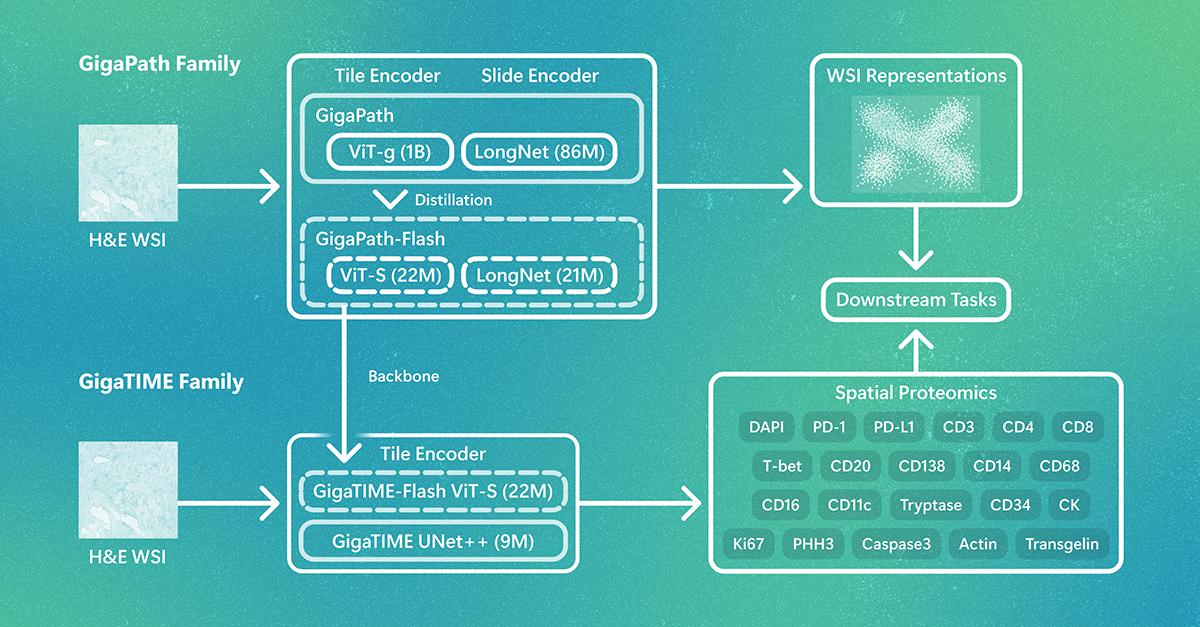
GigaPath-Flash and GigaTIME-Flash: Toward population-scale discovery with efficient pathology foundation models

What if pathology foundation models could do more with less? GigaPath-Flash and GigaTIME-Flash cut computational demands while maintaining strong performance, opening the door to larger studies and broader exploration. The post GigaPath-Flash and GigaTIME-Flash: Toward population-scale discovery with efficient pathology foundation models appeared first on Microsoft Research.

We use cookies to run the site and, with your consent, for analytics and to show ads. See our Cookie Policy.