Skip to content
#edge computing Open access

Shaping Ability of Mtwo, ZenFlex, E-FLEX ONE, and E-FLEX EDGE Nickel–Titanium Rotary Instruments in Curved Root Canals: A Micro-Computed Tomography Study

Panupat Phumpatrakom Awiruth Klaisiri Purin Suriyakraingkai Asfat Cheloh Patita Mettasat Kittikhun Thamsukhum
Sep 2026 · European Journal of General Dentistry · 0 citations · 35 references
Endodontics and Root Canal Treatments

Abstract

Abstract Objective Nickel–titanium (NiTi) rotary instruments are widely used in endodontics because of their flexibility and shaping efficiency. Nevertheless, canal transportation and excessive dentin removal remain concerns, particularly in curved canals. To address these limitations, heat treatment processes have been introduced to improve the mechanical properties of NiTi alloys, especially flexibility and resistance to deformation. This study aimed to compare the centering ability, canal transportation, and dentin volume changes produced by four different heat-treated NiTi file systems. Materials and Methods Forty-eight canals were randomly divided into four groups. Images of each canal were captured before and after root canal preparation using micro-CT. Data-Viewer was used to superimpose the pre- and post-instrumentation photos. The centering ratio, canal transportation, and volume change were then measured by CTAn application. Results E-FLEX EDGE demonstrated the highest centering ratio in the apical and middle thirds of the root canal, whereas E-FLEX ONE showed the highest centering ratio in the cervical third. Additionally, E-FLEX EDGE exhibited the least canal transportation in the apical and middle regions. In contrast, ZenFlex demonstrated the least canal transportation at the cervical region. Regarding dentin removal, E-FLEX EDGE showed the greatest dentin volume change, while Mtwo exhibited the lowest dentin volume change. Conclusion ZenFlex and Mtwo were the most effective in preserving dentin, supporting the concept of minimally invasive endodontics. In severely curved canals, ZenFlex and E-FLEX EDGE demonstrated favorable shaping performance, with ZenFlex maintaining canal anatomy and E-FLEX EDGE exhibiting excellent centering ability.

Read PDF

Similar papers

#computer vision Review Sep 2017

Agile Software Development Methods: Review and Analysis

This publication proposes a definition and a classification of agile software development approaches and analyses ten software development methods that can be characterized as being "agile" against the defined criterion.

P. Abrahamsson, O. Salo, Jussi Ronkainen et al. · 727 citations · ⚡54
#computer vision Jun 2008

The impact of agile practices on communication in software development

The study shows that agile practices improve both informal and formal communication, but indicates that, in larger development situations involving multiple external stakeholders, a mismatch of adequate communication mechanisms can sometimes even hinder the communication.

M. Pikkarainen, Jukka Haikara, O. Salo et al. · 401 citations · ⚡48
#machine learning Review Open access Oct 2014

Software development in startup companies: A systematic mapping study

The results indicate that software engineering work practices are chosen opportunistically, adapted and configured to provide value under the constrains imposed by the startup context.

Nicolò Paternoster, Carmine Giardino, M. Unterkalmsteiner et al. · 394 citations · ⚡54

Related blog posts

GPT-Lab Sep 17, 2026

Beyond Prompt Engineering: The Role of Tacit Knowledge in Software Engineering

AI is making software generation faster, but speed does not remove the need for expertise. As more work is delegated to AI, tacit knowledge may become one of the most important human advantages in software engineering. The post Beyond Prompt Engineering: The Role of Tacit Knowledge in Software Engineering appeared first on GPT-Lab.

Microsoft Research Blog Aug 31, 2026

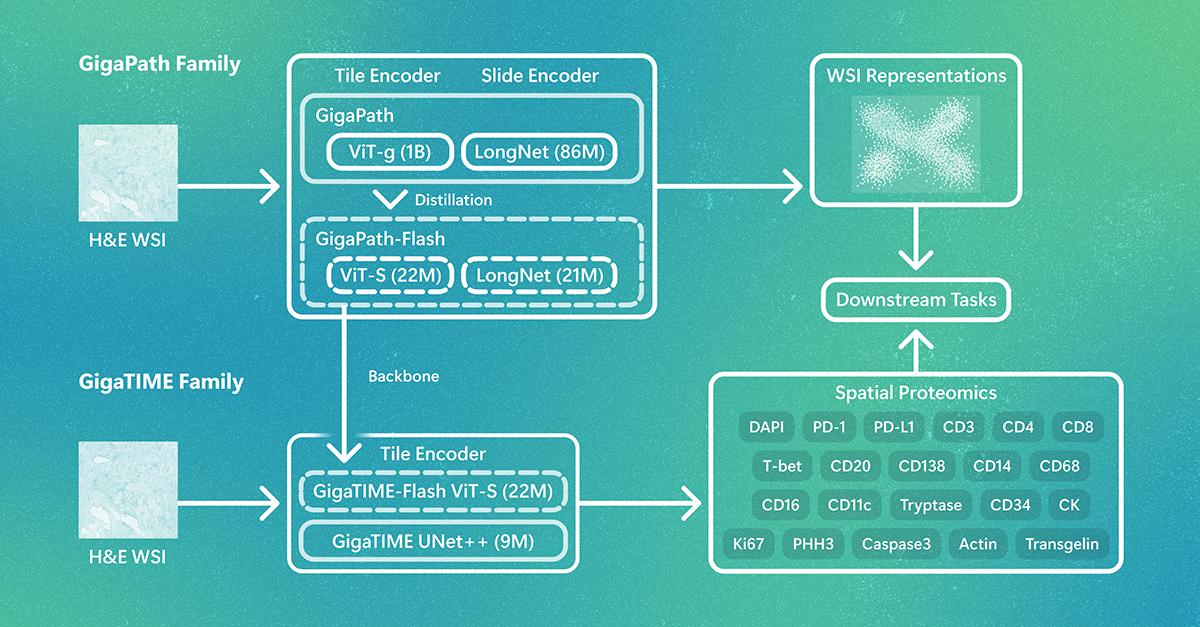
GigaPath-Flash and GigaTIME-Flash: Toward population-scale discovery with efficient pathology foundation models

What if pathology foundation models could do more with less? GigaPath-Flash and GigaTIME-Flash cut computational demands while maintaining strong performance, opening the door to larger studies and broader exploration. The post GigaPath-Flash and GigaTIME-Flash: Toward population-scale discovery with efficient pathology foundation models appeared first on Microsoft Research.

We use cookies to run the site and, with your consent, for analytics and to show ads. See our Cookie Policy.