Skip to content
#edge computing Open access

Quantum Game Theory

Sep 2026 · Zenodo (CERN European Organization for Nuclear Research)

Abstract

Since the establishment of von Neumann and Nash's concept of equilibrium, game theory has become a universal language in economics and social sciences. However, classical game theory is deeply rooted in the mechanistic worldview, and its deterministic assumptions, static equilibrium, and individualistic methodology are becoming increasingly inadequate in explaining the emergence of cooperation, uncertainty, and complex social interactions. This book directly faces this dilemma and introduces the core concepts of quantum mechanics into game analysis, constructing a complete system of quantum game theory. Starting from the century long evolution of game theory, the entire book deeply criticizes the mechanistic nature of classical game theory, and re establishes the philosophical foundation of game theory through practical ontology. On this basis, this book proposes the hypothesis of a "quantum gamer" and constructs a complete analytical framework from superposition strategy space, quantum entanglement to measurement collapse. The system reconstructs core areas such as quantum zero sum games, quantum non-zero sum games, quantum prisoner's dilemma, quantum coordination games, quantum evolutionary games, quantum cooperative games, and quantum incomplete information games, and extends them to cutting-edge directions such as quantum repetitive games, quantum game learning, and quantum mechanism design. At the application level, this book comprehensively demonstrates the broad prospects of quantum game theory in fields such as economics, political science, sociology, biology, computer science, quantum computing, artificial intelligence, and ethics. This book emphasizes that quantum entanglement enables cooperation to emerge, and quantum measurement leads equilibrium from static to dynamic collapse, thus surpassing the explanatory boundaries of classical game theory. The book has a rigorous structure and in-depth arguments, combining theoretical originality with interdisciplinary perspectives, providing a groundbreaking work for researchers, graduate students, and cutting-edge explorers to understand the quantum game revolution.

View source

Similar papers

#computer vision Review Sep 2017

Agile Software Development Methods: Review and Analysis

This publication proposes a definition and a classification of agile software development approaches and analyses ten software development methods that can be characterized as being "agile" against the defined criterion.

P. Abrahamsson, O. Salo, Jussi Ronkainen et al. · 727 citations · ⚡54
#computer vision Jun 2008

The impact of agile practices on communication in software development

The study shows that agile practices improve both informal and formal communication, but indicates that, in larger development situations involving multiple external stakeholders, a mismatch of adequate communication mechanisms can sometimes even hinder the communication.

M. Pikkarainen, Jukka Haikara, O. Salo et al. · 401 citations · ⚡48
#machine learning Review Open access Oct 2014

Software development in startup companies: A systematic mapping study

The results indicate that software engineering work practices are chosen opportunistically, adapted and configured to provide value under the constrains imposed by the startup context.

Nicolò Paternoster, Carmine Giardino, M. Unterkalmsteiner et al. · 394 citations · ⚡54

Related blog posts

GPT-Lab Sep 17, 2026

Beyond Prompt Engineering: The Role of Tacit Knowledge in Software Engineering

AI is making software generation faster, but speed does not remove the need for expertise. As more work is delegated to AI, tacit knowledge may become one of the most important human advantages in software engineering. The post Beyond Prompt Engineering: The Role of Tacit Knowledge in Software Engineering appeared first on GPT-Lab.

Microsoft Research Blog Aug 31, 2026

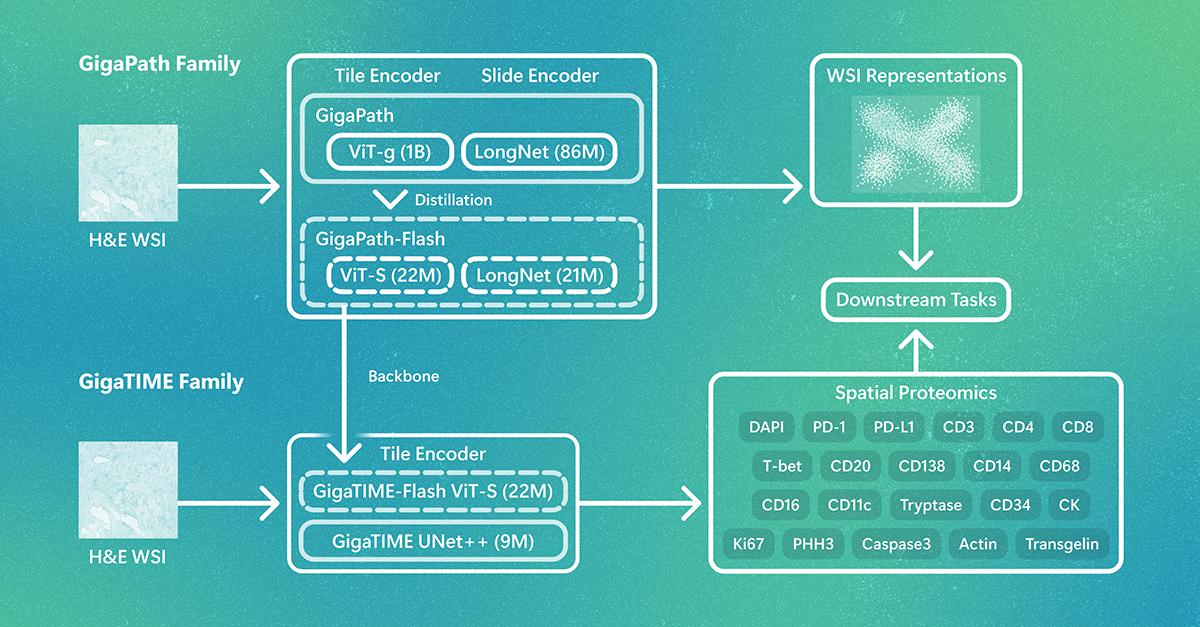
GigaPath-Flash and GigaTIME-Flash: Toward population-scale discovery with efficient pathology foundation models

What if pathology foundation models could do more with less? GigaPath-Flash and GigaTIME-Flash cut computational demands while maintaining strong performance, opening the door to larger studies and broader exploration. The post GigaPath-Flash and GigaTIME-Flash: Toward population-scale discovery with efficient pathology foundation models appeared first on Microsoft Research.

We use cookies to run the site and, with your consent, for analytics and to show ads. See our Cookie Policy.