As clouds with their higher processing density and wireless interconnectivity operate at gigahertz frequency range, they are more vulnerable to electromagnetic interferences. Interference of this kind has the effect of putting the system at risk, causing crosstalk between the components, and even possibly compromising data security. The research contained within this paper presents a wideband Frequency Selective Surface FSS that has been specially designed to serve as a barrier to electromagnetic interference in modern cloud hardware. The introduced FSS has a stop band between 8.02 GHz and 14.84 GHz. The interference caused by high-speed interconnections and power supplies is efficiently handled by this specific band. The design provides an impressive 90 dB shielding efficiency and a maximum transmission level of –38.77 dB at the resonance frequency of 12.38 GHz. The results of the study indicate that this FSS can totally block the entry of the unwanted electromagnetic waves. The design is realized on a tiny FR4 substrate of size 18 mm by 18 mm by 1.6 mm, is not dependent on the direction of the incoming signal, and exhibits a consistent reflection phase. The FSS broad operation was verified through simulations employing Floquet port analysis for both transverse electric and transverse magnetic polarizations. The small size and frequency-dependent shielding property of the design ensure its use in server casings, Internet of Things edge devices, and data center links. It presents an easy and effective way to improve the electromagnetic compatibility of the cloud infrastructure of the future.
This publication proposes a definition and a classification of agile software development approaches and analyses ten software development methods that can be characterized as being "agile" against the defined criterion.
P. Abrahamsson, O. Salo, Jussi Ronkainen et al.· arXiv.org· 727 citations· ⚡54
The study shows that agile practices improve both informal and formal communication, but indicates that, in larger development situations involving multiple external stakeholders, a mismatch of adequate communication mechanisms can sometimes even hinder the communication.
M. Pikkarainen, Jukka Haikara, O. Salo et al.· Empirical Software Engineeri...· 401 citations· ⚡48
The results indicate that software engineering work practices are chosen opportunistically, adapted and configured to provide value under the constrains imposed by the startup context.
Nicolò Paternoster, Carmine Giardino, M. Unterkalmsteiner et al.· Information and Software Tec...· 394 citations· ⚡54
The perception of the impact of agile methods is predominantly positive, and several challenge areas were discovered, but based on this study, agile methods are here to stay.
M. Laanti, O. Salo, P. Abrahamsson· Information and Software Tec...· 260 citations· ⚡20
AI is making software generation faster, but speed does not remove the need for expertise. As more work is delegated to AI, tacit knowledge may become one of the most important human advantages in software engineering. The post Beyond Prompt Engineering: The Role of Tacit Knowledge in Software Engineering appeared first on GPT-Lab.
MIT News · Artificial Intelligence· news.mit.eduSep 9, 2026
A weeklong summer workshop brought higher education faculty to campus to explore how AI and machine learning materials can be adapted for their classrooms.
MIT News · Artificial Intelligence· news.mit.eduSep 2, 2026
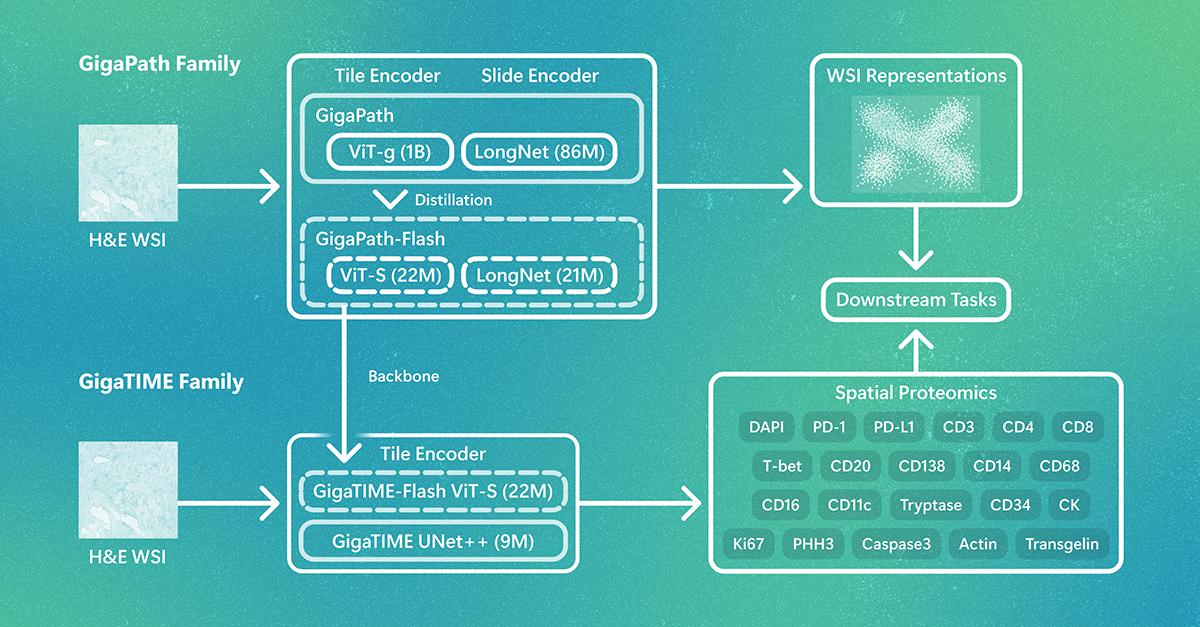
What if pathology foundation models could do more with less? GigaPath-Flash and GigaTIME-Flash cut computational demands while maintaining strong performance, opening the door to larger studies and broader exploration. The post GigaPath-Flash and GigaTIME-Flash: Toward population-scale discovery with efficient pathology foundation models appeared first on Microsoft Research.
We use cookies to run the site and, with your consent, for analytics and to show ads.
See our Cookie Policy.