Different methods have been suggested to solve the critical limitations encountered in the Von Neumann architecture: the continuous transfer of data between the memory and the processing units, leading to an increase in energy consumption and latency. This paper presents a digital design of multiply-accumulation (MAC) embedded within a standard 6T SRAM block using Verilog HDL. The design multiplies input data with corresponding weights that are stored in memory and accumulates the results to perform the fundamental calculations needed for neural network inference. It functions as a single-layer neural network and can carry out effective dot-product operations for tasks involving light AI inference. The proposed design combines a custom MAC computation engine with a 64KB SRAM that runs on a Spartan 6 XC6SLX150-3CSG484 FPGA which supports configurable vector lengths and operates as a single-layer neural network accelerator for lightweight AI tasks. In comparison to traditional SRAM-based processing, experimental results show a sustained throughput of 7.7 M MAC/s with an energy efficiency of 0.125 nJ/MAC, achieving energy efficiency. The design makes it easier to integrate with post-processing steps like activation functions by directly storing computation results in on-chip memory and exporting them to CSV for additional processing. A small, low-power solution for real-time AI workloads in embedded and Internet of Things devices is offered by this CIM technique.
This publication proposes a definition and a classification of agile software development approaches and analyses ten software development methods that can be characterized as being "agile" against the defined criterion.
P. Abrahamsson, O. Salo, Jussi Ronkainen et al.· arXiv.org· 727 citations· ⚡54
The study shows that agile practices improve both informal and formal communication, but indicates that, in larger development situations involving multiple external stakeholders, a mismatch of adequate communication mechanisms can sometimes even hinder the communication.
M. Pikkarainen, Jukka Haikara, O. Salo et al.· Empirical Software Engineeri...· 401 citations· ⚡48
The results indicate that software engineering work practices are chosen opportunistically, adapted and configured to provide value under the constrains imposed by the startup context.
Nicolò Paternoster, Carmine Giardino, M. Unterkalmsteiner et al.· Information and Software Tec...· 394 citations· ⚡54
The perception of the impact of agile methods is predominantly positive, and several challenge areas were discovered, but based on this study, agile methods are here to stay.
M. Laanti, O. Salo, P. Abrahamsson· Information and Software Tec...· 260 citations· ⚡20
AI is making software generation faster, but speed does not remove the need for expertise. As more work is delegated to AI, tacit knowledge may become one of the most important human advantages in software engineering. The post Beyond Prompt Engineering: The Role of Tacit Knowledge in Software Engineering appeared first on GPT-Lab.
MIT News · Artificial Intelligence· news.mit.eduSep 9, 2026
A weeklong summer workshop brought higher education faculty to campus to explore how AI and machine learning materials can be adapted for their classrooms.
MIT News · Artificial Intelligence· news.mit.eduSep 2, 2026
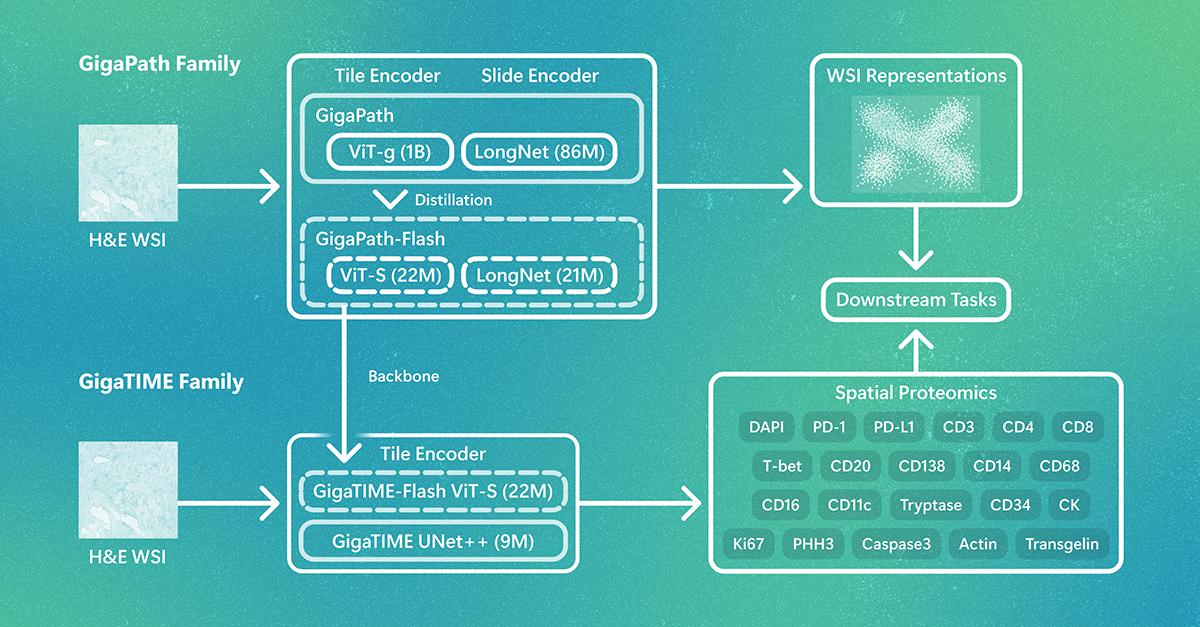
What if pathology foundation models could do more with less? GigaPath-Flash and GigaTIME-Flash cut computational demands while maintaining strong performance, opening the door to larger studies and broader exploration. The post GigaPath-Flash and GigaTIME-Flash: Toward population-scale discovery with efficient pathology foundation models appeared first on Microsoft Research.
We use cookies to run the site and, with your consent, for analytics and to show ads.
See our Cookie Policy.