Skip to content
#edge computing Open access

Quantum Finance

Sep 2026 · Zenodo (CERN European Organization for Nuclear Research)

Abstract

Finance has gone through decades under the guidance of efficient market hypothesis and rational pricing model, but has encountered profound challenges in the face of financial crises and market anomalies: irrational fluctuations in asset prices, herding effects, foam and crashes, exposing the mechanical limitations of classical financial theory. This book constructs a complete theoretical system of quantum finance using probability, entanglement, and measurement collapse as core tools in quantum mechanics. The whole book consists of six parts and thirty chapters. The first part establishes the philosophical foundation and quantum probability framework of quantum finance; The second part of the system constructs the theory of quantum asset pricing, covering quantum CAPM, quantum arbitrage pricing, quantum option pricing, and quantum interest rate term structure; The third part expands quantum risk management, covering quantum VaR, stress testing, and systemic risk; Part Four: Constructing Quantum Portfolio and Asset Allocation Theory; The fifth part delves into the microstructure of quantum markets and quantum behavioral finance; Chapter 6: Prospects for Quantum Computing, Quantum Machine Learning, Quantum Blockchain Applications in Finance, and Quantum Financial Regulation. The core insight of this book is that financial asset prices are not deterministic facts, but rather probabilities of superposition; Market price discovery is not a linear equilibrium, but the emergence of quantum entanglement and measurement collapse among market participants; The financial crisis is not an exogenous shock, but a quantum phase transition under critical conditions. The book has a complete system and rigorous mathematics, providing a cutting-edge theoretical framework for financial researchers, quantitative investment practitioners, and risk management professionals to understand the quantum nature of financial markets.

View source

Similar papers

#computer vision Review Sep 2017

Agile Software Development Methods: Review and Analysis

This publication proposes a definition and a classification of agile software development approaches and analyses ten software development methods that can be characterized as being "agile" against the defined criterion.

P. Abrahamsson, O. Salo, Jussi Ronkainen et al. · 727 citations · ⚡54
#computer vision Jun 2008

The impact of agile practices on communication in software development

The study shows that agile practices improve both informal and formal communication, but indicates that, in larger development situations involving multiple external stakeholders, a mismatch of adequate communication mechanisms can sometimes even hinder the communication.

M. Pikkarainen, Jukka Haikara, O. Salo et al. · 401 citations · ⚡48
#machine learning Review Open access Oct 2014

Software development in startup companies: A systematic mapping study

The results indicate that software engineering work practices are chosen opportunistically, adapted and configured to provide value under the constrains imposed by the startup context.

Nicolò Paternoster, Carmine Giardino, M. Unterkalmsteiner et al. · 394 citations · ⚡54

Related blog posts

GPT-Lab Sep 17, 2026

Beyond Prompt Engineering: The Role of Tacit Knowledge in Software Engineering

AI is making software generation faster, but speed does not remove the need for expertise. As more work is delegated to AI, tacit knowledge may become one of the most important human advantages in software engineering. The post Beyond Prompt Engineering: The Role of Tacit Knowledge in Software Engineering appeared first on GPT-Lab.

Microsoft Research Blog Aug 31, 2026

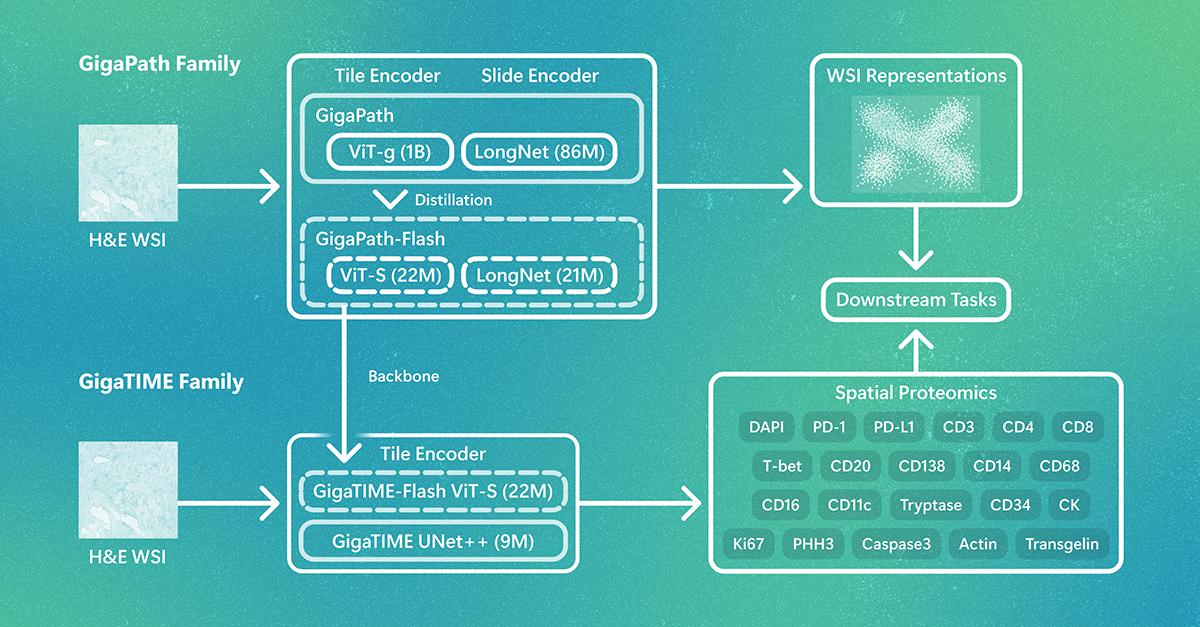
GigaPath-Flash and GigaTIME-Flash: Toward population-scale discovery with efficient pathology foundation models

What if pathology foundation models could do more with less? GigaPath-Flash and GigaTIME-Flash cut computational demands while maintaining strong performance, opening the door to larger studies and broader exploration. The post GigaPath-Flash and GigaTIME-Flash: Toward population-scale discovery with efficient pathology foundation models appeared first on Microsoft Research.

We use cookies to run the site and, with your consent, for analytics and to show ads. See our Cookie Policy.