Sep 2026· Zenodo (CERN European Organization for Nuclear Research)
Abstract
Continuous ingestion of high-dimensional telemetry forces predictive networks into a severe space-time trade-off, where conventional outlier rejection algorithms dilute mathematical gradients with benign idle data and induce thermal throttling on local hardware. This study introduces an $\mathcal{O}(d)$ ternary quantized framework that autonomously segregates sequential telemetry into redundant cache, degradation envelopes, and adversarial noise using parameter-free interquartile scaling and peak density thresholds. Empirical evaluations utilizing empirical machining datasets verify that topological isolation definitively eliminates gradient explosions inherent to raw data ingestion. The architecture achieves empirical risk minimization four times faster than robust Z-score baselines by discarding uninformative payload mass, while entropy evaluations prove anomalous amputations induce negligible structural information loss. Hardware simulations validate an absolute thermodynamic equilibrium, entirely preventing processor thermal throttling. Isolating pure physical degradation signatures from bulk transmission fundamentally dismantles the dependency on logarithmic cloud-indexing for automated diagnostics. Resolving this computational bottleneck establishes a thermodynamically sustainable foundation for decentralized operations, strictly fulfilling global mandates for energy-efficient computing infrastructure without compromising predictive integrity.
This publication proposes a definition and a classification of agile software development approaches and analyses ten software development methods that can be characterized as being "agile" against the defined criterion.
P. Abrahamsson, O. Salo, Jussi Ronkainen et al.· arXiv.org· 727 citations· ⚡54
The study shows that agile practices improve both informal and formal communication, but indicates that, in larger development situations involving multiple external stakeholders, a mismatch of adequate communication mechanisms can sometimes even hinder the communication.
M. Pikkarainen, Jukka Haikara, O. Salo et al.· Empirical Software Engineeri...· 401 citations· ⚡48
The results indicate that software engineering work practices are chosen opportunistically, adapted and configured to provide value under the constrains imposed by the startup context.
Nicolò Paternoster, Carmine Giardino, M. Unterkalmsteiner et al.· Information and Software Tec...· 394 citations· ⚡54
The perception of the impact of agile methods is predominantly positive, and several challenge areas were discovered, but based on this study, agile methods are here to stay.
M. Laanti, O. Salo, P. Abrahamsson· Information and Software Tec...· 260 citations· ⚡20
AI is making software generation faster, but speed does not remove the need for expertise. As more work is delegated to AI, tacit knowledge may become one of the most important human advantages in software engineering. The post Beyond Prompt Engineering: The Role of Tacit Knowledge in Software Engineering appeared first on GPT-Lab.
MIT News · Artificial Intelligence· news.mit.eduSep 9, 2026
A weeklong summer workshop brought higher education faculty to campus to explore how AI and machine learning materials can be adapted for their classrooms.
MIT News · Artificial Intelligence· news.mit.eduSep 2, 2026
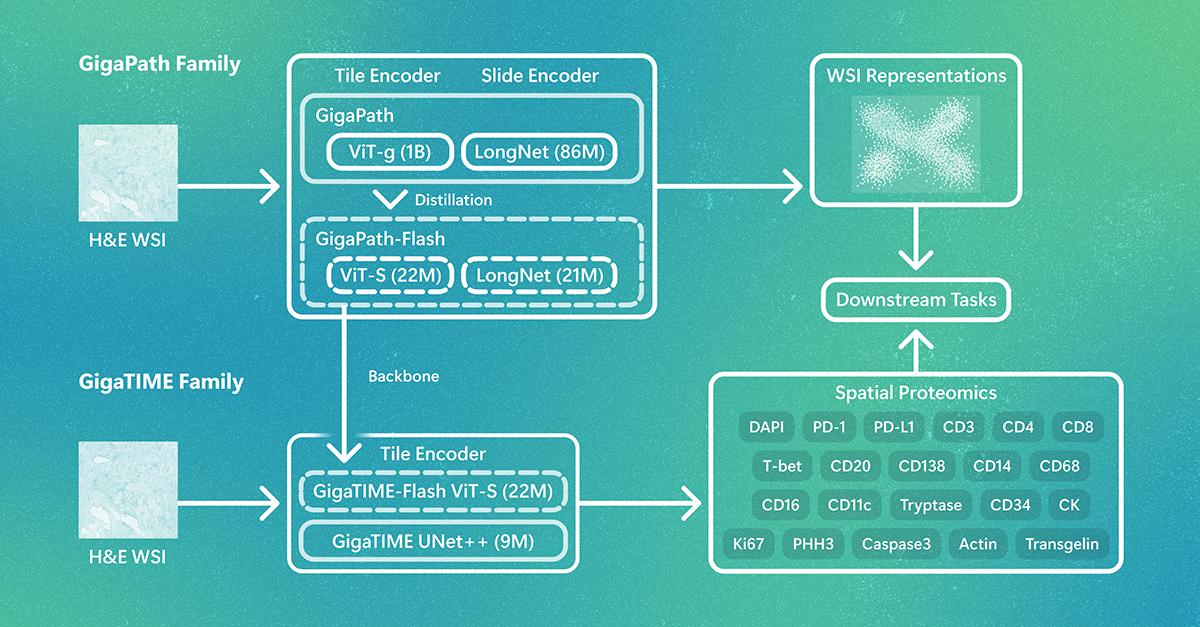
What if pathology foundation models could do more with less? GigaPath-Flash and GigaTIME-Flash cut computational demands while maintaining strong performance, opening the door to larger studies and broader exploration. The post GigaPath-Flash and GigaTIME-Flash: Toward population-scale discovery with efficient pathology foundation models appeared first on Microsoft Research.
We use cookies to run the site and, with your consent, for analytics and to show ads.
See our Cookie Policy.