High penetration of distributed photovoltaic (PV) generation in low-voltage distribution networks can cause voltage violations, limited PV accommodation, and uneven loading among neighboring distribution transformers (DTs). To address these issues, an edge computing-enabled optimal control method is proposed for low-voltage distribution networks organized as distribution transformer clusters (DTCs). An intelligent fusion terminal serves as the edge computing platform and locally performs measurement acquisition, day-ahead schedule generation, intraday rolling correction, safety verification, and control command issuance. In the day-ahead stage, PV generation scenarios are identified from forecast profiles, and scenario-dependent energy storage state-of-charge (SOC) reservation rules and soft open point (SOP) active power balancing schedules are generated. In the intraday stage, PV inverter reactive power, energy storage charging and discharging, necessary PV active power curtailment, and SOP power transfer are coordinated according to real-time measurements. A safety scaling and boundary verification mechanism is further introduced to ensure voltage security and device feasibility without repeatedly solving complex optimization models. Case studies on a three-DT system show that the proposed method reduces overvoltage occurrences in TQ1 by 81.0% and eliminates undervoltage occurrences under four PV scenarios. With SOP-based balancing, total overvoltage and undervoltage occurrences in the DTC are reduced by 4.35% and 88.99%, respectively, while PV utilization and loading ratio balance are improved. The intraday control time is approximately 20 ms, demonstrating the feasibility of real-time rolling control on resource-constrained edge computing platforms.
This publication proposes a definition and a classification of agile software development approaches and analyses ten software development methods that can be characterized as being "agile" against the defined criterion.
P. Abrahamsson, O. Salo, Jussi Ronkainen et al.· arXiv.org· 727 citations· ⚡54
The study shows that agile practices improve both informal and formal communication, but indicates that, in larger development situations involving multiple external stakeholders, a mismatch of adequate communication mechanisms can sometimes even hinder the communication.
M. Pikkarainen, Jukka Haikara, O. Salo et al.· Empirical Software Engineeri...· 401 citations· ⚡48
The results indicate that software engineering work practices are chosen opportunistically, adapted and configured to provide value under the constrains imposed by the startup context.
Nicolò Paternoster, Carmine Giardino, M. Unterkalmsteiner et al.· Information and Software Tec...· 394 citations· ⚡54
The perception of the impact of agile methods is predominantly positive, and several challenge areas were discovered, but based on this study, agile methods are here to stay.
M. Laanti, O. Salo, P. Abrahamsson· Information and Software Tec...· 260 citations· ⚡20
AI is making software generation faster, but speed does not remove the need for expertise. As more work is delegated to AI, tacit knowledge may become one of the most important human advantages in software engineering. The post Beyond Prompt Engineering: The Role of Tacit Knowledge in Software Engineering appeared first on GPT-Lab.
MIT News · Artificial Intelligence· news.mit.eduSep 9, 2026
A weeklong summer workshop brought higher education faculty to campus to explore how AI and machine learning materials can be adapted for their classrooms.
MIT News · Artificial Intelligence· news.mit.eduSep 2, 2026
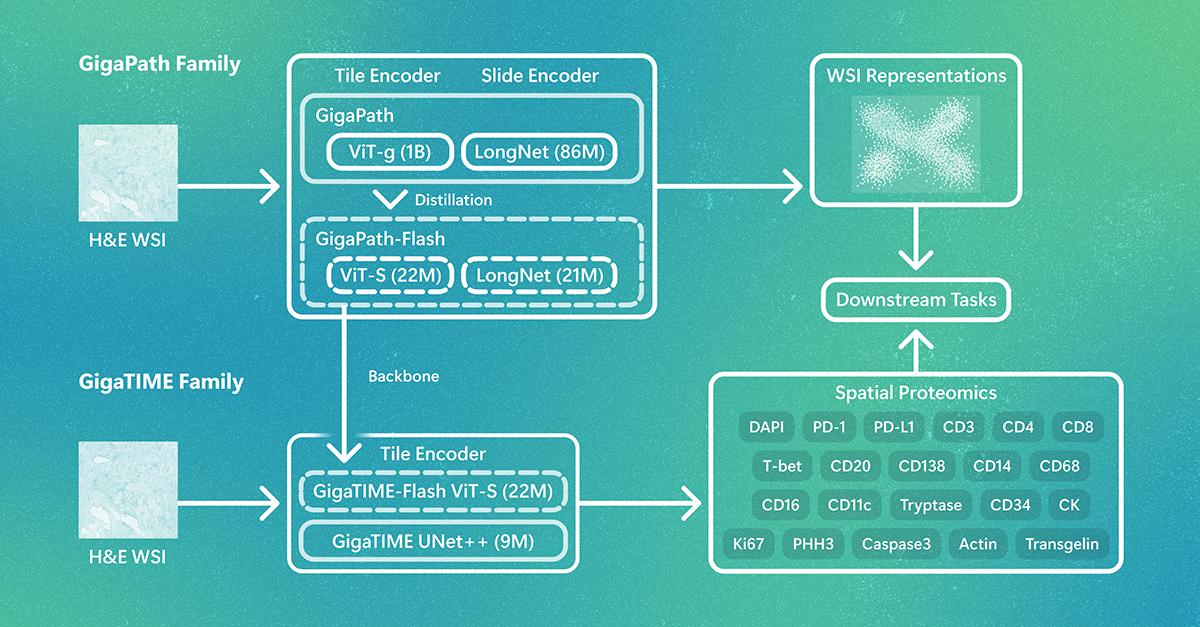
What if pathology foundation models could do more with less? GigaPath-Flash and GigaTIME-Flash cut computational demands while maintaining strong performance, opening the door to larger studies and broader exploration. The post GigaPath-Flash and GigaTIME-Flash: Toward population-scale discovery with efficient pathology foundation models appeared first on Microsoft Research.
We use cookies to run the site and, with your consent, for analytics and to show ads.
See our Cookie Policy.