This work formalizes target-mode coverage as target-mode coverage, the coverage of a predefined set of semantically specified modes, and proposes multi-axis max@K, a group-based reinforcement learning objective for improving it in diffusion-based T2I models.
Abstract
Text-to-image (T2I) models can synthesize realistic, prompt-aligned images, yet samples generated for the same prompt often cover only a small subset of visually distinct modes. This limits diversity and, for person-centric prompts, can reflect or amplify demographic skew. We formalize this problem as target-mode coverage, the coverage of a predefined set of semantically specified modes, and propose multi-axis max@K, a group-based reinforcement learning objective for improving it in diffusion-based T2I models. Given a group of samples and one score per target mode, multi-axis max@K first takes the maximum score across samples for each mode and then sums these per-mode maxima. The resulting credit assignment gives a sample positive weight on a mode only when it raises that mode's group maximum, so different samples can contribute to different modes. We validate the credit-assignment mechanism on a synthetic mixture and on SD3.5-M with deterministic pixel-based color rewards, and then apply the same objective to perceived-appearance fairness. On held-out prompts, multi-axis max@K improves the Fairness Score by 0.23-0.36 over the base model under three automatic evaluators, while maintaining image quality and text alignment. Code is available at https://github.com/KuOnoda/multi-axis-maxk.

This work proposes Hybrid-Policy Self-Distillation (HPSD), a novel self-distillation framework where a single TI2V model acts as both teacher and student under different conditions: the teacher operates in TI2V mode with a high-quality first frame and an enhanced prompt, while the student runs in the base T2V mode with...
Jia-Zi Bu, Peng-Yang Ling, Yu-Jie Zhou et al.· 2 citations
This approach first reframes concept erasure as prompt-conditioned parameter amortization and trains a hypernetwork to map textual descriptions to prompt-specific LoRA updates, eliminating the need for per-prompt gradient optimization or manual LoRA merging.
Yi Sun, Xin-Hao Zhong, Zhi-Qi Zhang et al.· 0 citations
A multi-dimensional image quality assessment framework for T2I tasks that can not only distinguish overall performance differences across models, but also provide interpretable results at the level of individual dimensions is proposed.
This paper proposes a novel LVLM-Guided multi-level contrastive learning network (MLCL), and introduces a multi-level alignment strategy: inside each modality, a normalized InfoNCE loss aligns features from the two encoders to reduce redundancy.
Jun Li, Ling-Hao Yan, Qing-Xu Liu et al.· Scientific Reports· 0 citations
A novel notion of concept-wise mutual information is introduced and large, concept-dependent differences between individual layers are found, demonstrating that the generation of specific structures is localized in distinct parts of the network.
Nikolai Röhrich, Isabell Hans, F. Krause et al.· 0 citations
A unified theoretical framework is introduced that separates distribution modeling from matching discrepancy and connects global objectives to pointwise feature updates through Wasserstein gradient flow and motivates MGFlow, which models feature distributions with Gaussian mixtures at an adjustable granularity between...
Chi Zhang, Hao-Yan Shi, Yue-Yi Liu et al.· arXiv.org· 3 citations
Related blog posts
MIT News · Artificial Intelligence· news.mit.eduOct 28, 2026
Professor Paris Smaragdis develops computers with superhuman hearing for applications like speech recognition, music understanding, and environmental monitoring.
Exploring how generative AI could make machine vision more accessible to businesses. The post GenEye in a Box: Making Machine Vision Something You Can Just Ask For appeared first on GPT-Lab.
Microsoft Research Blog· microsoft.comAug 11, 2026
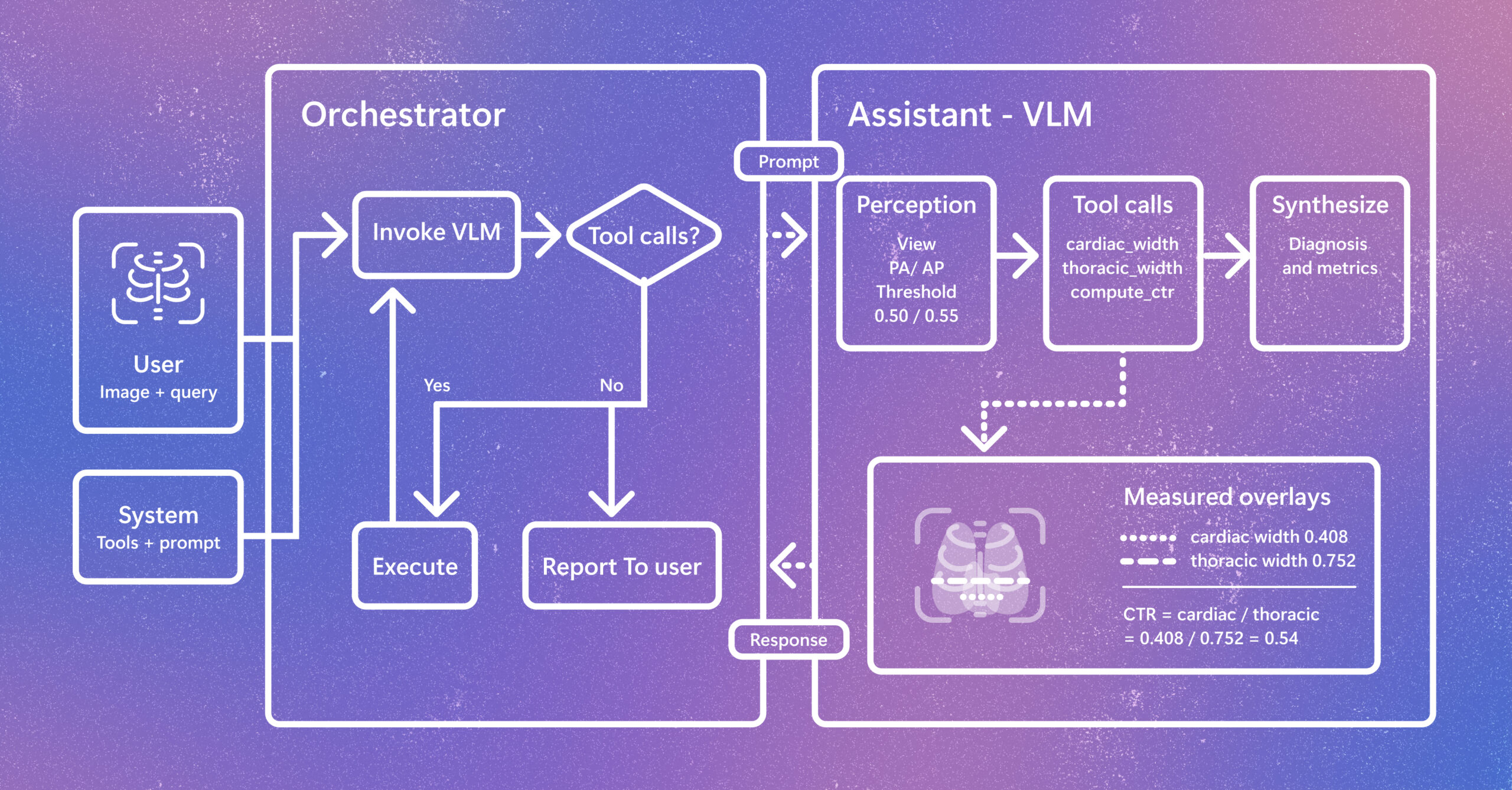
Radiology AI is evolving beyond report generation. CARE-X explores a unified approach that combines flexible reasoning, calibrated predictions, and measurement-based tools for chest X-ray interpretation. The post Introducing CARE-X: Towards Clinically Useful Radiology VLMs with Auxiliary Supervision, Reward-Aligned Learning, and Tool-Augmented Measurement appeared first on Microsoft Research.