Skip to content
#software testing Review Open access

Comparative evaluation of artificial intelligence-assisted smile designs: Aesthetic preferences among dental specialists and laypeople.

Aug 2026 · Journal of Prosthodontics · 0 citations · 20 references
Medicine

TL;DR

Aesthetic preferences for AI-assisted smile designs differed meaningfully between software platforms and, to a lesser extent, between dental specialists and laypeople, with specialists showing a distinctly stronger relative preference for Smilecloud.

Abstract

Purpose

To evaluate aesthetic preferences for artificial intelligence (AI)-assisted smile designs produced using four digital smile design software platforms, and to explore associations between these preferences and demographic factors, among dental specialists and laypeople.

Materials And Methods

A cross-sectional study was conducted to assess aesthetic preferences for AI-assisted smile designs among dental specialists and laypeople. Photographs of 10 standardized models were processed through four digital smile design software platforms: Smilefy, Smilecloud, DTS PRO, and Trios Smile Design. A single prosthodontist reviewed each automated output and adjusted tooth shape, color, midline, gingival contour, and occlusal plane where needed to conform to clinical norms; outputs are therefore best described as AI-assisted rather than fully automated. Each output was labeled A-D to blind participants to the software used; this letter assignment was shuffled independently for each of the 10 model sets rather than following a single fixed layout, though the specific mapping used per set was not formally logged. Participants ranked the four outputs per model from 1 (most aesthetic) to 4 (least aesthetic) using a blinded, pretested questionnaire. Of the participants recruited, at least partial ranking data were available for an analytic sample of 78 dental specialists and 86 laypeople (164 total; demographic data were available for 76 and 85, respectively). Because rankings were ordinal, clustered within participants, and forced-choice, aesthetic preference was analyzed using the Friedman test with Kendall's coefficient of concordance (W) as an effect size, followed by Wilcoxon signed-rank pairwise comparisons with Holm correction. Associations between preference and professional group, age, and gender were examined using Mann-Whitney U and Kruskal-Wallis tests (Holm-corrected), applied to each software's mean rank.

Results

Rankings differed significantly across the four software platforms (Friedman χ2 = 349.8, df = 3, p < 0.001; Kendall's W = 0.71, indicating strong agreement). Smilefy and Smilecloud were the most preferred designs overall (mean ranks 1.78 and 1.90, respectively, out of 4), while Trios was the least preferred (mean rank 3.55). Specialists showed significantly stronger relative preference for Smilecloud than laypeople did (rank-biserial r = 0.37, Holm-adjusted p < 0.001), while laypeople were relatively more tolerant of Trios than specialists were (r = -0.44, Holm-adjusted p < 0.001). Within specialists, preference against Trios strengthened significantly with age (Kruskal-Wallis H = 26.2, p < 0.001, ε2 = 0.32); no other age or gender association survived correction for multiple comparisons in either group.

Conclusions

Aesthetic preferences for AI-assisted smile designs differed meaningfully between software platforms and, to a lesser extent, between dental specialists and laypeople, with specialists showing a distinctly stronger relative preference for Smilecloud. Age-related differences were most evident among specialists' preferences for Trios. Given the cross-sectional, non-randomized design and the operator-adjusted nature of the outputs evaluated, these findings should be read as associations rather than causal drivers of preference.

Read PDF

Similar papers

#computer vision Review Sep 2017

Agile Software Development Methods: Review and Analysis

This publication proposes a definition and a classification of agile software development approaches and analyses ten software development methods that can be characterized as being "agile" against the defined criterion.

P. Abrahamsson, O. Salo, Jussi Ronkainen et al. · 727 citations · ⚡54
#computer vision Jun 2008

The impact of agile practices on communication in software development

The study shows that agile practices improve both informal and formal communication, but indicates that, in larger development situations involving multiple external stakeholders, a mismatch of adequate communication mechanisms can sometimes even hinder the communication.

M. Pikkarainen, Jukka Haikara, O. Salo et al. · 401 citations · ⚡48
#machine learning Review Open access Oct 2014

Software development in startup companies: A systematic mapping study

The results indicate that software engineering work practices are chosen opportunistically, adapted and configured to provide value under the constrains imposed by the startup context.

Nicolò Paternoster, Carmine Giardino, M. Unterkalmsteiner et al. · 394 citations · ⚡54
#computer vision Review Mar 2008

Agile methods in European embedded software development organisations: a survey on the actual use and usefulness of Extreme Programming and Scrum

The results show that the embedded industry has been able to apply agile methods in its development processes and that the appreciation of the agile methods and their individual practices appears to increase once adopted and applied in practice.

O. Salo, P. Abrahamsson · 238 citations · ⚡9
#computer vision Open access Jul 2017

What happens when software developers are (un)happy

Consequences of happiness and unhappiness that are beneficial and detrimental for developers' mental well-being, the software development process, and the produced artifacts are found.

D. Graziotin, Fabian Fagerholm, Xiaofeng Wang et al. · 236 citations · ⚡13
#computer vision Open access Oct 2004

Mobile-D: an agile approach for mobile application development

The Mobile-D approach is briefly outlined here and the experiences gained from four case studies are discussed, which helped develop an agile development approach for mobile application development.

P. Abrahamsson, Antti Hanhineva, H. Hulkko et al. · 225 citations · ⚡18

Related blog posts

GPT-Lab Sep 17, 2026

Beyond Prompt Engineering: The Role of Tacit Knowledge in Software Engineering

AI is making software generation faster, but speed does not remove the need for expertise. As more work is delegated to AI, tacit knowledge may become one of the most important human advantages in software engineering. The post Beyond Prompt Engineering: The Role of Tacit Knowledge in Software Engineering appeared first on GPT-Lab.

MIT News · Artificial Intelligence Aug 17, 2026

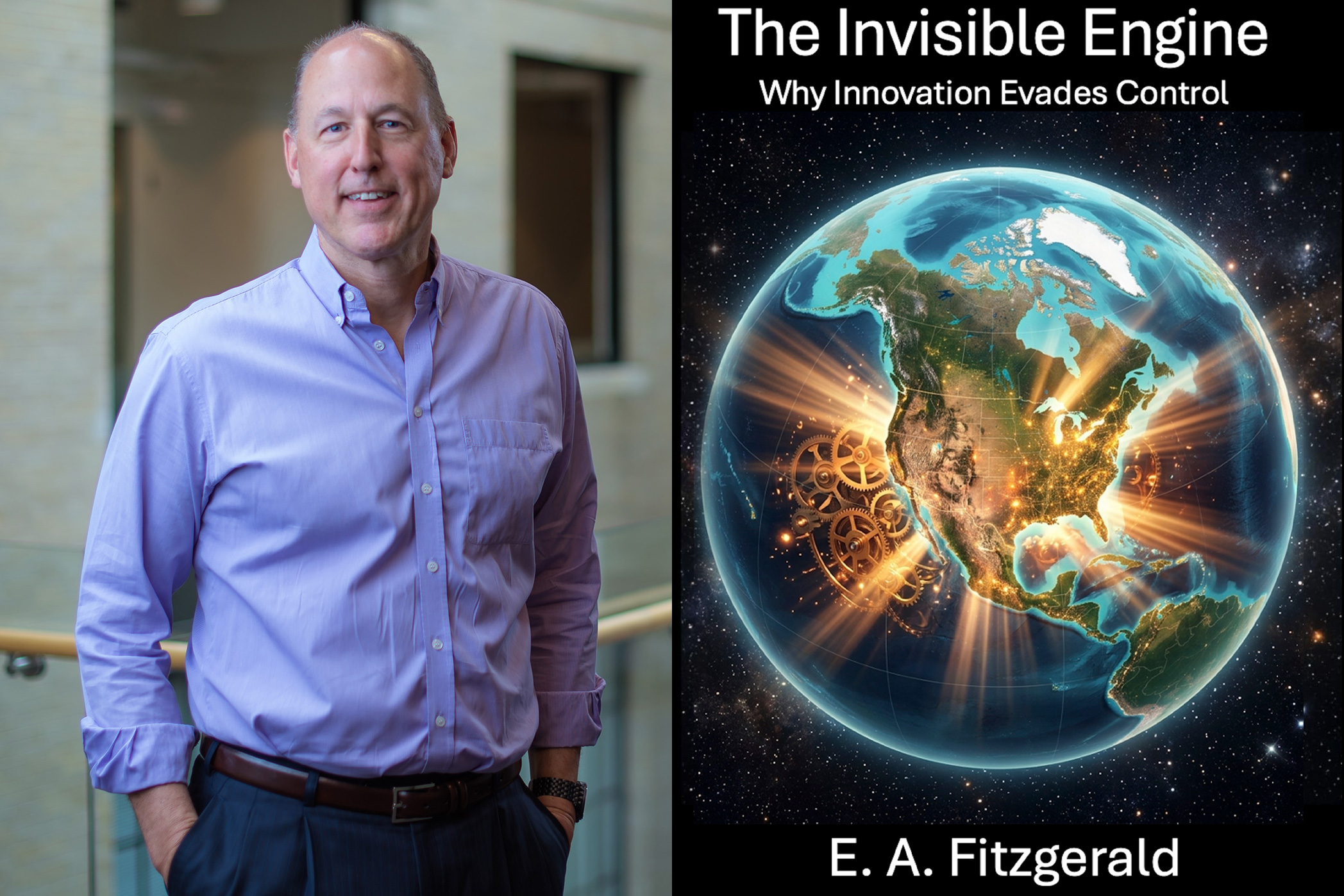
Q&A: Rethinking how innovation happens

In his latest book, Professor Eugene Fitzgerald examines the forces that turn breakthroughs into value — and why innovation resists simple formulas.

Microsoft Research Blog Aug 12, 2026

MindTopo reveals VLMs’ spatial reasoning abilities

A path, a fence, a knot. MindTopo sets a new benchmark for testing how AI understands topological relationships and highlights new opportunities to strengthen spatial reasoning and planning. The post MindTopo reveals VLMs’ spatial reasoning abilities appeared first on Microsoft Research.

We use cookies to run the site and, with your consent, for analytics and to show ads. See our Cookie Policy.