Sep 2026· Journal of the American Society of Echocardiography· 0 citations· 37 references
Medicine
TL;DR
Right ventricular free-wall longitudinal strain is a robust determinant of adverse outcomes beyond conventional LV indices and A4C-LVLS in VFMR and might be incorporated into routine evaluation to improve risk stratification in VFMR.
Abstract
Background
Ventricular functional mitral regurgitation (VFMR) is a heterogeneous disease with widely variable outcomes, yet current risk stratification relies predominantly on left ventricular (LV) indices. This study aims to evaluate the incremental value of right ventricular free-wall longitudinal strain (RVfwLS) beyond conventional LV parameters and LV longitudinal strain (LVLS) in an unselected VFMR population.
Methods
This multicenter retrospective cohort included consecutive patients with moderately severe or greater VFMR diagnosed between 2010 and 2022. Right ventricular free-wall longitudinal strain and apical 4-chamber LVLS (A4C-LVLS) were quantified using automated software. The primary end point was cardiovascular death or death equivalent (LV assist device implantation or heart transplantation) during the longest available follow-up. Optimal cutoff for RVfwLS was derived from regression tree analysis and maximal selective rank statistics. Incremental prognostic value was assessed using likelihood ratio tests comparing nested models.
Results
Among the 487 patients included, 156 (32%) patients experienced the primary end point over a median follow-up of 2.6 (interquartle range, 0.85.9) years. Compared with event-free patients, those with events had larger LV volumes, but lower LV ejection fraction, A4C-LVLS, RV fractional area change (RVFAC), and RVfwLS (all P ≤ .005). Right ventricular free-wall longitudinal strain was independently associated with the primary end point on top of conventional LV indices, A4C-LVLS, and RVFAC (all P ≤ .047). Patients with A4C-LVLS < 8.7% and RVfwLS < 14% exhibited markedly worse 6-year event-free survival (48%) than those with higher biventricular strain (A4C-LVLS ≥ 8.7% and RVfwLS ≥ 14%; 72%; P < .001). Moreover, RVfwLS provided incremental prognostic value beyond A4C-LVLS, conventional LV indices, and RVFAC (all P ≤ .046).
Conclusions
Right ventricular free-wall longitudinal strain is a robust determinant of adverse outcomes beyond conventional LV indices and A4C-LVLS in VFMR. A cutoff near 14% reliably identified the highest-risk subgroup. These results might support incorporating RVfwLS into routine evaluation to improve risk stratification in VFMR.

Right heart failure (RHF) remains a major determinant of morbidity and mortality following left ventricular assist device (LVAD) implantation. Right ventricular free wall strain (RVFWS) and global longitudinal strain (RVGLS) have emerged as promising echocardiographic markers, yet their long-term prognostic utility and...
Carl-Thaddäus Braun, R. Schramm, M. Morshuis et al.· The International Journal of...· 0 citations
To assess right ventricular (RV) systolic trajectories across right ventricular pacing (RVP) burdens and their relationship with left ventricular (LV) remodeling in patients with preserved baseline LV ejection fraction (LVEF), data are presented on patients with preserved baseline LV ejection fraction (LVEF).
O. Malikides, M. Marketou, Andria Papazachariou et al.· Echocardiography· 0 citations
The TVARC and ASE cutoffs for RV dysfunction showed prognostic value in patients with significant STR, and combining TAPSE and RVFWLS may provide a pragmatic, exploratory framework for risk stratification of these patients.
X. Galloo, M. Dietz, E. Prihadi et al.· JACC Cardiovascular Imaging· 1 citation
RVFW strain and coupling indexes derived from catheterization and echocardiographic RV strain imaging can aid with the need for an RVAD and RHF risk stratification following LVAD implantation.
Michael Schäfer, S. S. Bakhtiyar, T. Hanff et al.· JACC: Advances· 0 citations
Background Outcomes after transcatheter aortic valve replacement (TAVR) reflect cumulative myocardial injury beyond stenosis. Left ventricular (LV) and right ventricular (RV) dysfunction may present as overlapping but distinct functional profiles in aortic stenosis; the prognostic significance of their coexistence rema...
Ying-Qi Liu, Z. Ge, Wen Liu et al.· JACC: Asia· 1 citation
Strain parameters, particularly LVGLS, remained independently associated with outcomes in 34 of 36 studies after multivariable adjustment, often providing incremental value beyond LVEF and late gadolinium enhancement, and support strain imaging, especially LVGLS, as an adjunct to conventional risk stratification in div...
Dina Mohammed, Humza Saeed, Abdallah Rayyan et al.· Cardiology in Review· 0 citations
Related blog posts
Microsoft Research Blog· microsoft.comOct 30, 2026
Evaluating Microsoft Copilot at enterprise scale requires test data that captures the full complexity of real organizations, yet real enterprise data contains sensitive information that cannot be used for evaluation under any circumstances. The post From synthetic enterprise data evaluations to real Microsoft Copilot AI confidence appeared first on Microsoft Research.
Microsoft Research Blog· microsoft.comOct 29, 2026
Host Sowbhagya Suresh shares some of the latest news and cutting-edge research from across Microsoft—from understanding the challenges facing coding agents to uncovering how people use AI at work and improving extended-range weather forecasting. The post Microsoft Research Focus – Edition #97 appeared first on Microsoft Research.
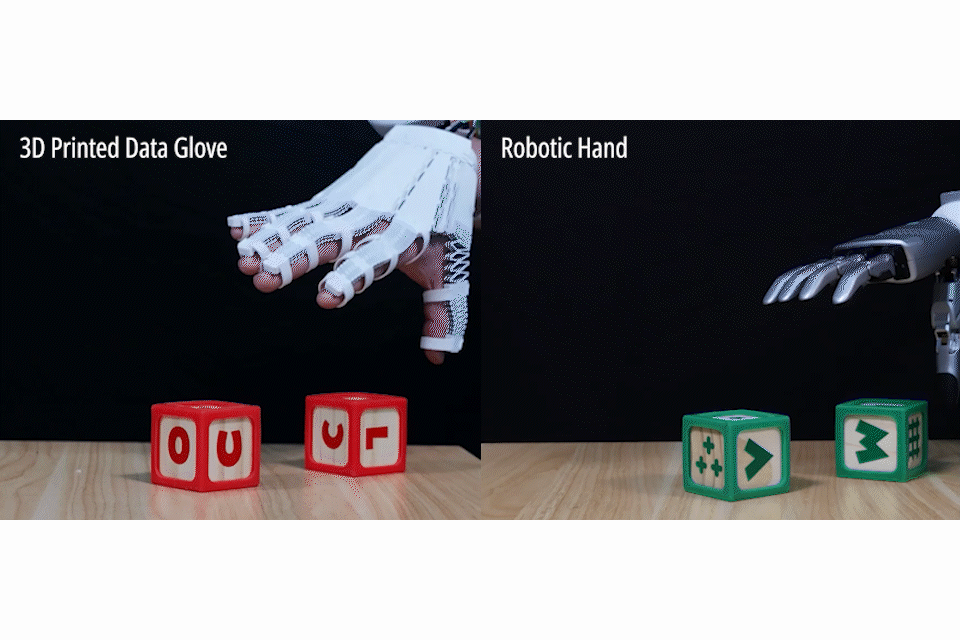
“X-Hinges” helps design and 3D print items like lamps and gloves with an interactive twist: automatically embedded sensors that perceive and adaptively respond to human contact.
We use cookies to run the site and, with your consent, for analytics and to show ads.
See our Cookie Policy.