Skip to content
#software testing Book Open access

A History of Healthcare Computing and Advances in Clinical Information Productivity in Southampton, 1980 -2024: Essay 7: The Challenges of Acquisition and Integration of an Enterprise Document Management System in Southampton, 2013-2024

Sep 2026 · ePrints Soton (University of Southampton)

Abstract

In 2010, in recognition of the continuing failings and overruns of government directed IT programmes, which included the NHS National Programme for Information Technology (NPfIT), the Government Digital Service was created to bring coherence to IT strategy in Government Departments and to its internet projection. This initiative created Gov.UK around a series of 25 exemplar projects, and a series of powerful design principles which focussed upon in house development, agile and iterative development, and a relentless focus and testing of the actual needs of the true end users of any system. This would make any such a system “Digital by Default” meaning so good that the user would choose no alternative way of working. In 2013, the then Secretary of State for Health Jeremy Hunt followed NPfIT with the “Go Paperless” strategy for the NHS, which was still heavily dependent upon paper records with their resulting costs and inefficiencies. The “Go paperless” mandate prompted an urgent plan at University Hospital Southampton (UHS) to undertake two major projects in parallel: the digitisation of archival paper records, and the acquisition of a commercial enterprise grade Electronic Document Management System (EDMS). The EDMS in turn was intended to serve as the primary EDMS for the Trust, and to replace the locally developed UHS Electronic Patient Record (EPR). This project proved to be more complex than intended, with modified outcomes. Old lessons were relearned about the evolution of complex digital software projects which are mandated by political imperatives rather than operational needs and technical maturity. In the previous essay in this series, I described the digital scanning programme at UHS from 2013 – 2018 and the attempts to create a workable classification scheme for the diverse documentation that comprises a typical medical record. In this essay, I describe and reflect upon the lessons and outcomes of the acquisition and implementation programme for the Hyland OnBase EDMS at UHS between 2014 and 2024.


Read PDF

Similar papers

#computer vision Review Sep 2017

Agile Software Development Methods: Review and Analysis

This publication proposes a definition and a classification of agile software development approaches and analyses ten software development methods that can be characterized as being "agile" against the defined criterion.

P. Abrahamsson, O. Salo, Jussi Ronkainen et al. · 727 citations · ⚡54
#computer vision Jun 2008

The impact of agile practices on communication in software development

The study shows that agile practices improve both informal and formal communication, but indicates that, in larger development situations involving multiple external stakeholders, a mismatch of adequate communication mechanisms can sometimes even hinder the communication.

M. Pikkarainen, Jukka Haikara, O. Salo et al. · 401 citations · ⚡48
#machine learning Review Open access Oct 2014

Software development in startup companies: A systematic mapping study

The results indicate that software engineering work practices are chosen opportunistically, adapted and configured to provide value under the constrains imposed by the startup context.

Nicolò Paternoster, Carmine Giardino, M. Unterkalmsteiner et al. · 394 citations · ⚡54
#computer vision Review Mar 2008

Agile methods in European embedded software development organisations: a survey on the actual use and usefulness of Extreme Programming and Scrum

The results show that the embedded industry has been able to apply agile methods in its development processes and that the appreciation of the agile methods and their individual practices appears to increase once adopted and applied in practice.

O. Salo, P. Abrahamsson · 238 citations · ⚡9
#computer vision Open access Jul 2017

What happens when software developers are (un)happy

Consequences of happiness and unhappiness that are beneficial and detrimental for developers' mental well-being, the software development process, and the produced artifacts are found.

D. Graziotin, Fabian Fagerholm, Xiaofeng Wang et al. · 236 citations · ⚡13
#computer vision Open access Oct 2004

Mobile-D: an agile approach for mobile application development

The Mobile-D approach is briefly outlined here and the experiences gained from four case studies are discussed, which helped develop an agile development approach for mobile application development.

P. Abrahamsson, Antti Hanhineva, H. Hulkko et al. · 225 citations · ⚡18

Related blog posts

GPT-Lab Sep 17, 2026

Beyond Prompt Engineering: The Role of Tacit Knowledge in Software Engineering

AI is making software generation faster, but speed does not remove the need for expertise. As more work is delegated to AI, tacit knowledge may become one of the most important human advantages in software engineering. The post Beyond Prompt Engineering: The Role of Tacit Knowledge in Software Engineering appeared first on GPT-Lab.

MIT News · Artificial Intelligence Aug 17, 2026

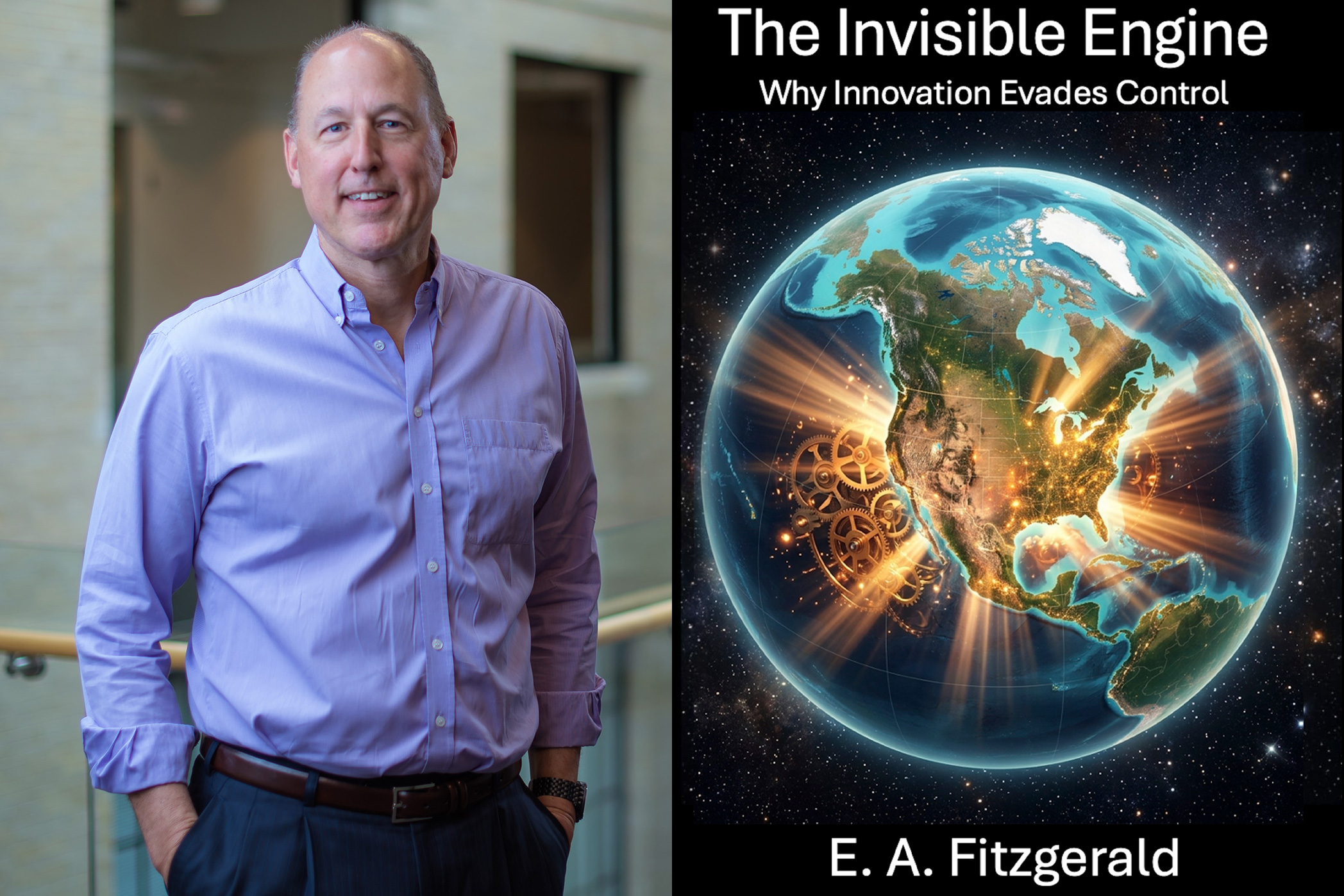
Q&A: Rethinking how innovation happens

In his latest book, Professor Eugene Fitzgerald examines the forces that turn breakthroughs into value — and why innovation resists simple formulas.

Microsoft Research Blog Aug 12, 2026

MindTopo reveals VLMs’ spatial reasoning abilities

A path, a fence, a knot. MindTopo sets a new benchmark for testing how AI understands topological relationships and highlights new opportunities to strengthen spatial reasoning and planning. The post MindTopo reveals VLMs’ spatial reasoning abilities appeared first on Microsoft Research.

We use cookies to run the site and, with your consent, for analytics and to show ads. See our Cookie Policy.