Skip to content
#edge computing Preprint

An Intelligent Decision Support System for Emotion Monitoring using Microscopic Fixational Dynamics

Sep 2026 · 0 citations · 80 references
Computer Science

TL;DR

An intelligent decision support system and pervasive edge-computing framework that leverages smart glasses and a companion smartphone to infer emotional states from microscopic visual fixation patterns, establishing a physiologically interpretable, unobtrusive, and deployable paradigm for continuous real-time emotion monitoring.

Abstract

The rising prevalence of psychological disorders necessitates effective emotion monitoring, yet current methods relying on facial or physiological signals often suffer from intrusiveness and privacy issues. This paper proposes an intelligent decision support system and pervasive edge-computing framework that leverages smart glasses and a companion smartphone to infer emotional states from microscopic visual fixation patterns. Moving beyond traditional macroscopic gaze metrics, the proposed system extracts and decomposes three distinct neurophysiological micro-movements: microsaccades, ocular drifts, and ocular microtremors. We introduce an interpretable hybrid artificial intelligence pipeline combining a multi-head attention mechanism, extreme gradient boosting, and a support vector machine to extract deep temporal features, quantify their physiological importance, and perform efficient on-device classification. Through an extensive evaluation involving 60 volunteers, we rigorously validate the framework under a strict leave-one-subject-out cross-validation protocol across both controlled and naturalistic mobile scenarios. Ablation studies unequivocally demonstrate that these fixational micro-movements are substantially more discriminative for emotion inference than traditional macroscopic features. Furthermore, aligned with contemporary affective science, the system incorporates a few-shot personalization mechanism to bridge universal physiological baselines with individual emotional heterogeneity, achieving a highly robust personalized F1-score of 83.6%. This work establishes a physiologically interpretable, unobtrusive, and deployable paradigm for continuous real-time emotion monitoring.

View source

Similar papers

#computer vision Review Sep 2017

Agile Software Development Methods: Review and Analysis

This publication proposes a definition and a classification of agile software development approaches and analyses ten software development methods that can be characterized as being "agile" against the defined criterion.

P. Abrahamsson, O. Salo, Jussi Ronkainen et al. · 727 citations · ⚡54
#computer vision Jun 2008

The impact of agile practices on communication in software development

The study shows that agile practices improve both informal and formal communication, but indicates that, in larger development situations involving multiple external stakeholders, a mismatch of adequate communication mechanisms can sometimes even hinder the communication.

M. Pikkarainen, Jukka Haikara, O. Salo et al. · 401 citations · ⚡48
#machine learning Review Open access Oct 2014

Software development in startup companies: A systematic mapping study

The results indicate that software engineering work practices are chosen opportunistically, adapted and configured to provide value under the constrains imposed by the startup context.

Nicolò Paternoster, Carmine Giardino, M. Unterkalmsteiner et al. · 394 citations · ⚡54

Related blog posts

GPT-Lab Sep 17, 2026

Beyond Prompt Engineering: The Role of Tacit Knowledge in Software Engineering

AI is making software generation faster, but speed does not remove the need for expertise. As more work is delegated to AI, tacit knowledge may become one of the most important human advantages in software engineering. The post Beyond Prompt Engineering: The Role of Tacit Knowledge in Software Engineering appeared first on GPT-Lab.

Microsoft Research Blog Aug 31, 2026

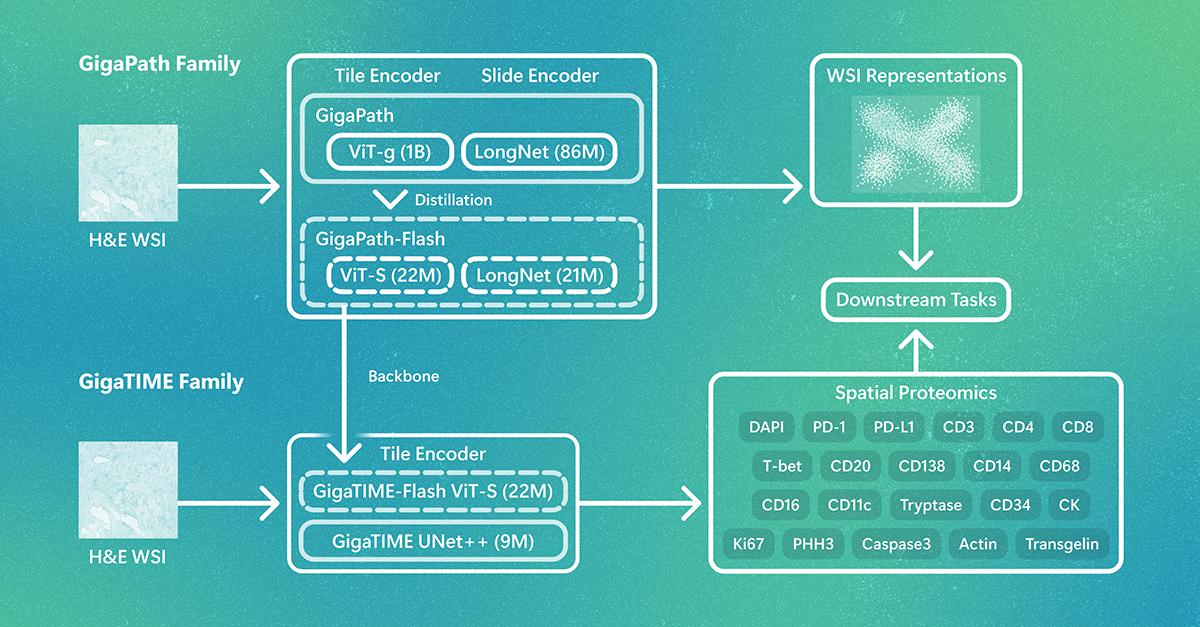
GigaPath-Flash and GigaTIME-Flash: Toward population-scale discovery with efficient pathology foundation models

What if pathology foundation models could do more with less? GigaPath-Flash and GigaTIME-Flash cut computational demands while maintaining strong performance, opening the door to larger studies and broader exploration. The post GigaPath-Flash and GigaTIME-Flash: Toward population-scale discovery with efficient pathology foundation models appeared first on Microsoft Research.

We use cookies to run the site and, with your consent, for analytics and to show ads. See our Cookie Policy.