Skip to content

Less Is Moral: A CHARMing Framework for Moral Foundations Detection in Endorsement Behaviour

Hui-Xiang Fu Marian-Andrei Rizoiu
Sep 2026 · 0 citations · 44 references
Computer Science

Abstract

Moral language plays a central role in shaping online endorsement and the diffusion of information, yet existing moral foundation detection systems often suffer from poor cross-domain generalization, weak rationale grounding, and reliance on costly prompting-based large language models (LLMs). We introduce CHARM, a MA\textbf{C}- and \textbf{H}ate-speech-\textbf{A}ware \textbf{R}ationale-aligned \textbf{M}oral foundation detection framework built on a lightweight fine-tuned LLM, which integrates complementary moral grounding, rationale alignment, and polarity-aware hate speech signals to support more robust and faithful moral prediction. Unlike prior dictionary-, fine-tune-, or prompt-based detectors, which decouple computation from psychological theory, CHARM is built so that each component -- MAC cross-attention, rationale alignment, and hate-speech modulation -- operationalizes a distinct psychological construct. Using a 30\% subsample of the MFTC, MFRC, and News training pools together with the richer supervision in MFTCXplain, CHARM improves AUC by up to 15.3\% in-domain, surpasses the supervised baselines on every out-of-domain dataset in both AUC and F1, and offers a scalable, low-cost alternative to prompting-based LLM detectors. We further apply CHARM to large-scale COVID-19 discourse on Twitter and show that moral value alignment is strongly associated with online endorsement behavior. By making moral framing measurable at scale, CHARM offers a practical tool for studying the spread of morally charged misinformation.

View source

Similar papers

#computer vision Review Sep 2017

Agile Software Development Methods: Review and Analysis

This publication proposes a definition and a classification of agile software development approaches and analyses ten software development methods that can be characterized as being "agile" against the defined criterion.

P. Abrahamsson, O. Salo, Jussi Ronkainen et al. · 727 citations · ⚡54
#computer vision Open access Jul 2017

What happens when software developers are (un)happy

Consequences of happiness and unhappiness that are beneficial and detrimental for developers' mental well-being, the software development process, and the produced artifacts are found.

D. Graziotin, Fabian Fagerholm, Xiaofeng Wang et al. · 236 citations · ⚡13
#computer vision Open access Oct 2004

Mobile-D: an agile approach for mobile application development

The Mobile-D approach is briefly outlined here and the experiences gained from four case studies are discussed, which helped develop an agile development approach for mobile application development.

P. Abrahamsson, Antti Hanhineva, H. Hulkko et al. · 225 citations · ⚡18
#artificial intelligence Open access May 2023

Evaluating the Performance of Large Language Models on GAOKAO Benchmark

GAOKAO-Bench is introduced, an intuitive benchmark that employs questions from the Chinese GAOKAO examination as test samples, including both subjective and objective questions that contribute a robust evaluation benchmark for future large language models and offers valuable insights into the advantages and limitations of such models.

Xiaotian Zhang, Chun-yan Li, Yi Zong et al. · 216 citations · ⚡17
#computer vision Open access Mar 2014

Happy software developers solve problems better: psychological measurements in empirical software engineering

A study with 42 participants investigates the relationship between the affective states, creativity, and analytical problem-solving skills of software developers and offers support for the claim that happy developers are indeed better problem solvers in terms of their analytical abilities.

D. Graziotin, Xiaofeng Wang, P. Abrahamsson · 216 citations · ⚡13
#computer vision Open access Jun 2016

Software Development in Startup Companies: The Greenfield Startup Model

The results are packaged in the Greenfield Startup Model (GSM), which explains the priority of startups to release the product as quickly as possible, and the need to shorten time-to-market, by speeding up the development through low-precision engineering activities.

Carmine Giardino, Nicolò Paternoster, M. Unterkalmsteiner et al. · 178 citations · ⚡14

Related blog posts

Google DeepMind Blog Aug 12, 2026

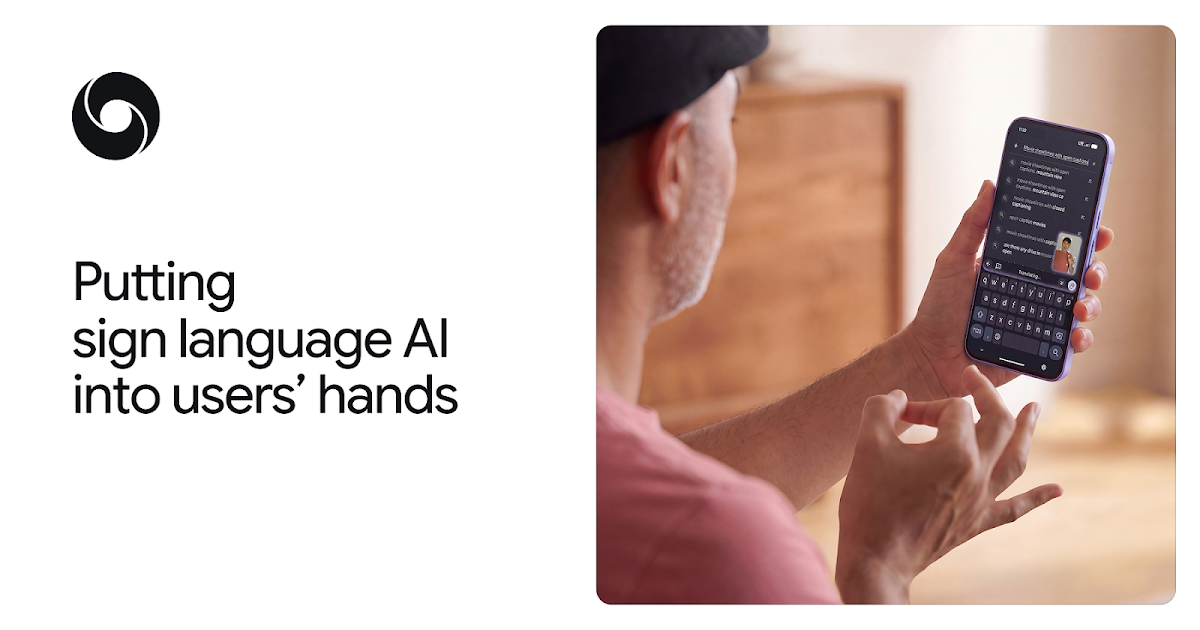
Putting sign language AI into users’ hands

Introducing sign-language-to-text (SL2T), our breakthrough model powering new sign language features for Deaf and hard of hearing users.

MIT News · Artificial Intelligence Jun 3, 2026

MIT researchers teach AI models to interpret charts

The new ChartNet training dataset could improve the accuracy of vision-language models that help analyze business trends or interpret scientific figures.

We use cookies to run the site and, with your consent, for analytics and to show ads. See our Cookie Policy.