Omni-modal dialogue models can understand multimodal inputs and synthesize spoken replies, but a spoken answer still leaves the agent visually absent. We introduce \textbf{Ex-Omni-2D}, a framework that answers a multimodal query with coordinated text, personalized speech, and reference-conditioned video. The dialogue model first writes a structured \textit{Visual Thought Plan} (VTP) for scene, emotion, and motion, then generates the response text and multi-codebook speech units. These speech units are decoded into audio and aligned with video frames, giving the speech and avatar modules a common timing signal while allowing them to learn from different data sources. The video module is trained as a full-sequence Teacher conditioned on reference appearance, VTP semantics, and frame-aligned speech units. We further explore to distill it into a few-step block-causal \emph{Streaming Student}; its Prefix Streaming mechanism carries the previous clean latent into the next chunk and is analyzed as a partial mitigation for late-chunk subject drift. At $400\times720$/$720\times400$, the four-step four-GPU Student provides incremental output with lower startup latency than the full-sequence Teacher.

This publication proposes a definition and a classification of agile software development approaches and analyses ten software development methods that can be characterized as being "agile" against the defined criterion.
P. Abrahamsson, O. Salo, Jussi Ronkainen et al.· arXiv.org· 727 citations· ⚡54
The study shows that agile practices improve both informal and formal communication, but indicates that, in larger development situations involving multiple external stakeholders, a mismatch of adequate communication mechanisms can sometimes even hinder the communication.
M. Pikkarainen, Jukka Haikara, O. Salo et al.· Empirical Software Engineeri...· 401 citations· ⚡48
The results indicate that software engineering work practices are chosen opportunistically, adapted and configured to provide value under the constrains imposed by the startup context.
Nicolò Paternoster, Carmine Giardino, M. Unterkalmsteiner et al.· Information and Software Tec...· 394 citations· ⚡54
The possibility of inferring high-dimensional data inference in a model that consists of a prior and an auxiliary differentiable constraint given some additional information is considered, thereby allowing a range of potential applications in adapting models to new domains and tasks.
Alexandros Graikos, Esmeralda S. Whitammer, N. Jojic et al.· Neural Information Processin...· 316 citations· ⚡15
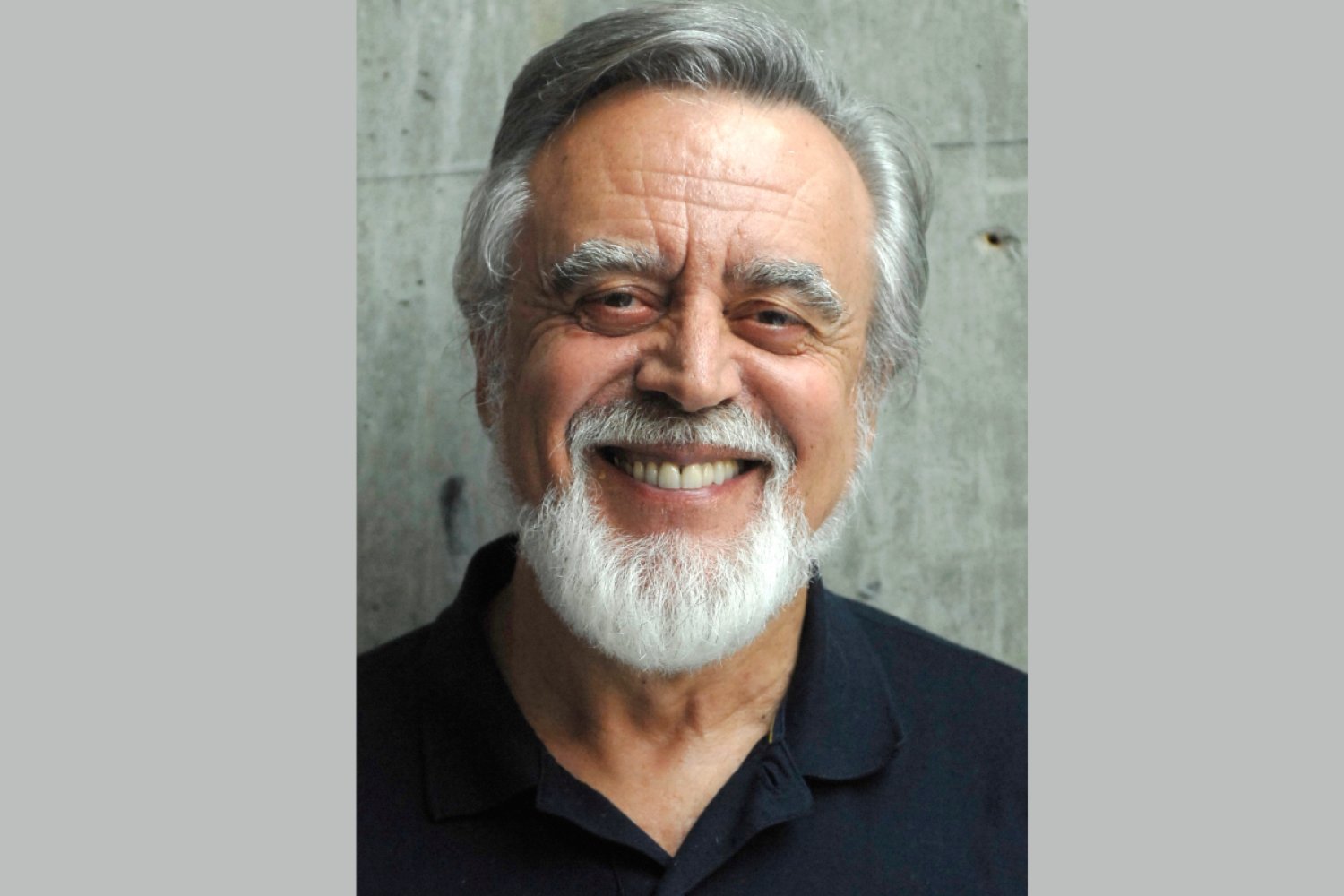
Known for his clear and elegant writing style, Bertsekas shaped fields from control and optimization to large-scale computation and artificial intelligence.
We use cookies to run the site and, with your consent, for analytics and to show ads.
See our Cookie Policy.