Skip to content
#edge computing Open access

Research on the Topological Primitive Mechanism of the Creation Axis and the Novel Topological Computing System

Sep 2026 · Zenodo (CERN European Organization for Nuclear Research)

Abstract

AbstractAiming at the industrial and theoretical bottlenecks in the post-Moore era, including limited iteration of traditional discrete computing power, high complexity of large-number operations, low efficiency of cryptographic analysis, and lack of primitive support for mathematical deduction, this paper constructs a fully independent and original topological primitive computing system based on the original PDSM-NT vortex number theory system, with a three-dimensional compact Ricci-flat CY₃ manifold as the geometric substrate. This paper firstly proves that the Creation Axis serves as the unique fixed primitive benchmark for high-dimensional topological fields, number theory distribution rhythms, and symmetric group evolution; prime distribution, zeta function zero-point arrangement, and modular symmetric constraints are all low-dimensional projective representations constrained by the topology of the Creation Axis. Relying on five core mechanisms including Creation Axis symmetric conservation, Z₁₂₀ modular periodic regularization, eight-ridge topological constraint, vortex annihilation bijective correspondence, and critical topological band global collapse, this study breaks the underlying paradigm of traditional discrete computing that relies on discrete iteration, brute-force traversal, and hardware stacking, and establishes a new top-down topological regulation operation logic. The research results show that Creation Axis topological computing achieves order-of-magnitude breakthroughs in large-number factorization, rapid prime deduction, precise zero-point solving on the complex plane, and supercomputing energy consumption optimization, thoroughly eliminating the inherent defects of traditional discrete computing such as high redundancy, high energy consumption, and difficulties in decrypting ultra-large-number encryption. This research not only improves the primitive theoretical system of topological number theory, but also provides a novel underlying theoretical and engineering implementation path for domestically independent and controllable new computing power, high-end information security, quantum computing optimization, and cutting-edge mathematical simulation.

View source

Similar papers

#computer vision Review Sep 2017

Agile Software Development Methods: Review and Analysis

This publication proposes a definition and a classification of agile software development approaches and analyses ten software development methods that can be characterized as being "agile" against the defined criterion.

P. Abrahamsson, O. Salo, Jussi Ronkainen et al. · 727 citations · ⚡54
#computer vision Jun 2008

The impact of agile practices on communication in software development

The study shows that agile practices improve both informal and formal communication, but indicates that, in larger development situations involving multiple external stakeholders, a mismatch of adequate communication mechanisms can sometimes even hinder the communication.

M. Pikkarainen, Jukka Haikara, O. Salo et al. · 401 citations · ⚡48
#machine learning Review Open access Oct 2014

Software development in startup companies: A systematic mapping study

The results indicate that software engineering work practices are chosen opportunistically, adapted and configured to provide value under the constrains imposed by the startup context.

Nicolò Paternoster, Carmine Giardino, M. Unterkalmsteiner et al. · 394 citations · ⚡54

Related blog posts

GPT-Lab Sep 17, 2026

Beyond Prompt Engineering: The Role of Tacit Knowledge in Software Engineering

AI is making software generation faster, but speed does not remove the need for expertise. As more work is delegated to AI, tacit knowledge may become one of the most important human advantages in software engineering. The post Beyond Prompt Engineering: The Role of Tacit Knowledge in Software Engineering appeared first on GPT-Lab.

Microsoft Research Blog Aug 31, 2026

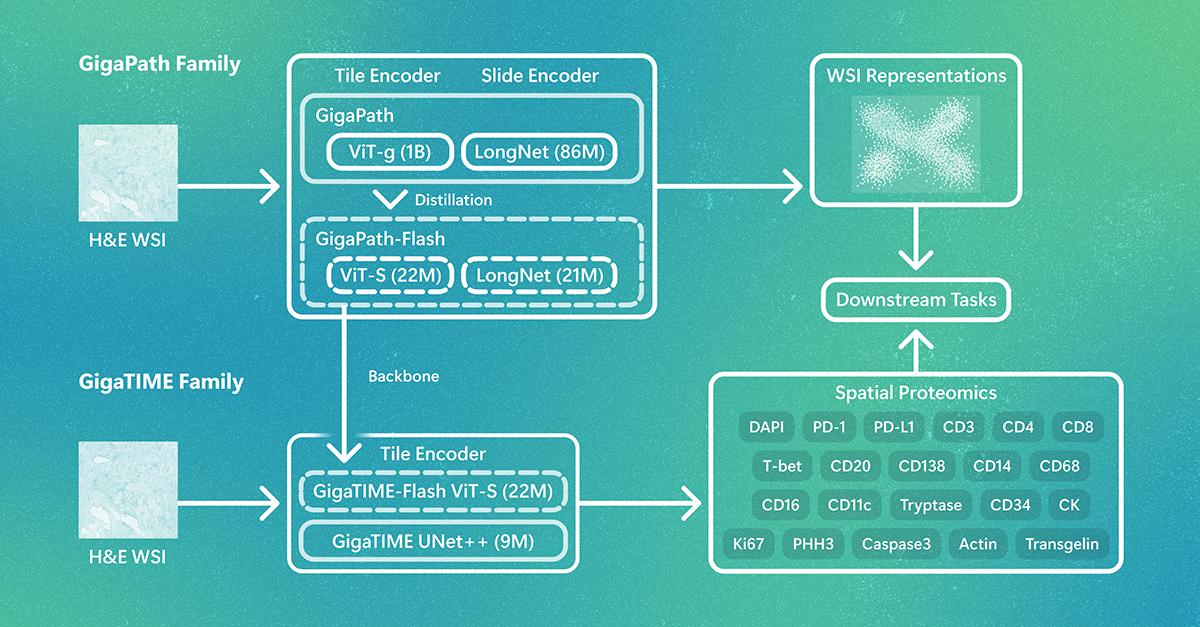
GigaPath-Flash and GigaTIME-Flash: Toward population-scale discovery with efficient pathology foundation models

What if pathology foundation models could do more with less? GigaPath-Flash and GigaTIME-Flash cut computational demands while maintaining strong performance, opening the door to larger studies and broader exploration. The post GigaPath-Flash and GigaTIME-Flash: Toward population-scale discovery with efficient pathology foundation models appeared first on Microsoft Research.

We use cookies to run the site and, with your consent, for analytics and to show ads. See our Cookie Policy.