Skip to content
#edge computing Book Open access

FC-DDQN for Multi-User Computation Offloading and Resource Allocation in Mobile Edge Computing

Sep 2026 · Zenodo (CERN European Organization for Nuclear Research)
IoT and Edge/Fog Computing

Abstract

This repository contains the software and reproducibility materials associated with the study “Factorized Coordinated Double Deep Q-Learning for Multi-User Computation Offloading and Resource Allocation in Mobile Edge Computing.” The proposed Factorized Coordinated Double Deep Q-Network (FC-DDQN) separates the binary local/offloading decision from the discrete MEC CPU-resource decision using independently parameterized value networks. A lightweight MEC-side coordinator ranks simultaneous offloading proposals according to their learned Q-value advantage and converts them into a resource-feasible joint allocation. Coordination is applied during training and evaluation so that the actions stored in replay memory correspond to those executed in the MEC environment. The repository includes the MEC simulation environment, the FC-DDQN implementation, conventional DQN and DDQN components, coordination and ablation scripts, experimental configurations, the original summary results from ten independent FC-DDQN training runs, validation-selected checkpoints, and the final publication figures. Under the nominal configuration, FC-DDQN achieves a mean normalized constraint-aware system objective of approximately 0.02005 across ten independent training runs, with zero mean MEC overload. The repository also documents the validation and held-out test seeds used in the experiments. The final Figures 4–8 are preserved as used in the revised manuscript and are not automatically regenerated by this repository. Some original trajectory-level outputs for conventional baselines and intermediate ablation configurations were not retained and are therefore not represented as available raw data.

View source

Similar papers

#computer vision Review Sep 2017

Agile Software Development Methods: Review and Analysis

This publication proposes a definition and a classification of agile software development approaches and analyses ten software development methods that can be characterized as being "agile" against the defined criterion.

P. Abrahamsson, O. Salo, Jussi Ronkainen et al. · 727 citations · ⚡54
#computer vision Jun 2008

The impact of agile practices on communication in software development

The study shows that agile practices improve both informal and formal communication, but indicates that, in larger development situations involving multiple external stakeholders, a mismatch of adequate communication mechanisms can sometimes even hinder the communication.

M. Pikkarainen, Jukka Haikara, O. Salo et al. · 401 citations · ⚡48
#machine learning Review Open access Oct 2014

Software development in startup companies: A systematic mapping study

The results indicate that software engineering work practices are chosen opportunistically, adapted and configured to provide value under the constrains imposed by the startup context.

Nicolò Paternoster, Carmine Giardino, M. Unterkalmsteiner et al. · 394 citations · ⚡54

Related blog posts

GPT-Lab Sep 17, 2026

Beyond Prompt Engineering: The Role of Tacit Knowledge in Software Engineering

AI is making software generation faster, but speed does not remove the need for expertise. As more work is delegated to AI, tacit knowledge may become one of the most important human advantages in software engineering. The post Beyond Prompt Engineering: The Role of Tacit Knowledge in Software Engineering appeared first on GPT-Lab.

Microsoft Research Blog Aug 31, 2026

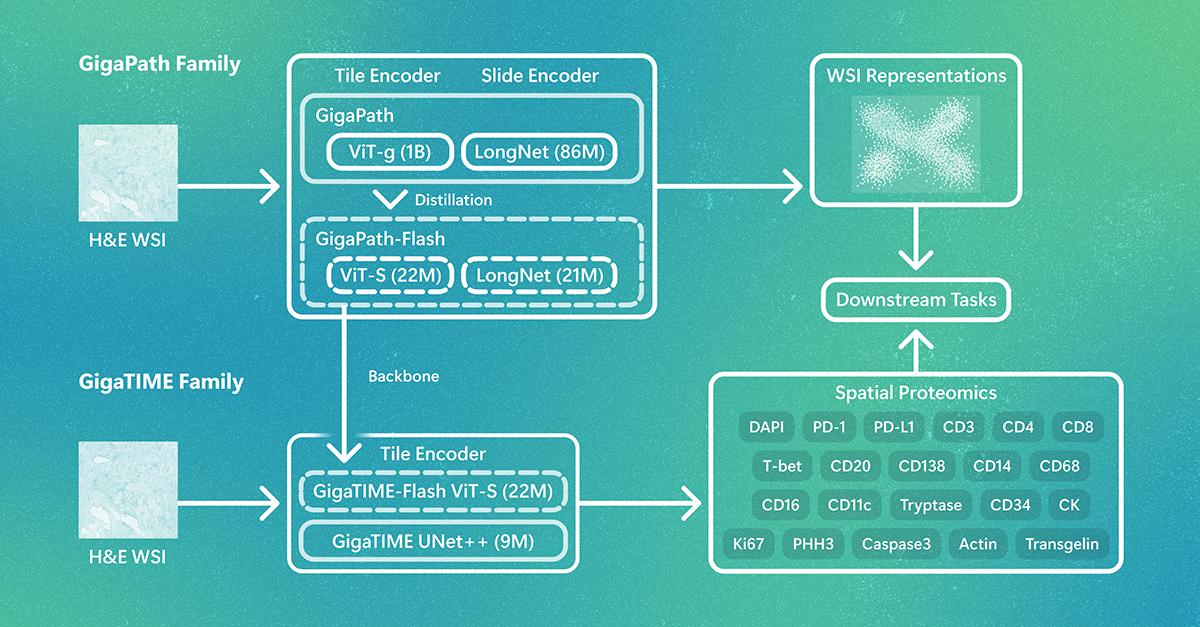
GigaPath-Flash and GigaTIME-Flash: Toward population-scale discovery with efficient pathology foundation models

What if pathology foundation models could do more with less? GigaPath-Flash and GigaTIME-Flash cut computational demands while maintaining strong performance, opening the door to larger studies and broader exploration. The post GigaPath-Flash and GigaTIME-Flash: Toward population-scale discovery with efficient pathology foundation models appeared first on Microsoft Research.

We use cookies to run the site and, with your consent, for analytics and to show ads. See our Cookie Policy.