The sum nobody bounded: an optimal 15j inequality, a directional decay law, and the one direction in which absolute majorants fail for the Lorentzian EPRL vertex
Sep 2026· Zenodo (CERN European Organization for Nuclear Research)
Noncommutative and Quantum Gravity Theories
Abstract
Every Lorentzian spinfoam amplitude computed numerically truncates the sum over virtual SU(2) spins l_f >= j_f at a shell depth Delta l; the convergence of that sum has not been proved. This paper bounds the sum by the direct absolute-value route and reports how far it reaches. (1) For the first-kind 15j symbol of the vertex assembly we prove |15j| <= J, a closed form in the fifteen labels, with constant 1 proved optimal (saturated at a doubled-label tuple where both sides equal sqrt(3)/6). (2) Assembling J with rigorous booster envelopes under one shared rapidity, and under the explicit hypothesis that the internal 15j label and the four auxiliary intertwiners carry no growth rate, we derive an exact direction-resolved decay law for the envelope: coordinate directions decay with exponent at least 17/6, the law is piecewise affine on a 13-hyperplane arrangement (7,377 cells), and the envelope fails to be summable on a proper subcone around the isotropic diagonal with maximal deficit 7/18. (3) Over every choice the construction admits (1,458 members per booster) the best achievable exponent coincides with the realized one. VERSION 2 CORRECTS THE SCOPE OF (2)-(3): the auxiliary intertwiners have key-bounded cardinality but their values track the shell, so the decay law describes the envelope under the stated hypothesis and not the vertex tail; on the tail's actual support the absolute route fails by more than stated (crude exponent at the isotropic point at most -1/3 rather than 11/3), and the summand is supported only on the cone where, at each edge, the largest virtual spin is matched by at least one other. Theorem 1 is unaffected. All results are exact rational or symbolic statements at the stock convention rho = gamma (j+1), gamma = 6/5.
This publication proposes a definition and a classification of agile software development approaches and analyses ten software development methods that can be characterized as being "agile" against the defined criterion.
P. Abrahamsson, O. Salo, Jussi Ronkainen et al.· arXiv.org· 727 citations· ⚡54
The study shows that agile practices improve both informal and formal communication, but indicates that, in larger development situations involving multiple external stakeholders, a mismatch of adequate communication mechanisms can sometimes even hinder the communication.
M. Pikkarainen, Jukka Haikara, O. Salo et al.· Empirical Software Engineeri...· 401 citations· ⚡48
The results indicate that software engineering work practices are chosen opportunistically, adapted and configured to provide value under the constrains imposed by the startup context.
Nicolò Paternoster, Carmine Giardino, M. Unterkalmsteiner et al.· Information and Software Tec...· 394 citations· ⚡54
The perception of the impact of agile methods is predominantly positive, and several challenge areas were discovered, but based on this study, agile methods are here to stay.
M. Laanti, O. Salo, P. Abrahamsson· Information and Software Tec...· 260 citations· ⚡20
AI is making software generation faster, but speed does not remove the need for expertise. As more work is delegated to AI, tacit knowledge may become one of the most important human advantages in software engineering. The post Beyond Prompt Engineering: The Role of Tacit Knowledge in Software Engineering appeared first on GPT-Lab.
MIT News · Artificial Intelligence· news.mit.eduSep 9, 2026
A weeklong summer workshop brought higher education faculty to campus to explore how AI and machine learning materials can be adapted for their classrooms.
MIT News · Artificial Intelligence· news.mit.eduSep 2, 2026
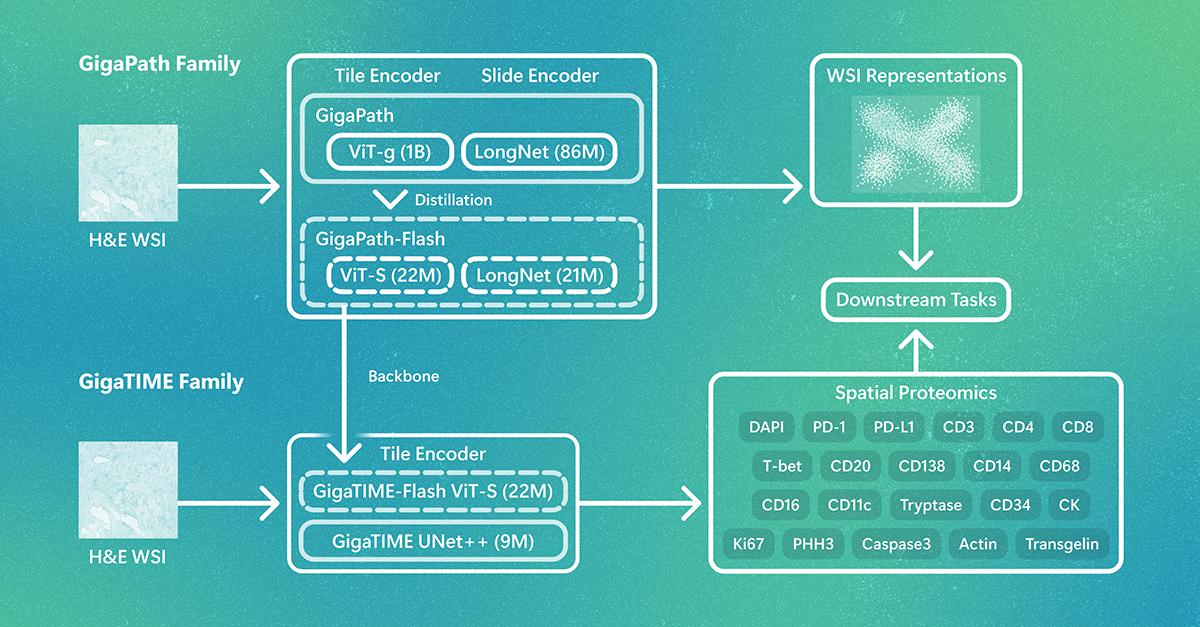
What if pathology foundation models could do more with less? GigaPath-Flash and GigaTIME-Flash cut computational demands while maintaining strong performance, opening the door to larger studies and broader exploration. The post GigaPath-Flash and GigaTIME-Flash: Toward population-scale discovery with efficient pathology foundation models appeared first on Microsoft Research.
We use cookies to run the site and, with your consent, for analytics and to show ads.
See our Cookie Policy.