Skip to content

A short-term power load prediction method based on Attention-LSTM in the context of optical-computing synergy

Sep 2026 · European Conference on Electrical Engineering and Computer Science · Vol 14327, pp. 143272V - 143272V-13 · 0 citations · 25 references
Engineering

Abstract

Accurate short-term forecasts of the electrical power demand are required for the intelligent operation of the power grid and energy management. With the introduction of more decentralized power units and fluctuating energy demand, power consumption now has considerable non-linearity and time dependency, so the old prediction method is no longer suitable. To improve the accuracy of the forecast and operational efficiency, a new short-term energy consumption prediction method using Attention-LSTM is put forward in this paper. An optical interconnect system is employed in the above structure to achieve high-speed, stable transmission of consumption data; data cleaning and abnormal detection are done at the edge, and model and hyperparameter optimisation are carried out in the cloud. The dataset of daily energy demand is used for the test of the algorithm. The chosen input factors are past consumption, weather conditions and time attributes; a rolling window set is created, and then the demand for the next hour is predicted. LSTM is used to find the time dependency of the power profile, and attention is added to highlight important historical information. According to the simulation results, the Attention-LSTM model has performed better than the Persistence, LSTM and GRU models in terms of MAE, RMSE and MAPE. According to the ablation experiment, the attention layer and some kinds of modal input variables are also useful. Therefore, there will be more precise and punctual support for demand forecasting in the operation of intelligent grids in the environment of optical-computing synergy.

View source

Similar papers

#computer vision Review Sep 2017

Agile Software Development Methods: Review and Analysis

This publication proposes a definition and a classification of agile software development approaches and analyses ten software development methods that can be characterized as being "agile" against the defined criterion.

P. Abrahamsson, O. Salo, Jussi Ronkainen et al. · 727 citations · ⚡54
#computer vision Jun 2008

The impact of agile practices on communication in software development

The study shows that agile practices improve both informal and formal communication, but indicates that, in larger development situations involving multiple external stakeholders, a mismatch of adequate communication mechanisms can sometimes even hinder the communication.

M. Pikkarainen, Jukka Haikara, O. Salo et al. · 401 citations · ⚡48
#machine learning Review Open access Oct 2014

Software development in startup companies: A systematic mapping study

The results indicate that software engineering work practices are chosen opportunistically, adapted and configured to provide value under the constrains imposed by the startup context.

Nicolò Paternoster, Carmine Giardino, M. Unterkalmsteiner et al. · 394 citations · ⚡54

Related blog posts

GPT-Lab Sep 17, 2026

Beyond Prompt Engineering: The Role of Tacit Knowledge in Software Engineering

AI is making software generation faster, but speed does not remove the need for expertise. As more work is delegated to AI, tacit knowledge may become one of the most important human advantages in software engineering. The post Beyond Prompt Engineering: The Role of Tacit Knowledge in Software Engineering appeared first on GPT-Lab.

Microsoft Research Blog Aug 31, 2026

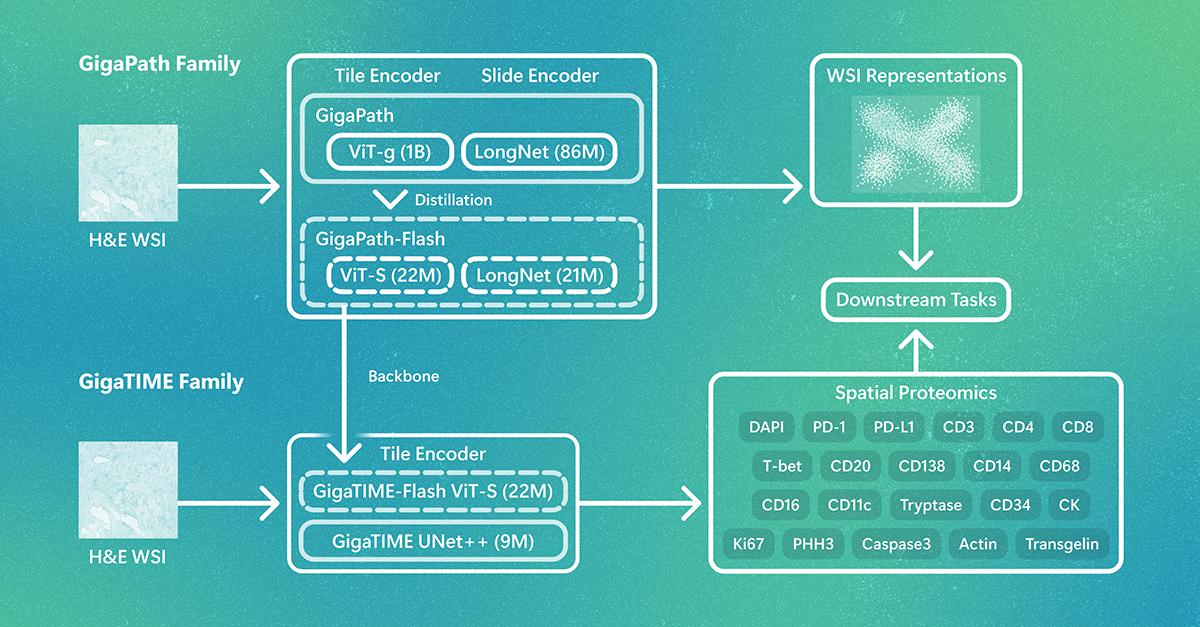
GigaPath-Flash and GigaTIME-Flash: Toward population-scale discovery with efficient pathology foundation models

What if pathology foundation models could do more with less? GigaPath-Flash and GigaTIME-Flash cut computational demands while maintaining strong performance, opening the door to larger studies and broader exploration. The post GigaPath-Flash and GigaTIME-Flash: Toward population-scale discovery with efficient pathology foundation models appeared first on Microsoft Research.

We use cookies to run the site and, with your consent, for analytics and to show ads. See our Cookie Policy.