Fusion of MLP, XGBoost, and QAT-Optimized PointNet++ for Predicting Short-Term Dendrometer-Derived Stem Dynamics: An Edge-Oriented Computational Framework
Furkat BolikulovKudratjon ZohirovGayrat MannonovUlugbek KhudayorovZavqiddin TemirovUlugbek MingboevErkin HafizovAkmalbek AbdusalomovYoung-Im Cho
Sep 2026· Italian National Conference on Sensors· 0 citations· 28 references
Remote Sensing and LiDAR Applications
Abstract
Urban-forest monitoring increasingly requires intelligent sensor-driven systems capable of characterizing short-term tree responses while operating efficiently within Internet of Things (IoT) and edge-computing environments. This study proposes a fusion-based artificial intelligence framework that integrates Quantization-Aware Training (QAT)-optimized PointNet++ models with machine-learning regression to predict a short-term dendrometer-derived stem-diameter response expressed in biomass-equivalent units. The framework combines 1024-point LiDAR tree representations, geometric measurements, and environmental sensor data through three components: QAT-optimized PointNet++ models for 34-species classification and trunk–crown part segmentation, frozen model-based prediction and geometric feature extraction, and MLP and XGBoost regression models for prediction of the short-term target. The dataset contained 2694 trees from five regions of South Korea, with the target derived from dendrometer-based stem-diameter measurements recorded over a 14-day interval between 8 September 2022 and 22 September 2022. Importantly, this short-term signal reflects both structural and reversible water-status-related stem dynamics and is therefore not interpreted as direct dry-biomass accumulation or carbon sequestration. The QAT-optimized models retained 92.52% segmentation accuracy (82.67% mIoU) and 80.46% species-classification accuracy, while the regression model reached R2 = 0.9663 and RMSE = 0.4437 kg for the defined biomass-equivalent target. Quantization reduced the saved model size of both encoders by approximately 10.5× (21 MB → 2 MB) and accelerated CPU inference by up to 4.1×. These efficiency measurements were obtained on an ×86 desktop CPU and therefore characterize computational compression benefits rather than completed deployment or field validation on a low-power embedded device. These results demonstrate the computational feasibility of combining compressed point-cloud perception with multimodal prediction of short-term dendrometer-derived stem dynamics. Validation over seasonal and multi-year periods using independent biomass-reference measurements would be required before extending the framework to long-term biomass accumulation or carbon-sequestration assessment.
This publication proposes a definition and a classification of agile software development approaches and analyses ten software development methods that can be characterized as being "agile" against the defined criterion.
P. Abrahamsson, O. Salo, Jussi Ronkainen et al.· arXiv.org· 727 citations· ⚡54
The study shows that agile practices improve both informal and formal communication, but indicates that, in larger development situations involving multiple external stakeholders, a mismatch of adequate communication mechanisms can sometimes even hinder the communication.
M. Pikkarainen, Jukka Haikara, O. Salo et al.· Empirical Software Engineeri...· 401 citations· ⚡48
The results indicate that software engineering work practices are chosen opportunistically, adapted and configured to provide value under the constrains imposed by the startup context.
Nicolò Paternoster, Carmine Giardino, M. Unterkalmsteiner et al.· Information and Software Tec...· 394 citations· ⚡54
The perception of the impact of agile methods is predominantly positive, and several challenge areas were discovered, but based on this study, agile methods are here to stay.
M. Laanti, O. Salo, P. Abrahamsson· Information and Software Tec...· 260 citations· ⚡20
AI is making software generation faster, but speed does not remove the need for expertise. As more work is delegated to AI, tacit knowledge may become one of the most important human advantages in software engineering. The post Beyond Prompt Engineering: The Role of Tacit Knowledge in Software Engineering appeared first on GPT-Lab.
MIT News · Artificial Intelligence· news.mit.eduSep 9, 2026
A weeklong summer workshop brought higher education faculty to campus to explore how AI and machine learning materials can be adapted for their classrooms.
MIT News · Artificial Intelligence· news.mit.eduSep 2, 2026
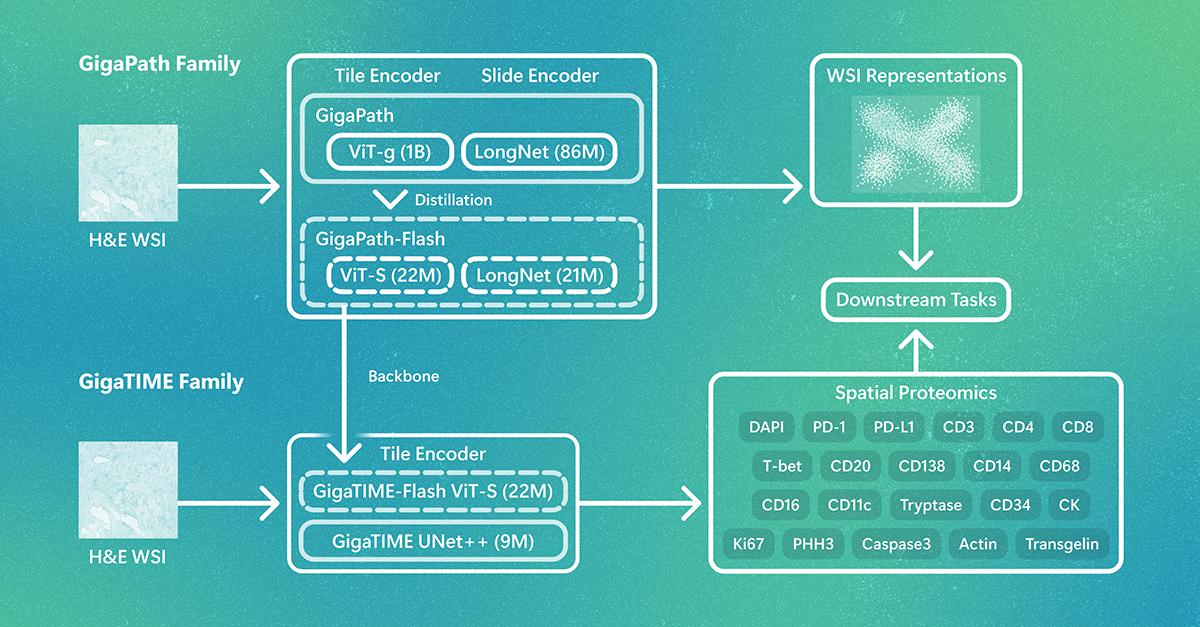
What if pathology foundation models could do more with less? GigaPath-Flash and GigaTIME-Flash cut computational demands while maintaining strong performance, opening the door to larger studies and broader exploration. The post GigaPath-Flash and GigaTIME-Flash: Toward population-scale discovery with efficient pathology foundation models appeared first on Microsoft Research.
We use cookies to run the site and, with your consent, for analytics and to show ads.
See our Cookie Policy.