Orienteering Problem with Uncertain Time-Varying Rewards: Framework and Benchmark for Everyday Service Robotics
Masafumi EndoKohei HondaYuu JinnaiRyo Yonetani
Aug 2026
Artificial IntelligenceRobotics
Abstract
We present the orienteering problem with uncertain time-varying rewards (OP-UTVR), a novel variant of the orienteering problem (OP). While most existing OP formulations assume rewards to be known in advance, practical applications involve uncertain and time-varying rewards, as with shifting customer demand for delivery agents. OP-UTVR relaxes this assumption by allowing agents to estimate reward dynamics from observations and forecast future rewards. This enables informed routing decisions despite stochastic reward changes and inevitable prediction errors. We address this problem using three planners that differ in planning horizon and online adaptivity, and derive theoretical bounds on their performance under reward stochasticity. We further introduce a mobile service robot benchmark for OP-UTVR, where a robot navigates among pedestrians in indoor environments. Experiments reveal trade-offs between planning horizon and adaptivity, and demonstrate the effectiveness of long-horizon planning with online adaptation.

Investigating how experienced developers use agents in building software, including their motivations, strategies, task suitability, and sentiments finds that while experienced developers value agents as a productivity boost, they retain their agency in software design and implementation out of insistence on fundamental software quality attributes.
This systematic review evaluates 55 studies from 2017 to 2023 on the application of machine learning techniques to ASD, highlighting key challenges and opportunities, particularly the need for models that can integrate complex data to improve diagnostic accuracy and treatment outcomes.
Rafael Muñoz-Terol, Jesús Peral, Sandra Amador et al.· Heliyon· 4 citations· ⚡1
This paper identifies two different routes through which models can acquire geometrically separable features: they can learn them from complementary co-occurrence signals in general language data, including text-number co-occurrence and cross-number interaction, or from multi-token addition problems.
A novel quantum generative model for synthesizing tabular data by proposing a quantum generative adversarial network architecture with flexible data encoding and a novel quantum circuit ansatz for effectively modeling tabular data is introduced.
P. Bhardwaj, Caitlin Jones, Lasse Dierich et al.· Scientific Reports· 2 citations
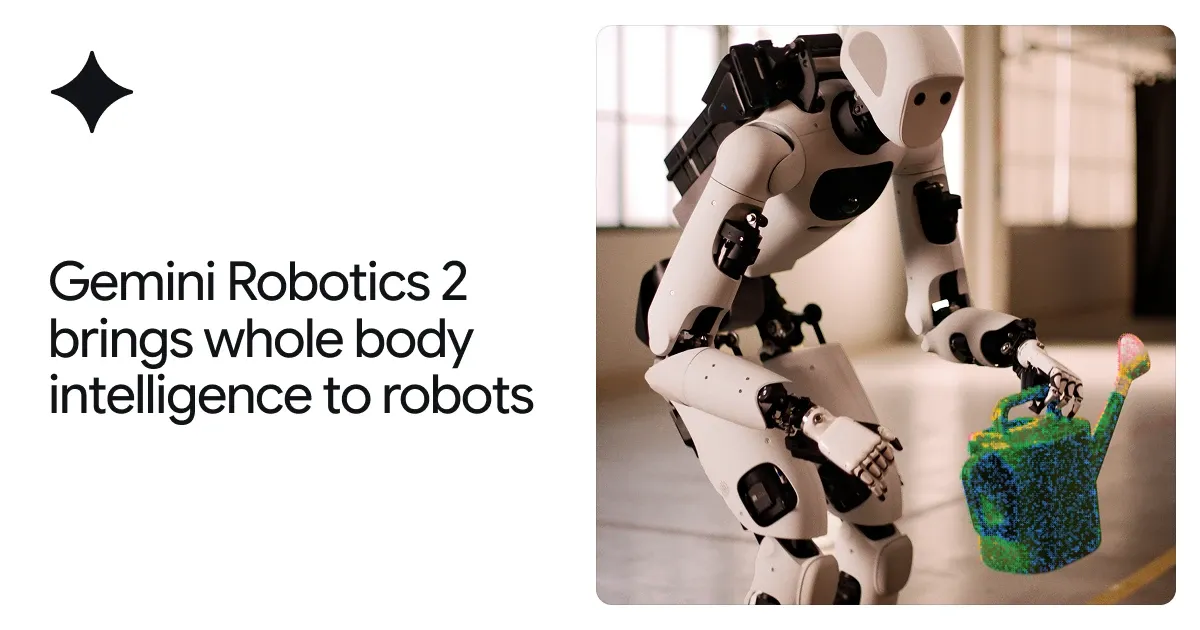
From feet to fingertips — we are teaching robots intelligent whole-body control, fine dexterity, and teamwork to complete a broad range of complex tasks.