Skip to content
#edge computing Open access

DDMS: Dynamic Duty Management via Offline-First Geo-Spatial Constraint Orchestration

Sep 2026 · Zenodo (CERN European Organization for Nuclear Research)
Opportunistic and Delay-Tolerant Networks

Abstract

Civil security and law enforcement agencies regularly manage field deployments at scales exceeding tens of thousands of uniformed personnel. In conventional field operations, duty scheduling and redeployment remain heavily manual; static paper rosters are drafted days in advance and patched reactively across ad-hoc voice or radio channels. When operational disruptions occur (such as severe weather halts, route obstructions, spontaneous crowd surges, or emergent personnel unavailability), the latency between the operational plan and physical ground truth causes unverified attendance, multi-hour redeployment lags, and irrecoverable after-action data. The Dynamic Duty Management System (DDMS) addresses these operational challenges by modeling the operational theater as a continuously updated multipartite graph. Personnel, posts, route corridors, incidents, and command structures form vertices, while assignments, spatial adjacencies, capabilities, and hierarchical command authorities form edges. Upon an operational disturbance, an incremental solver isolates the affected local subgraph and computes optimal duty adjustments under a formal hierarchical relaxation mechanism when joint feasibility is initially empty. Duty deltas synchronize with edge devices through an offline-first causal protocol that handles extended disconnections and forks concurrent writes for supervisor reconciliation. We evaluate DDMS using operational telemetry from a 45-day multi-agency high-altitude deployment coordinating 13,000 to 21,000 personnel daily across complex terrain, alongside Kanwar Yatra pilgrimage deployments across Bareilly Range and Muzaffarnagar managing over 10,000 to 14,000 personnel across hundreds of sub-sectors and corridors. Reported empirical outcomes demonstrate a reduction in sector roster preparation from approximately 6 h to 25 min, median incident response latency from 29 min to 8 min, and unverified attendance from approximately 14% to 1.2%, while preserving the constitutional chain of command.

View source

Similar papers

#computer vision Review Sep 2017

Agile Software Development Methods: Review and Analysis

This publication proposes a definition and a classification of agile software development approaches and analyses ten software development methods that can be characterized as being "agile" against the defined criterion.

P. Abrahamsson, O. Salo, Jussi Ronkainen et al. · 727 citations · ⚡54
#computer vision Jun 2008

The impact of agile practices on communication in software development

The study shows that agile practices improve both informal and formal communication, but indicates that, in larger development situations involving multiple external stakeholders, a mismatch of adequate communication mechanisms can sometimes even hinder the communication.

M. Pikkarainen, Jukka Haikara, O. Salo et al. · 401 citations · ⚡48
#machine learning Review Open access Oct 2014

Software development in startup companies: A systematic mapping study

The results indicate that software engineering work practices are chosen opportunistically, adapted and configured to provide value under the constrains imposed by the startup context.

Nicolò Paternoster, Carmine Giardino, M. Unterkalmsteiner et al. · 394 citations · ⚡54

Related blog posts

GPT-Lab Sep 17, 2026

Beyond Prompt Engineering: The Role of Tacit Knowledge in Software Engineering

AI is making software generation faster, but speed does not remove the need for expertise. As more work is delegated to AI, tacit knowledge may become one of the most important human advantages in software engineering. The post Beyond Prompt Engineering: The Role of Tacit Knowledge in Software Engineering appeared first on GPT-Lab.

Microsoft Research Blog Aug 31, 2026

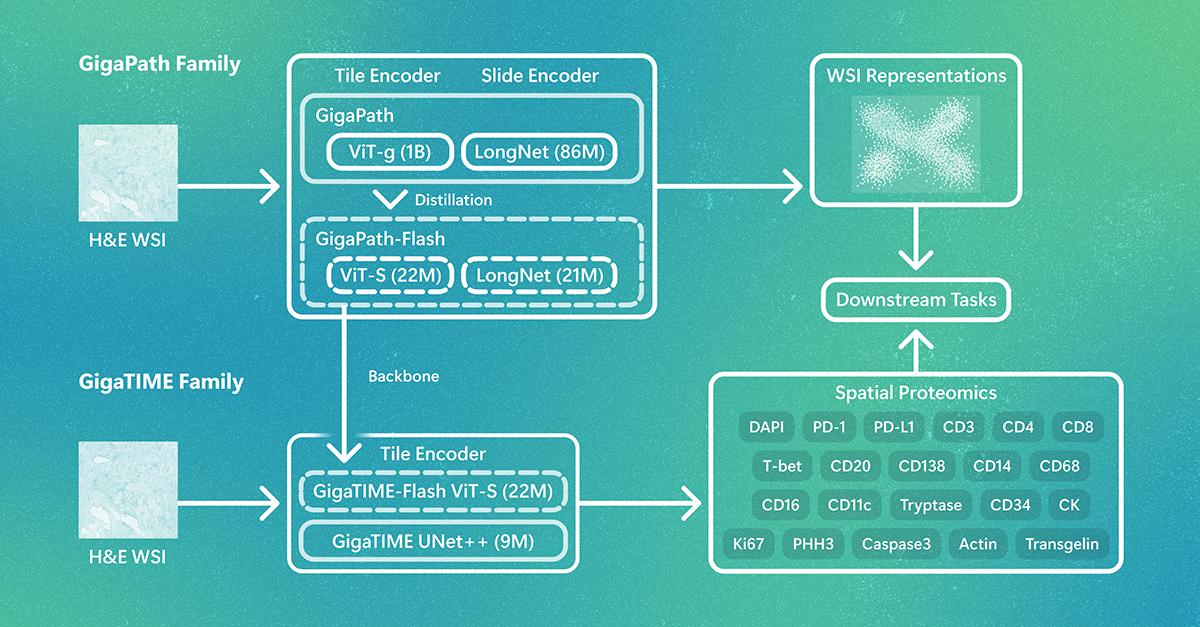
GigaPath-Flash and GigaTIME-Flash: Toward population-scale discovery with efficient pathology foundation models

What if pathology foundation models could do more with less? GigaPath-Flash and GigaTIME-Flash cut computational demands while maintaining strong performance, opening the door to larger studies and broader exploration. The post GigaPath-Flash and GigaTIME-Flash: Toward population-scale discovery with efficient pathology foundation models appeared first on Microsoft Research.

We use cookies to run the site and, with your consent, for analytics and to show ads. See our Cookie Policy.