Skip to content
#edge computing Open access

Serverless edge intelligence for SLA-aware function placement and resource slicing in wireless networks

Sep 2026 · Scientific Reports
IoT and Edge/Fog Computing

Abstract

Wireless edge networks must support delay-sensitive services under fluctuating traffic, interference, heterogeneous SLA priorities, and limited radio, computing, and memory resources. This paper proposes Serverless-PRONTO, an SLA-aware orchestration framework that jointly controls serverless function placement, task offloading, bandwidth allocation, CPU slicing, and warm-instance management. The system model captures uplink and downlink transmission, queueing, execution, cold-start initialization, and memory occupied by retained function instances. To solve the resulting dynamic, partially observable, mixed discrete-continuous problem, Serverless-PRONTO combines a physics-aware sparse graph encoder with multi-agent TD3 under centralized training and decentralized execution. The encoder represents inter-node coupling through channel, interference, distance, queue, resource, function-demand, and cold-start features, while top- \(\:K\) attention limits signaling. An SLA-risk mechanism prioritizes requests according to urgency, queue state, service class, and cold-start probability. A sequential feasibility projection converts raw actor outputs into valid placement, bandwidth, CPU, and memory decisions. Simulations against four serverless and edge-orchestration baselines under varying traffic loads and network sizes show higher SLA satisfaction, lower end-to-end delay and cold-start ratio, and more stable scalability, demonstrating the benefit of jointly coordinating wireless resources and serverless runtime states.

Read PDF

Similar papers

#computer vision Review Sep 2017

Agile Software Development Methods: Review and Analysis

This publication proposes a definition and a classification of agile software development approaches and analyses ten software development methods that can be characterized as being "agile" against the defined criterion.

P. Abrahamsson, O. Salo, Jussi Ronkainen et al. · 727 citations · ⚡54
#computer vision Jun 2008

The impact of agile practices on communication in software development

The study shows that agile practices improve both informal and formal communication, but indicates that, in larger development situations involving multiple external stakeholders, a mismatch of adequate communication mechanisms can sometimes even hinder the communication.

M. Pikkarainen, Jukka Haikara, O. Salo et al. · 401 citations · ⚡48
#machine learning Review Open access Oct 2014

Software development in startup companies: A systematic mapping study

The results indicate that software engineering work practices are chosen opportunistically, adapted and configured to provide value under the constrains imposed by the startup context.

Nicolò Paternoster, Carmine Giardino, M. Unterkalmsteiner et al. · 394 citations · ⚡54

Related blog posts

GPT-Lab Sep 17, 2026

Beyond Prompt Engineering: The Role of Tacit Knowledge in Software Engineering

AI is making software generation faster, but speed does not remove the need for expertise. As more work is delegated to AI, tacit knowledge may become one of the most important human advantages in software engineering. The post Beyond Prompt Engineering: The Role of Tacit Knowledge in Software Engineering appeared first on GPT-Lab.

Microsoft Research Blog Aug 31, 2026

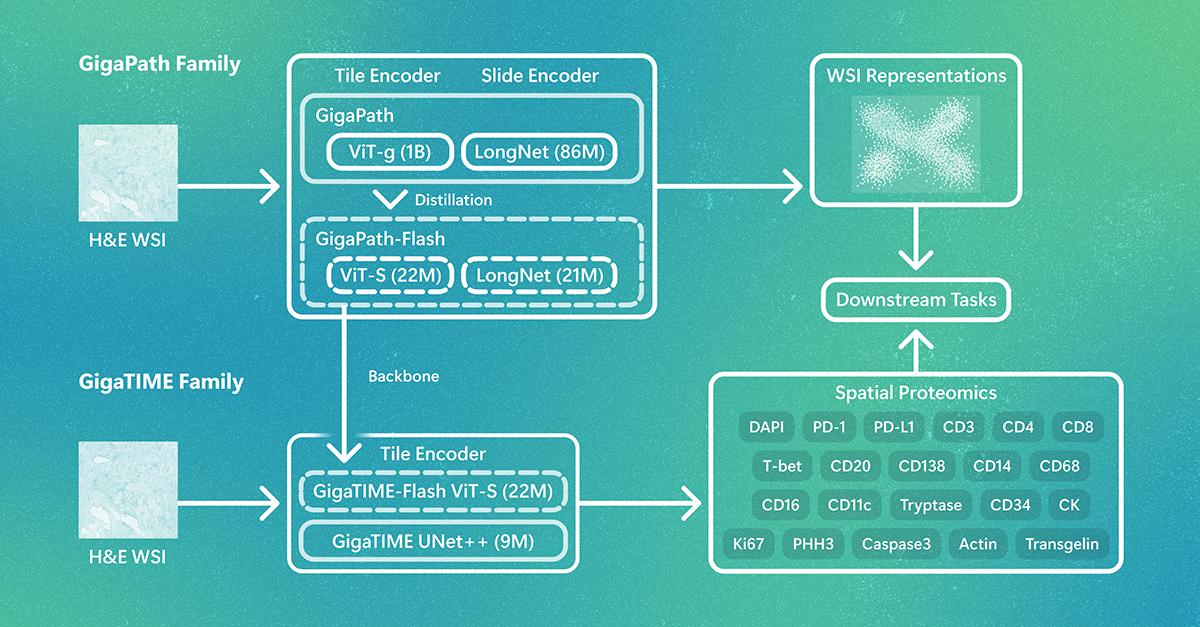
GigaPath-Flash and GigaTIME-Flash: Toward population-scale discovery with efficient pathology foundation models

What if pathology foundation models could do more with less? GigaPath-Flash and GigaTIME-Flash cut computational demands while maintaining strong performance, opening the door to larger studies and broader exploration. The post GigaPath-Flash and GigaTIME-Flash: Toward population-scale discovery with efficient pathology foundation models appeared first on Microsoft Research.

We use cookies to run the site and, with your consent, for analytics and to show ads. See our Cookie Policy.