Poor water quality monitoring and delayed responses to pollution remain major challenges in low-resource areas. Traditional methods of monitoring water and wastewater resources are ineffective because they take a long time to report contamination. Therefore, this critical review aims to examine how a combination of artificial intelligence (AI) and edge computing can comprehend decentralised, real-time water quality monitoring, even in areas with limited infrastructure and internet, constrained maintenance capacity, and shortages of skilled personnel. To our knowledge, this study is a first-of-its-kind integrated framework that showcases edge AI architectures and refers to specific operational, societal, and infrastructural limitations in the water, sanitation, and hygiene (WASH) sector. The synthesis clearly shows that the implementation of edge AI techniques has the capability to improve global water quality through immediate pollution detection, disaster forecasting, and automatic filter or alarm response without the need for cloud infrastructure. The examples given from developing countries support this statement by demonstrating that the technologies are low-cost and implementable in the long term. The problem of sensor calibration, data quality, and energy efficiency was identified as the most important implementation challenge. There is enough evidence of pilot-scale tests, but long-term validation of the technology in field trials is needed. The authors also present future research directions, such as the integration of AI, edge computing, machine learning, and IoT, and open-source edge frameworks. Edge AI systems provide promising avenues for decentralised water safety surveillance in low-resource communities in real time and can support the sustainable development goals of the United Nations through the realisation of clean water and sanitation for all.
This publication proposes a definition and a classification of agile software development approaches and analyses ten software development methods that can be characterized as being "agile" against the defined criterion.
P. Abrahamsson, O. Salo, Jussi Ronkainen et al.· arXiv.org· 727 citations· ⚡54
The study shows that agile practices improve both informal and formal communication, but indicates that, in larger development situations involving multiple external stakeholders, a mismatch of adequate communication mechanisms can sometimes even hinder the communication.
M. Pikkarainen, Jukka Haikara, O. Salo et al.· Empirical Software Engineeri...· 401 citations· ⚡48
The results indicate that software engineering work practices are chosen opportunistically, adapted and configured to provide value under the constrains imposed by the startup context.
Nicolò Paternoster, Carmine Giardino, M. Unterkalmsteiner et al.· Information and Software Tec...· 394 citations· ⚡54
The perception of the impact of agile methods is predominantly positive, and several challenge areas were discovered, but based on this study, agile methods are here to stay.
M. Laanti, O. Salo, P. Abrahamsson· Information and Software Tec...· 260 citations· ⚡20
AI is making software generation faster, but speed does not remove the need for expertise. As more work is delegated to AI, tacit knowledge may become one of the most important human advantages in software engineering. The post Beyond Prompt Engineering: The Role of Tacit Knowledge in Software Engineering appeared first on GPT-Lab.
MIT News · Artificial Intelligence· news.mit.eduSep 9, 2026
A weeklong summer workshop brought higher education faculty to campus to explore how AI and machine learning materials can be adapted for their classrooms.
MIT News · Artificial Intelligence· news.mit.eduSep 2, 2026
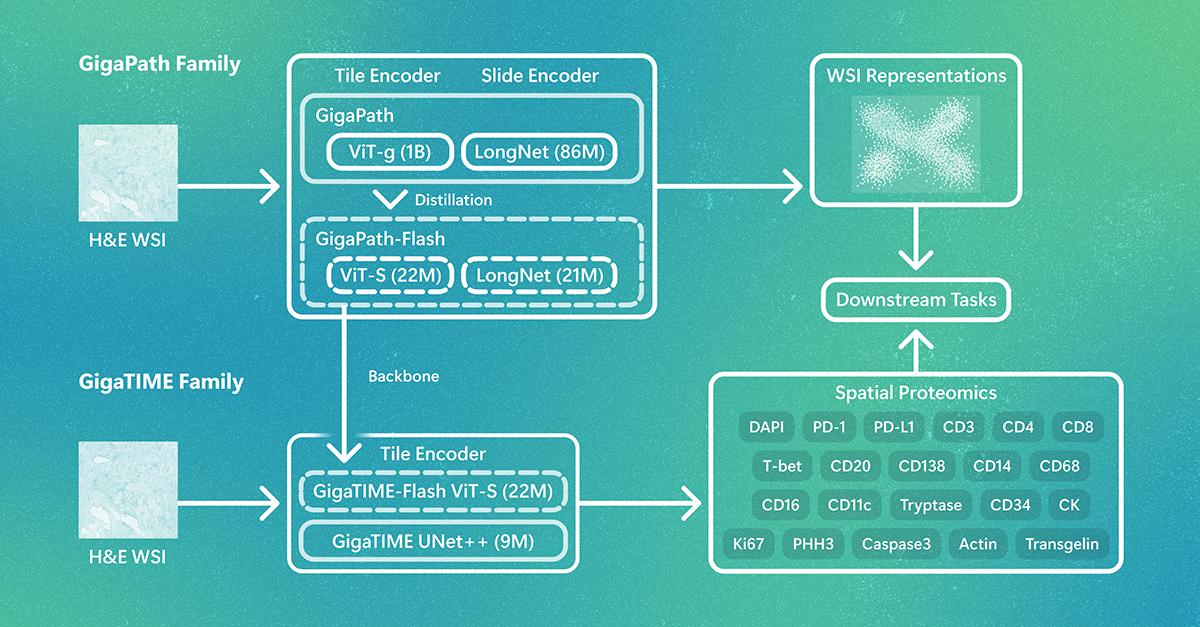
What if pathology foundation models could do more with less? GigaPath-Flash and GigaTIME-Flash cut computational demands while maintaining strong performance, opening the door to larger studies and broader exploration. The post GigaPath-Flash and GigaTIME-Flash: Toward population-scale discovery with efficient pathology foundation models appeared first on Microsoft Research.
We use cookies to run the site and, with your consent, for analytics and to show ads.
See our Cookie Policy.