Skip to content
#edge computing Dataset Open access

A Confound-Annotated Curriculum Dataset with Parsed Prerequisite Logic for the Universities of the United Arab Emirates

Sep 2026 · Mendeley Data

Abstract

A machine-readable, course-level corpus of the curricula of the universities of the United Arab Emirates, assembled from their published course catalogs. The corpus comprises twenty-two institutions across 56 catalog editions, 52,802 course records, and 33,945 parsed prerequisite relations, of which 7,030 (20.7%) are disjunctive alternatives rather than mandatory obligations. Its distinguishing property is that prerequisites are parsed into conjunctive-normal form, so that the alternatives a catalog states with the word "or" are preserved as boolean structure rather than flattened into a list of mandatory courses; the group index and alternative flag in the edge file recover the full conjunctive-normal structure. Every record is annotated with the measurement confounds that make document-derived curriculum data misleading if they are ignored, namely notation drift, selective disclosure, subject-code renumbering, and prerequisite-operator ambiguity, each exposed as a filterable field. One institution, the United Arab Emirates University, is covered by an eleven-edition panel spanning the decade from 2015-2016 to 2025-2026. All twenty-two institutions are represented at the course level. The verbatim course-description prose is not redistributed; its availability, language, and length are recorded in the course table, and its semantic content is provided as non-reproducing sentence embeddings. A pre-registered sampled correctness audit, included with the deposit, places course-code agreement at 100%, credit and prerequisite agreement in the mid-to-high nineties, and substantive title accuracy near 99%. The deposit includes the analysis code that computes curricular complexity under both the standard all-conjunctive reading and the alternative-aware reading, the integrity-verification script, and the full audit bundle.

View source

Similar papers

#computer vision Review Sep 2017

Agile Software Development Methods: Review and Analysis

This publication proposes a definition and a classification of agile software development approaches and analyses ten software development methods that can be characterized as being "agile" against the defined criterion.

P. Abrahamsson, O. Salo, Jussi Ronkainen et al. · 727 citations · ⚡54
#computer vision Jun 2008

The impact of agile practices on communication in software development

The study shows that agile practices improve both informal and formal communication, but indicates that, in larger development situations involving multiple external stakeholders, a mismatch of adequate communication mechanisms can sometimes even hinder the communication.

M. Pikkarainen, Jukka Haikara, O. Salo et al. · 401 citations · ⚡48
#machine learning Review Open access Oct 2014

Software development in startup companies: A systematic mapping study

The results indicate that software engineering work practices are chosen opportunistically, adapted and configured to provide value under the constrains imposed by the startup context.

Nicolò Paternoster, Carmine Giardino, M. Unterkalmsteiner et al. · 394 citations · ⚡54

Related blog posts

GPT-Lab Sep 17, 2026

Beyond Prompt Engineering: The Role of Tacit Knowledge in Software Engineering

AI is making software generation faster, but speed does not remove the need for expertise. As more work is delegated to AI, tacit knowledge may become one of the most important human advantages in software engineering. The post Beyond Prompt Engineering: The Role of Tacit Knowledge in Software Engineering appeared first on GPT-Lab.

Microsoft Research Blog Aug 31, 2026

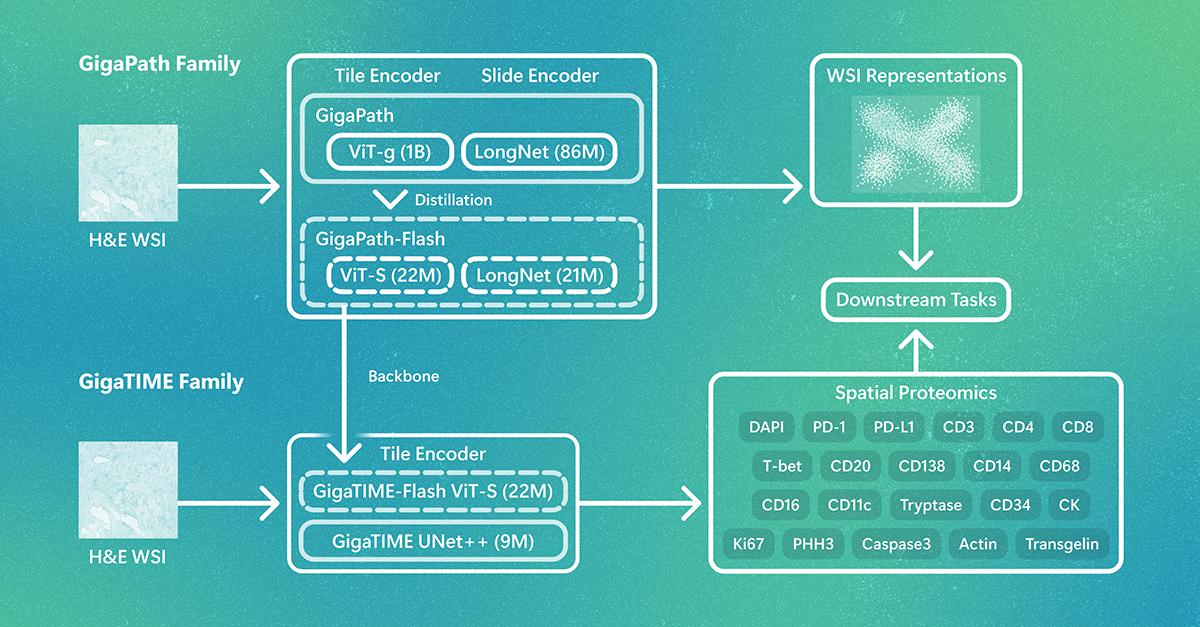
GigaPath-Flash and GigaTIME-Flash: Toward population-scale discovery with efficient pathology foundation models

What if pathology foundation models could do more with less? GigaPath-Flash and GigaTIME-Flash cut computational demands while maintaining strong performance, opening the door to larger studies and broader exploration. The post GigaPath-Flash and GigaTIME-Flash: Toward population-scale discovery with efficient pathology foundation models appeared first on Microsoft Research.

We use cookies to run the site and, with your consent, for analytics and to show ads. See our Cookie Policy.