Skip to content
#edge computing Open access

Cumulative Intraoperative Hypothermic Burden, Transfusion, and Estimated Blood Loss: A Retrospective Cohort Study

Sep 2026 · Zenodo (CERN European Organization for Nuclear Research)

Abstract

Superseded. This record is retired and should not be used or cited. It is replaced by 10.5281/zenodo.22234051, which is the archive accompanying the manuscript. Version v2.0.0 of this record (10.5281/zenodo.22232689) additionally contained files that should not have been distributed and its removal has been requested. Analysis pipeline for a retrospective cohort study of cumulative intraoperative hypothermic burden, intraoperative red cell transfusion, and estimated blood loss in 2,567 adults undergoing non-cardiac surgery, using the open VitalDB perioperative database. Scripts run in numeric order: 01-14 reproduce the originally submitted analysis, and 15-23 produce the first revision, including the edge-trimmed thermal exposure metric, threshold and dose analyses, and the table and figure builders. The repository carries code only; the manuscript, cover letters and peer-review correspondence are not distributed. VitalDB source data are openly available at https://vitaldb.net and are not redistributed here. v2.2.0 is the clean release accompanying the first revision submitted to BMC Anesthesiology. The repository was rebuilt from a single commit containing code only. Key methodological change from v1.1.0: core temperature had been integrated across the whole anaesthesia window, which counts probe equilibration at insertion and probe withdrawal at emergence as hypothermia, implying an implausible cohort nadir of 33.30 °C. Exposures are now computed after excluding the first and last 5 minutes of each case's monitored window. Cumulative burden is essentially unchanged (Pearson r=1.00, Spearman rho=0.99); the nadir corrects to 35.04 °C. Earlier v2.x versions are superseded. v2.0.0 in particular should not be used.

View source

Similar papers

#computer vision Review Sep 2017

Agile Software Development Methods: Review and Analysis

This publication proposes a definition and a classification of agile software development approaches and analyses ten software development methods that can be characterized as being "agile" against the defined criterion.

P. Abrahamsson, O. Salo, Jussi Ronkainen et al. · 727 citations · ⚡54
#computer vision Jun 2008

The impact of agile practices on communication in software development

The study shows that agile practices improve both informal and formal communication, but indicates that, in larger development situations involving multiple external stakeholders, a mismatch of adequate communication mechanisms can sometimes even hinder the communication.

M. Pikkarainen, Jukka Haikara, O. Salo et al. · 401 citations · ⚡48
#machine learning Review Open access Oct 2014

Software development in startup companies: A systematic mapping study

The results indicate that software engineering work practices are chosen opportunistically, adapted and configured to provide value under the constrains imposed by the startup context.

Nicolò Paternoster, Carmine Giardino, M. Unterkalmsteiner et al. · 394 citations · ⚡54

Related blog posts

GPT-Lab Sep 17, 2026

Beyond Prompt Engineering: The Role of Tacit Knowledge in Software Engineering

AI is making software generation faster, but speed does not remove the need for expertise. As more work is delegated to AI, tacit knowledge may become one of the most important human advantages in software engineering. The post Beyond Prompt Engineering: The Role of Tacit Knowledge in Software Engineering appeared first on GPT-Lab.

Microsoft Research Blog Aug 31, 2026

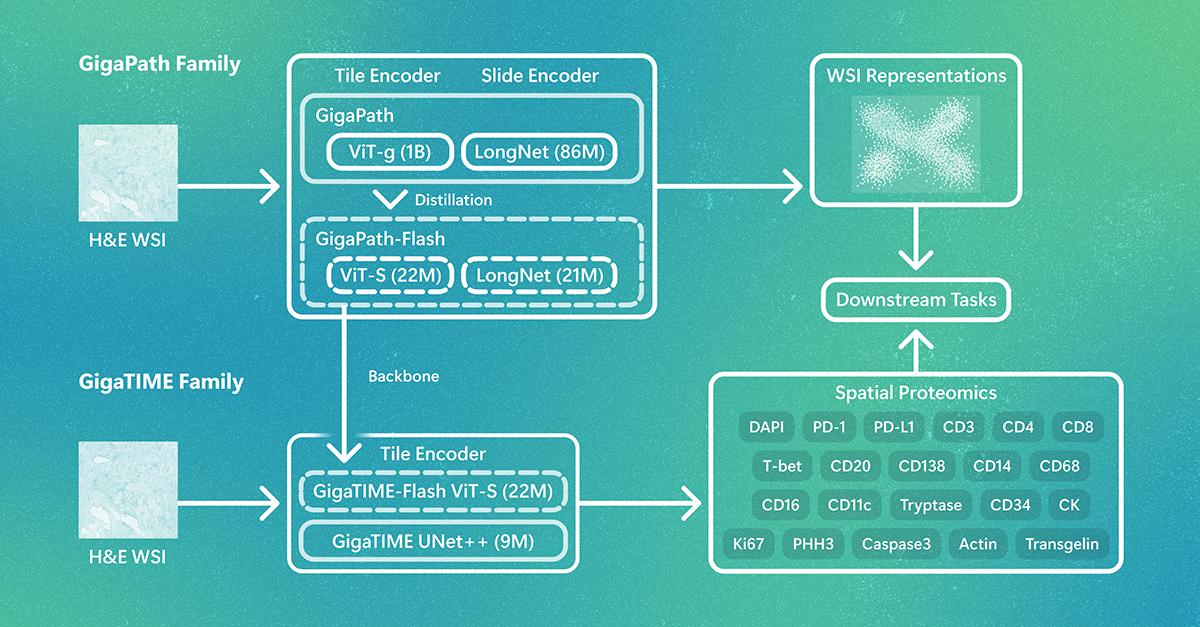
GigaPath-Flash and GigaTIME-Flash: Toward population-scale discovery with efficient pathology foundation models

What if pathology foundation models could do more with less? GigaPath-Flash and GigaTIME-Flash cut computational demands while maintaining strong performance, opening the door to larger studies and broader exploration. The post GigaPath-Flash and GigaTIME-Flash: Toward population-scale discovery with efficient pathology foundation models appeared first on Microsoft Research.

We use cookies to run the site and, with your consent, for analytics and to show ads. See our Cookie Policy.