Skip to content
#edge computing Open access

Reproducibility package — Source-Code Analysis of iFogSim for Simulating Distributed IoT Architectures

Sep 2026 · arXiv (Cornell University)
IoT and Edge/Fog Computing

Abstract

Simulation is an indispensable tool for validating distributed IoT architectures before physical deployment, and iFogSim has emerged as one of the most widely adopted platform in the fog and edge computing research community. Yet the experience of using iFogSim for non-canonical, application-specific architectures remains incompletely documented, leaving practitioners without guidance on when the tool is appropriate, which scientific objectives it can address, and how to manage the modelling approximations it imposes. This article helps in providing that guidance through two complementary contributions. First, we present a structured state of the art covering iFogSim and iFogSim2, a taxonomy of ten scientific objectives that motivate IoT architecture simulation, and a comparative survey of eight simulation tools assessed against those objectives. Second, we report our experience of simulating a four-tier smart emergency response system for resource-constrained urban environments, covering a 25-node synthetic road topology, four experimental configurations, and quantitative results including end-to-end alert latency (near 205 ms), FPGA-accelerated Dijkstra path computation (x10 CPU speedup), concurrent incident conflict rates (75% under dual load), and path-cache acceleration (x197). The analysis is organised around five practitioner questions: whether iFogSim fits the target architecture, which objectives it covers natively versus partially, what modelling challenges arise and how their workarounds bias reported results, what changes to the iFogSim source code would close the identified gaps, and whether tool co-simulation can provide comprehensive coverage. Seven modelling challenges are documented with source-code-grounded root causes and explicit bias assessments; finally, seven developer recommendations are proposed as an actionable improvement roadmap for the iFogSim community.

Read PDF

Similar papers

#computer vision Review Sep 2017

Agile Software Development Methods: Review and Analysis

This publication proposes a definition and a classification of agile software development approaches and analyses ten software development methods that can be characterized as being "agile" against the defined criterion.

P. Abrahamsson, O. Salo, Jussi Ronkainen et al. · 727 citations · ⚡54
#computer vision Jun 2008

The impact of agile practices on communication in software development

The study shows that agile practices improve both informal and formal communication, but indicates that, in larger development situations involving multiple external stakeholders, a mismatch of adequate communication mechanisms can sometimes even hinder the communication.

M. Pikkarainen, Jukka Haikara, O. Salo et al. · 401 citations · ⚡48
#machine learning Review Open access Oct 2014

Software development in startup companies: A systematic mapping study

The results indicate that software engineering work practices are chosen opportunistically, adapted and configured to provide value under the constrains imposed by the startup context.

Nicolò Paternoster, Carmine Giardino, M. Unterkalmsteiner et al. · 394 citations · ⚡54

Related blog posts

GPT-Lab Sep 17, 2026

Beyond Prompt Engineering: The Role of Tacit Knowledge in Software Engineering

AI is making software generation faster, but speed does not remove the need for expertise. As more work is delegated to AI, tacit knowledge may become one of the most important human advantages in software engineering. The post Beyond Prompt Engineering: The Role of Tacit Knowledge in Software Engineering appeared first on GPT-Lab.

Microsoft Research Blog Aug 31, 2026

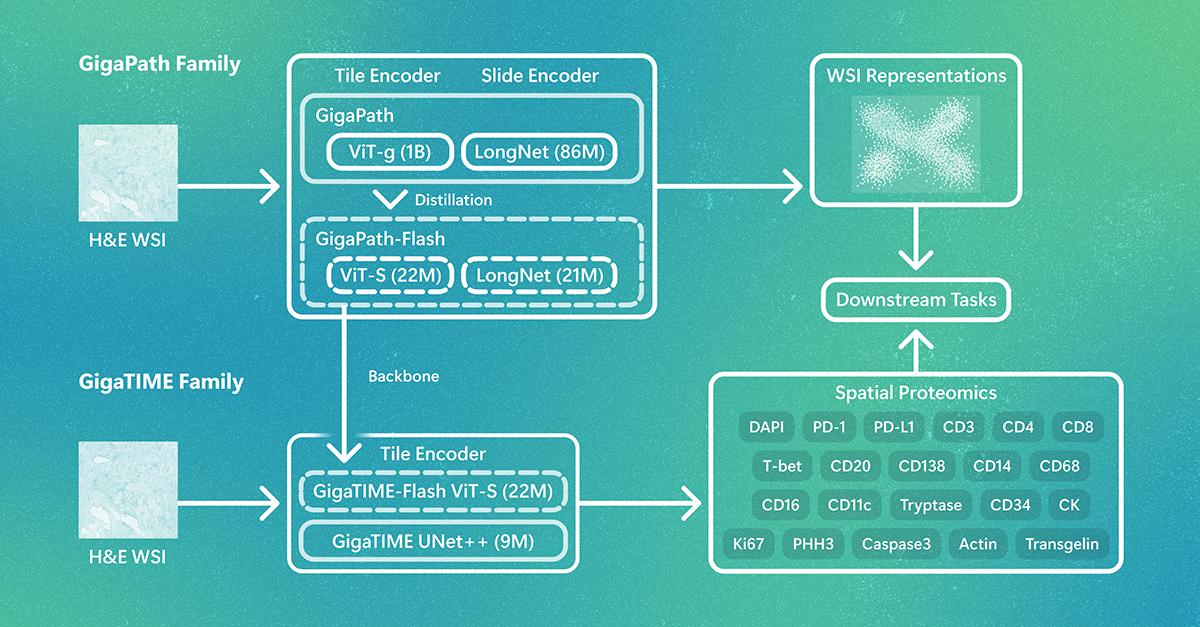
GigaPath-Flash and GigaTIME-Flash: Toward population-scale discovery with efficient pathology foundation models

What if pathology foundation models could do more with less? GigaPath-Flash and GigaTIME-Flash cut computational demands while maintaining strong performance, opening the door to larger studies and broader exploration. The post GigaPath-Flash and GigaTIME-Flash: Toward population-scale discovery with efficient pathology foundation models appeared first on Microsoft Research.

We use cookies to run the site and, with your consent, for analytics and to show ads. See our Cookie Policy.